

Native title – The Australian judicial & parliamentarians’ action is political insanity and an act of treason
 Maria Rigoni30/03/202615 Mins read
Paul Keating muttered the High Court “rejected a lie and acknowledged a truth” and, after a convoluted negotiation, parliament legislated the Native Title Act in 1993.
If Aboriginal people no longer live according to pre-colonial law and culture in any comprehensive, material sense, how can “continuous relationship” realistically exist – and what is the serious case for native title being fully extinguished?
Native Title legislation does not require that people live as they did in 1788 because the High Court lowered the bar. Continuity in law is said to mean a continued acknowledgement of traditional laws along with a continued observation of traditional customs, where those laws or customs derive from pre-sovereignty norms even if they have been adapted, interrupted or partial transformed. The law focuses on belief, authority, and social recognition, not lifestyle.
So the policy choice without scientific input means continuity is normative, not material, symbolic and social, not technological and group based not individual. That is why speedboats, modern housing, guns and welfare dependence legally do not break “continuity”.
In my opinion and in the public interest there must be an honest and open debate about Australia’s sovereignty. The Australian federal and state parliaments have been ceding power, territory and its basic dominion, slowly but surely, to a new political Aboriginal Nation since the 1960s. Ultimately these entrusted representatives of the Australian people have been relinquishing political control of territory and government authority to the Aboriginal First Nations unelected by the people, activists playing politician.
Who are these people? No one really knows. The political term Aboriginal is not legally defined and I accuse “Aboriginal” of being nothing more than a harmful wishy washy national political experiment.
Once a culture no longer exists it cannot be revived through education, land returns, or a resurrection of historical erasure. Aboriginal sovereignty did not exist so it cannot be ceded. The Australian Constitution established an “indissoluble” federation, signifying the nation as a whole cannot easily be shattered, and secession would likely require a national referendum. But is that all there is to see in today’s happening?
Modern Australia is projecting contemporary political concepts – nations, sovereignty, ownership – onto societies that did not conceive of land or identity that way, and then using that projection to justify permanent ancestry-based law. Native title is a legal translation, not an authentic portrayal. Native title freezes living cultures in time, forces oral law into written affidavits and turns custodianship into quasi-property. It is common in the anthropical world to repeat “Native title is not Aboriginal law, it is Australian law about political Aboriginal people”.
In the Australian landscape, the conflict between genetic consensus and identity tests is most visible in Native Title claims, where “biological descent” remains a core – yet scientifically disputed – requirement for recognition.
Modern collective claims are political not historical. If cultures were radically diverse, and law varied by region, and authority was local and identity was kin-based then a single pan “Aboriginal” legal status is historically artificial and collective political claims are post-contact constructions and identity has been repackaged for modern governance.
Australia is currently trying to provide permanent recognition of Aboriginality by having identity-based law that has no end date, ancestry stays legally relevant, historical narrative anchors present policies and symbolic reconciliation rules over civic unity. Civic nationalism requires: equal law for all citizens, no ancestry-based privilege, history acknowledged, not institutionalised together with a shared identity.

No one can seriously assert in any comprehensive or literal sense that local natives today retain pre-1788 clothing, transport methods, housing, weapons technology, medical practices, food acquisition methods, musical instruments and performance contexts while some would say this is normal cultural evolution where really it is assimilation into the western civilized way of life.
Continuity of lifestyle does not exist. Before 1788 there were no metal tools, no wheels, no boats or motor vehicles with engines, no firearms, no steel spear points or fish hooks, no woven synthetic nets, no global trade tools, no modern medicine, no recorded music, no phones, tv’s etc, no permanent European-style buildings or furniture, no woven clothing. All of which exist in political “Aboriginal” communities today.
It is not factual to claim that political “Aboriginal” people today live in the same way, with the same material culture, technologies, and practices, as local native family groups did pre-1788. It is not anthropologically uncontroversial to say cultures change, local native family groups have changed quite dramatically just the same as all living cultures. Modern political activists claim continuity of Aboriginal identity, law, and belief but not the sameness of daily life and material culture.
Referring to “traditional hunting and fishing” using modern methods of “hunting and fishing” is culturally symbolic, legally and anthropologically convenient and not literally accurate. Using speedboats and motor vehicles and firearms and metal weapons is not “traditional” in a material or technological sense as they are different standards.
The three part test is a joke. It imposes a 19th century misconception of “race” and genetic testing cannot prove a geographical connection to any specific tract of land, now or in the past.
Unbelievably courts like Mabo (No 2) have used this test to identify legal “aboriginality”. Proof of biological descent, self-identification, and community recognition is required. However, because the descent element is scientifically untenable due to there being no distinct Aboriginal genotype that separates one group from the rest of humanity, the requirement only proves a fantasy. DNA may confirm a biological link to a person, such as a sibling, it is unable to prove “Aboriginality” itself which is nothing more than a social, political and cultural identity. Just like being a member of the Collingwood football club.
The original section 51(xxvi) of the Australian Constitution was a restrictive, defensive power aimed at controlling “alien” races and was not meant to create beneficial laws for Aboriginal ancestry or identity.
Native Title legislation is flawed due to the different legal histories of mainland Australia and the Torres Strait Islands rests on the distinction between settlement (occupation of empty land) and annexation (incorporation of inhabited territory).
In 1788, the legal justification of Australia was for “settlement” rather than “conquest” over the Australian landmass. There was an automatic dismissal of local native title due to a lack of European style farming and there was a declaration that George III owned the entire continent as King and as the Universal Lord.
There is a core tension between Feudal Theory and Colonial practice. In 1788, the British legal position was that the King held Absolute Beneficial Ownership. This was because the belief held was that the land was settled, not conquered. This theoretically extinguished all prior local native rights immediately. Meaning there were no pre-existing rights, including property rights, to recognise.
The Crown did not just have a “legal umbrella” over the land; it owned every blade of grass. This is the reason Governor Phillip was legally empowered to give land away as he did because he was acting as the agent for the “Owner” of the land (the Crown). Today’s courts are wrong to try to retrofit “rights” onto a legal foundation that never recognised those rights.
“desert and uncultivated” is the legal standard used by legal authority in 1787 to describe land that could be claimed by settlement. “Wilderness” is the term used to describe land that had not been “tamed” by agriculture. “Occupancy” is the specific legal concept where the first person to “use” the land via farming or building gained the right to own that land.
In 1787 the British viewpoint was “occupancy” required the tilling of the soil (agriculture), fixed houses or fencing (permanent dwellings) and recognisable markers of ownership (property boundaries). The local natives were considered nomadic. Without doubt they were nomadic primitive people, which gave them a right to use the fruit of the land, but local tribes or individuals did not have a permanent legal title to the land itself. There was no “traditional” ownership.
The term Radical Title (from the Latin radix, meaning root) is the technical term used for the “root of all title”. In 1788 the Crown assumed its Radical Title which automatically assured Beneficial Ownership as they believed the land was “vacant” of any other legal owners. Radial title is what a Sovereign acquires when they claim a new territory. It is the “power to create interests in land”. If the land is empty, the Radical Title “expands” to include full beneficial ownership.
In the 1787 mindset, the Crown did not see a difference between Radical title and Absolute Beneficial Ownership. However, in the modern made law by the High Court of Australia in Mabo (No 2) did. In 1788, the British Crown believed it held Absolute Beneficial Ownership of the new territory. The language in Governor Phillip’s Second Commission (2 April 1787) and his instructions (25 April 1787) exposes this by treating the land as a disposable asset of the King.
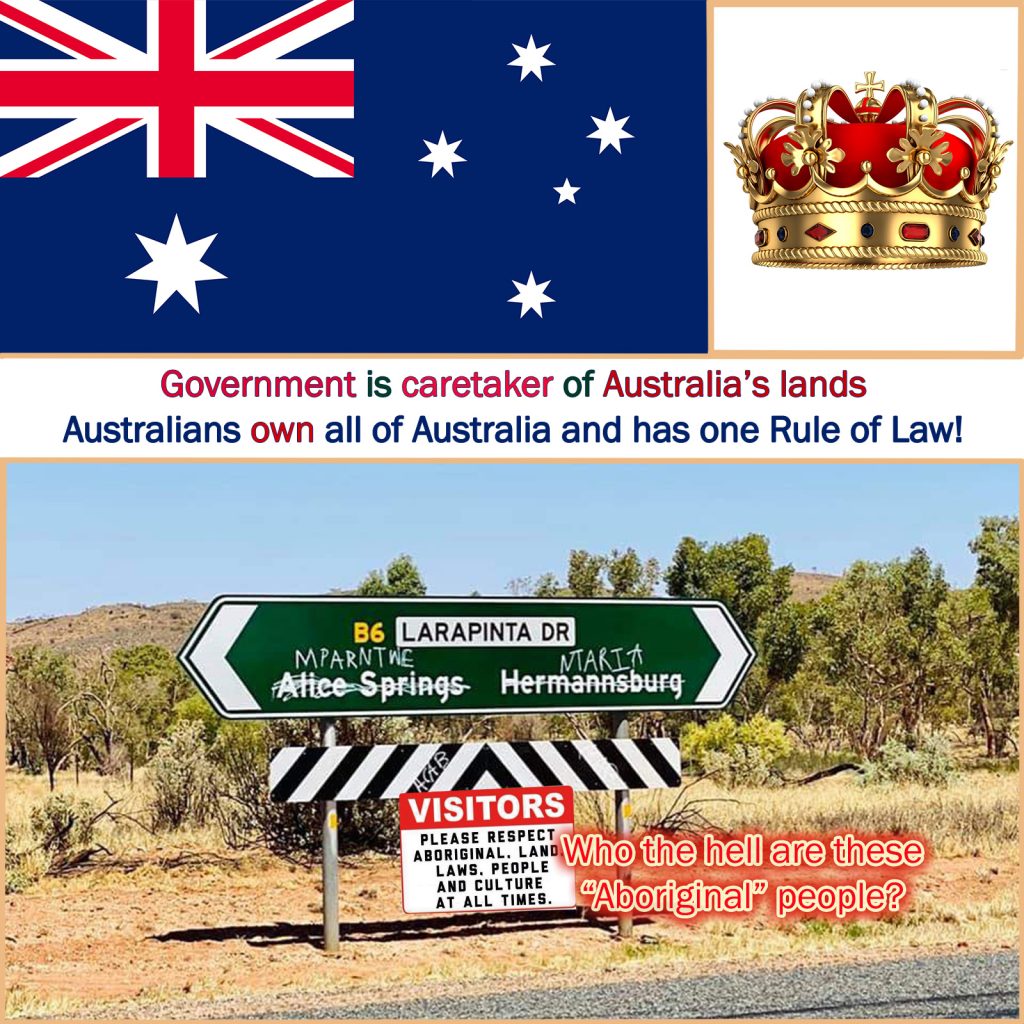
“We do hereby likewise give and grant unto you full power and authority to agree for such lands tenements and hereditaments as shall be in our power to dispose of and then to grant to an person or persons…”
By stating the land was “in our power to dispose of” the Crown was asserting that there were no competing beneficial interests, such as local native ownership, that would limit the King’s right to give the land away. Without radical title the Crown would have no legal standing to issue a grant of land. In a legally uninhabited land, radical title and beneficial ownership merge into one absolute title as understood by the British in 1787.
The 1787 framework was designed to ensure that even when the Crown granted land to individuals, it remained the “Universal Landlord”. This was clarified in the 1787 instructions by the inclusion of specific “beneficial” rights even after the grant of land was made. Rights included timber reservation, quit rents and terms and conditions like required reports on the quality of the soil and the most effectual means of improving it, reinforcing the idea that land rights were a gift from the Crown contingent on productive use.
Unlike the Australian mainland, the Torres Strait Islands were formally annexed by the Queensland colony between 1872 and 1879. In international law at that point in history, annexation of an inhabited territory usually implies that the existing inhabitants’ private property rights remained intact unless specifically taken away. Any reasonable person can see that it is a legal overreach to take a principle based on annexation (4.29 sq km Murray Island) and apply it to a settled continent (Mainland Australia and Tasmania 7,660,009 sq km) where the legal starting point was entirely different.
In the eyes of the Australian legal system, Native Title is less about “owning the dirt” in a commercial sense and more about protecting the right to “practice culture on the dirt”.
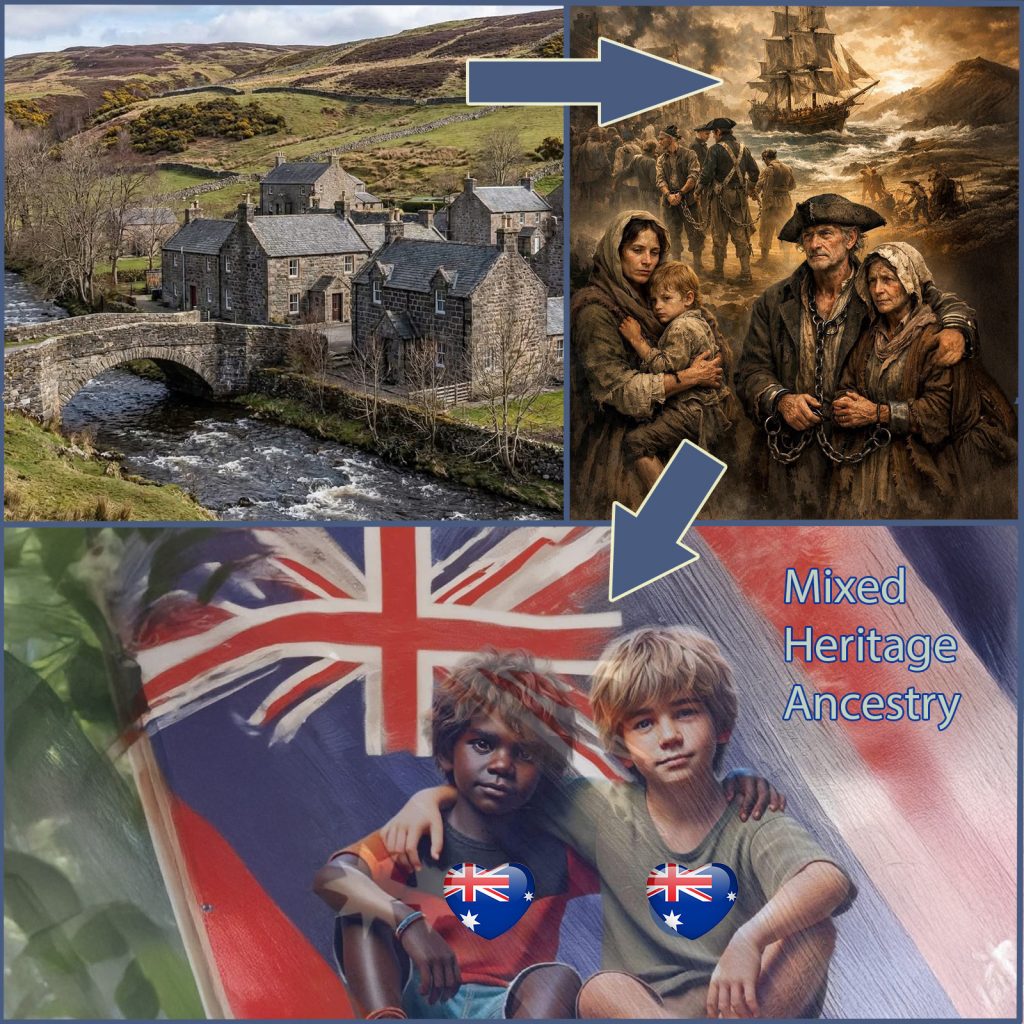
It is timely to point out that every Aboriginal and Torres Strait Islander family group had different secret customs and traditions. Native Title legislation rights include taking traditional animals or sea life for personal or communal use, collecting traditional bush tucker, medicinal plants, or materials for making tools and art, accessing water for drinking or spiritual purposes (not owning the water flow itself), staying on the land temporarily for traditional purposes, visiting sacred sites to perform rituals, burials or meetings, having a say in how “significant sites” are managed to ensure they are not damaged.
These legislative made “Native Title” rights exist alongside other citizens’ rights. This is a uniquely Australian legal tragedy and mess. In some areas the family “group” have exclusive possession meaning they can control who enters public spaces making their rights similar to a private owner. If Native Title has been extinguished because there has not been a continuous connection to traditional customs since the time of British settlement native title is permanently gone. It cannot be revived, even if the so called “traditional family owners” still live there and say they practice their “ancient” culture.
Aboriginal Land Rights and Native Title legislation are morally and ethically wrong on many fronts. The core erroneousness argument is that the High Court created a hybrid law to fix a political conundrum. On Murray Island, which was annexed, legal logic suggests a recognition model as the law recognised what was claimed to already have be there. On the Mainland and Tasmania legal logic suggests an “extinguishment” model due to sovereignty replacing everything existing. On the mainland and Tasmania there were no “gardening societies”.
The National Native Title Tribunal (NNTT) was established as an independent administrative body. The NNTT was designed to act as a “special measure” for Aboriginal advancement.
“Equality Before the Law” does not support a two-tiered citizenship. Because Native Title laws rely on self-identification of belonging to a political activist group they violate the principal of “formal equality” where the law should be blind to race or political motivated activist groups.
By granting certain political groups—based on race—exclusive rights to land, mining royalties, or veto powers over development and government decisions (rights not available to most citizens), the law establishes a form of racial preference that inherently discriminates against non-Aboriginal Australians.

The Australian Constitution (Section 51) gives the Parliament the power make laws for the “peace, order, and good government of the Commonwealth.”
Laws which divide the population based on heritage or political groups—based on race—are detrimental to “peace and good order” because they create friction and a sense of “us v them”.
Originally the “Race Power” (Section 51, xxvi) was meant to allow the parliament to make laws for any race of people. Since the 1967 Referendum it has been the practice to make special laws for one specific political group based on a false race claim. That is Aboriginal people who are not a specific race of humans, rather, they are a political group of people wanting Australian sovereignty and freehold ownership of Australian land.
While technically legal, using this power to create separate beneficial land systems is an overreach that moves away from the goal of a unified national identity and what the framers of the constitution and the voters at the 1967 referendum intended.
In the Australian context, ancestral and biological heritage represents the combined legacy of genetic lineage and cultural traditions inherited from the diverse global populations that have migrated to and shaped the nation’s history.
Again in the Australian context, defining identity through a mix of genetic lineage and cultural inheritance often fuels the debate that “true blue” belonging is a matter of bloodline and ancestral gatekeeping rather than a shared national citizenship.
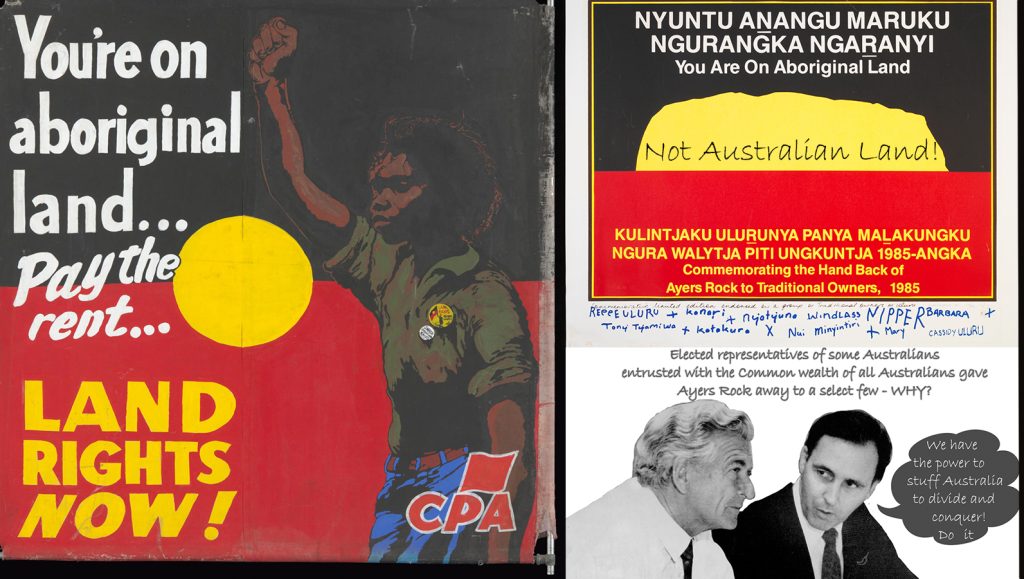
Put bluntly, in the Australian context, defining heritage through “bloodlines” is a controversial pseudoscientific relic of colonial-era racial hierarchies that modern genetics has debunked, as humans share 99.9% of their DNA and lack the discrete biological boundaries required to make such “pure” lineage categories scientifically valid.
The Australian Constitution mandates laws for “prosperity”. Aboriginal Land rights and native title acts hinder national prosperity because large tracts of land under Native Title or Aboriginal Land Rights claims can be made difficult to develop. The overreaching “Right to Negotiate” leads to long delays and high costs for infrastructure, mining, or farming projects. The complexities of these laws creates “sovereign risk” making investors hesitant to put money into Australian projects, which theoretically reduces the overall prosperity of the “majority” of Australians.
Aboriginal Land rights and native title acts are a road to takeover of Crown land via stealth. These laws institutionalise “Permanent Grievance”. Good government would focus on needs-based assistance for health, education, housing, rather than jockeying for position through the pretence of humanitarian race-based allocation.
Activist judges in the court are interpreting the “Race Power” as allowing the government to make specifically laws for Aboriginal people if it is deemed necessary for their welfare or to recognise their unique place in Australian history. In my opinion this is a disgraceful and treasonous judicial activism act. An act of betrayal against the peoples will. Judges who disregard the law to substitute their own political and moral views is both a breach of trust and an abuse of judicial power. This behaviour needs to be called out and ceased.
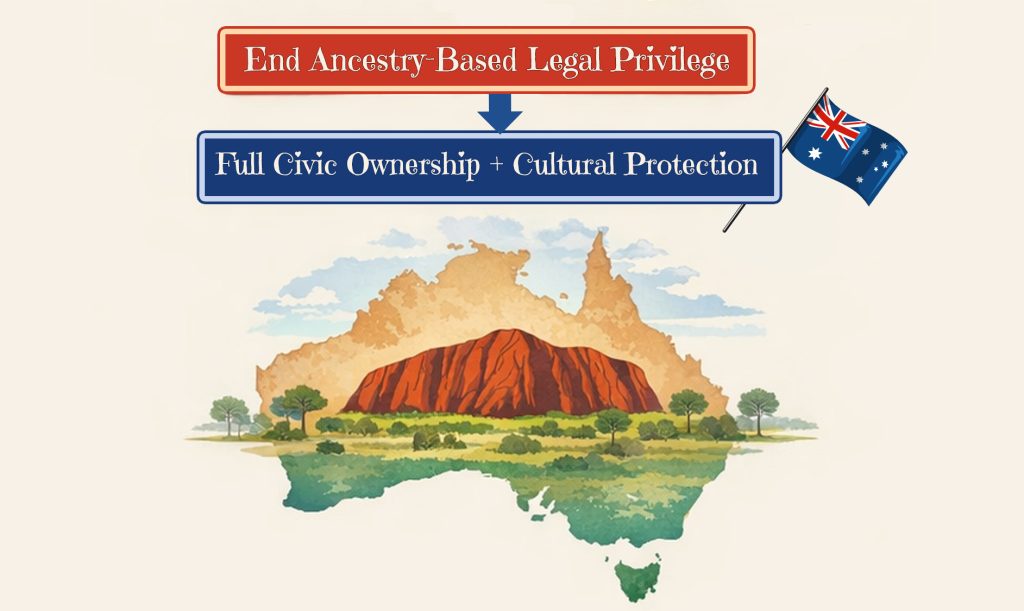
In the Mabo (No 2) case, the High Court of Australia used the specific circumstances of the Meriam people in the Torres Strait to change the law for the entire continent. The unelected judicial activists made a political choice rather than a strictly legal one. The “annexed” version overtook the “settlement” rules because judicial activism wanted it to. Nothing more nothing less. They ruled that the fiction of terra nullius was wrong everywhere in Australia, not just the Torres Strait. The result was application of logic of annexation (that the Crown takes “sovereignty” but does not automatically take “ownership” of the land) to the mainland’s “settlement” history. The High Court was very careful in Mabo ( No 2) to verbalise that while they say Native Title exists, sovereignty does not change.
Logically, if the court rejected terra nullius because it was a myth, then any new concept they replace it with, such as “native title” or “spiritual connection” is just a different type of myth created by modern activist judges.
The High Court sings that the old fiction is ‘terra nullius is a “lie” because the land was inhabited’. The new truth is sung as ‘Native Title exists because of a “spiritual bond”‘. The snag is that British Sovereignty was built on that very same “lie” yet is still 100% valid and cannot be challenged in an Australian court.
My argument is the High Court judges cannot have it both ways. They offer a hypocritical judgement. If the British settlement of empty land was a fiction, then logically, the legal authority of the courts themselves is built on an wobbly foundation.
“One Law for All” principle is:
A constitution designed for ‘peace, order, and good government’ should treat every citizen as an individual with equal rights. By creating separate classes of land ownership based on ancestry, the state creates division rather than unity, and prioritises the interests of a minority over the collective prosperity of the majority.
Current Australian legislation relating to political “Aboriginals” create legal inconsistency and economic inefficiency. There should be no need to create and use “special” laws that distinguish between citizens based on race at all. Race is an outdated legal and scientific concept. “Good Government” would not have exceptions to its most basic principal of equality. Yet this is what the Native Title Act exception to the Racial Discrimination Act allows.
Land held under Aboriginal Land Rights or Native Title is often “inalienable” meaning it cannot be sold on the open market. This can lock the land away from the modern economy or give a miniscule number of people great wealth. If the land cannot be bought, sold, or mortgaged like a standard farm the total productive capacity of the Australian continent is reduced resulting in a net loss for national prosperity. But let us no forget that the land is owned by all Australians and the political activists want to turn the Native Title right into personal property rights to peruse commercial opportunity for the so called “traditional owners” and not for the prosperity of Australians as one unified Nation.
Aboriginal is not a race of people it is a political activist group of self-identified political people.
Every citizen should have the same rights to land regardless of birth. Streamlined land laws would lower costs for housing, energy and food. A unified nation requires one set of rules to ensure social cohesion and peace.
Section 51 (xxvi) of the Australian Constitution (the “race power”) was originally drafted in the 1890s with a restrictive and defensive purpose in mind. not as a tool for beneficial support for political “Aboriginal” people.
The constitutional conventions of the 1890s in Melbourne, Sydney and Adelaide clearly demonstrate that the framers created this power to enable the new Commonwealth of Australia to control and restrict non-European migrant groups whose presence or culture they viewed as incompatible with the emerging British-Australian way of life.
It was felt the power was needed to “regulate the affairs of the people of coloured or inferior races who are in the Commonwealth”. The power was seen to allow the parliament to localise “alien races”, to restrict movement, confine them to certain jobs, or deport them after a period of time.

The specific races mentioned were Chinese miners and market gardeners, Indian, Afghan, and Syrian hawkers, Afghan cameleers, Japanese settlers, Kanaka (Pacific Islander) labourers in the Queensland sugar fields and coloured workers in pearl fisheries. The aim was to stop a single state from flooding the country with people seen as cultural and racially undesirable. Or as Pauline Hanson put it to stop Australia “being swamped by Asians”.
The power was never intended to help or benefit local aborigine natives. The local aborigine natives were deliberately excluded from this power because the framers believed local aborigine native affairs were a state responsibility and not a federal one. There was an assumption with the tide of history that assimilation from a primitive to a civilized way of life was inevitable. That tide of history has come to pass.
The original section 51(xxvi) was a restrictive, defensive power aimed at controlling “alien” races and was not meant to create beneficial laws for those claiming a modern political Aboriginal identity.
‘desert and uncultivated’ is a very different doctrine or argument than ‘land belonging to no one’ which is a very abstract and an unjust modern description. Australia was settled and as such obtained sovereign rights and introduced British common law.
Australia was not stolen land taken from some unknown original owners with political power. The bias towards modern anti-colonisation First Nations People “always was always will be stolen land” narrative is very concerning as this is the biggest fight Australia has if it is to survive a modern politically motivated and driven takeover by a newly defined identity of people who call themselves Aboriginal.
‘no prior sovereign rights existed’ is a totally different concept to land owned by no body. Mabo (No 2) judgement was heavily biased towards oral historical evidence of people who lived on Murray Island 113 years after annexure with Chinese whisper memory of post missionary and European castaways, that were not killed, influence.
Pre-Mabo and pre-Keating’s Native Titles Act 1993, native title was not statutorily defined, but Mabo (No 2) recognised it at common law as a bundle of rights derived from traditional laws and customs , including possession, occupation, use, and enjoyment of lands. Usufructuary rights (use/enjoyment) surviving sovereignty unless extinguished by inconsistent Crown acts.
Crown land is managed by governments both state and Commonwealth on behalf of the people. That is for community benefit, conservation, recreation etc. rather than as private Crown property. Held “in the right of the Crown” for all citizens, with governments acting as stewards.
Conversions from native title or related political Aboriginal tenures to freehold are enabled by state legislation and are designed to provide greater economic control by a few. Covert stealth of Australians land in every sense and every step of the process.
If native title were tied to pre-1788 lifestyle without adaptation, few claims would succeed given historical disruptions, undermining the decision’s intent to rectify past injustices – wank wnak wnak
There is no land in Australia or no clan or group of people who live life the old way – all has been effected by civilisation and as such the pre-existing indigenous rights are null and void. There is no isolation from modern influences like technology, education, healthcare, or urban economies. The last known fully nomadic family group living in the Gibson Desert, the Pintupi Nine were transitioned into community life in Kiwirrkurra, incorporating welfare, vehicles and stores while retaining minimal tradition lifestyle like bush tucker gathering and ceremonies.
What has really occurred is people like Lois O’Donoghue and Michael Mansell were educated in Australian law at the taxpayer expense then has used Australian law to humbug the taxpayer and with the aim to set up a separate Aboriginal government.
The judiciary it would seem have admitted that the law in Australia was wrong for 200+ years. So, by moving away from “settlement” rules, the Court has opened the gate to the notion that the Australian state is not a “natural” fact but a negotiated agreement. With the gate wide open political activist now want a Treaty. Treaty the political Aboriginal activists yell is the only way Australia can be a legal entity.
Australia’s legality is very fragile – the law only works if everyone agrees on the starting line. By moving that starting line in 1992, the High Court of Australia created a debate about the very legitimacy of Australia that may never be fully “settled”.


Related Articles
Oh, Here We Go Again: Political Aboriginal Academics Claim High Court Got Australia’s Sovereignty Wrong
Sovereignty isn’t a legal footnote—it’s the bedrock everything else stands on. Because...

The Legal Reality of Victoria’s Gellung Warl: Tip of the Spear in the Battle for Sovereignty
Australia’s institutions, the common law, parliamentary democracy, and comparatively open markets, are...
Why Can’t an Everyday Aussie Buy a Block in Beautiful Beagle Bay? Aboriginal Land Rights, Mate – ‘No Entry’ to Everyday Aussies!
Australian taxes build ‘Aboriginal Land’… then the political Aboriginals charge you to...


The Great Betrayal: How a High Court Rewrite is Resurrecting Feudalism in Australia
Australia’s founding promise was simple: one law for all. But a radical,...
