

Anthropology pulls the wool over our faces to allow the sheep in wolves’ clothes to settle into the paddock with the flock Part 2 of 2
 Maria Rigoni30/03/202613 Mins read
Past injustice has been acknowledged – but modern Australia has allowed it to dominate identity, law, and narrative beyond what is proportionate or constructive.
An Aboriginal songline cannot be taken seriously as a legal document that dictates land rights, marriage laws, and sacred obligations. But Federal Court judges and Land Commissioners have accepted the performance of songs as proof of a continuous connection to specific country. How can any court decision be taken seriously if it uses these date untested and author anon songlines as testifiable evidence of ownership and lore being customary law?
It is a ridiculous notion to suggest a songline is modern political Aboriginals’ “piece of paper”; a title deed that proves they owns the land and they have authority to speak for it. The propaganda for these songlines is evident they are not ancient oral maps being correctly recognised by current legislation they are modern legal tools being “manufactured” to achieve environmental goals.
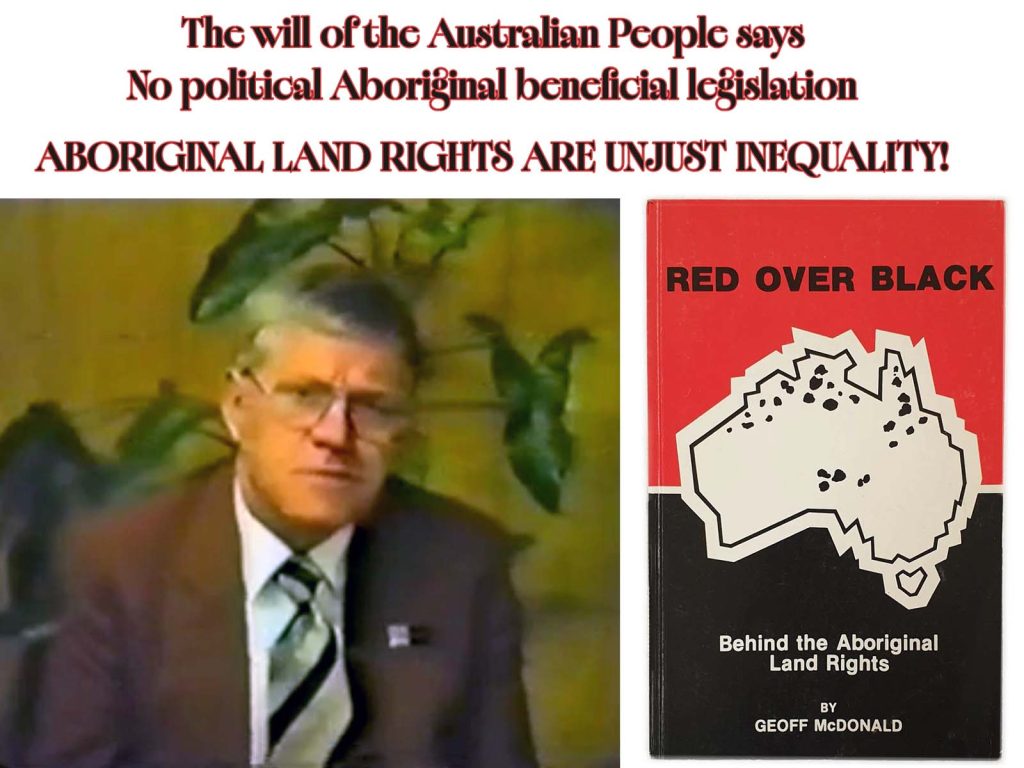
1970s land rights movement has influenced how native history and our judiciary decisions are presented today.
To keep it real local Australian born natives in 1787 lived as primitive, forager, hunter-gatherers and travelled in small bands of 25-50 people within larger linguistic cultural groups said to have consisted of 500-1500 natives. But no one really knows. A lot of guesswork exists without factual evidence.
All of the DNA of an organism is called its genome. Genomic studies have morphed the understanding of human evolution, illuminating that modern humans did not evolve in isolation but interbred with now-extinct, non-Homo sapiens groups, like the Neanderthals and Denisovans. These relationships left lasting, unique, and often adaptive genetic signatures in certain populations across regions. Aboriginal identity is political, a self-determined and not a genetically defined fact.
No direct DNA from 1787 exists. Local natives at that point in history did not keep written records or photos or knew what a museum was. The local natives could not spell, read, or write their own native language.
The absence of written records in 1787 means we rely on genetic, archaeological and anthropological data to reconstruct the history of Australian natives prior to 1788.
‘Native Title’ existed in common law prior to 1788, however, had no legal standing in Australia prior to 1993. Once the British settled Australia it obtained sovereignty over the territory giving it the power to make new laws and govern the territory. The common law of Britain automatically transferred to the new territory. The High Court in the Mabo 2 case changed existing common law in relation to real property that had operated in Australia for over 200 years.
One fundamental aspect of the common law is the feudal basis of real property law. Under this law the Crown has the ultimate “absolute” title to all of the land and people own estates in the land. An individual may hold legal title to property but the title to that property is originally derived from the Crown, and the land may be compulsorily resumed by the Crown, because the Crown retains an underlying radical title to all the land in the country.
The specific Latin term terra nullius was not part of the legal dictionary in 1787. The phrase did not exist in International law. terra nullius is a relic term used by later historians and lawyers to depict a set of 18th-century legal concepts that were not actually labelled by that term at that time. British law relied on the Doctrine of Discovery and the Doctrine of Settlement to justify the claiming of land in Australia.
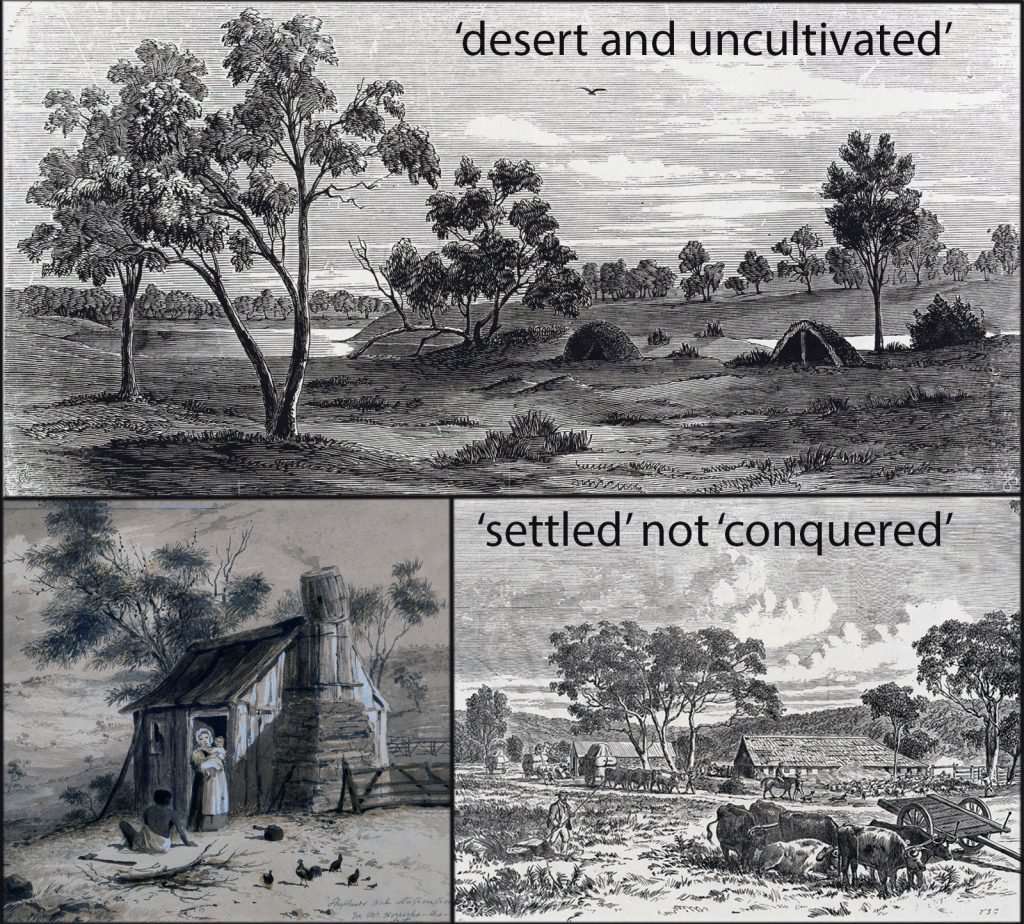
Legal justification for claiming land like Australia was based on the distinction between annexed, ceded, conquered, or settled outposts. Annexed land refers to territory that has been formally incorporated into an existing state, nation, or municipality, extending its borders and jurisdiction. The Torres Strait islands are an example of this. Settled colonies occurred when the land was thought to be “desert and uncultivated”. The uncultivated threshold is related to land ownership being something that was tied to “mixing one’s labour with the soil” that is agriculture and permanent fencing and buildings.
Is was not until late in the 20th century that the Latin term terra nullius was used in connection to the “colonisation” of Australia. The term terra nullius with the new 20th century meaning of “land belonging to no body” was mischievously retroactively applied by the Australian High Court to describe what they saw as a legal vacuum the British assumed existed in 1788. In legal terms, terra nullius really means “land over which no previous sovereignty has been exercised”.
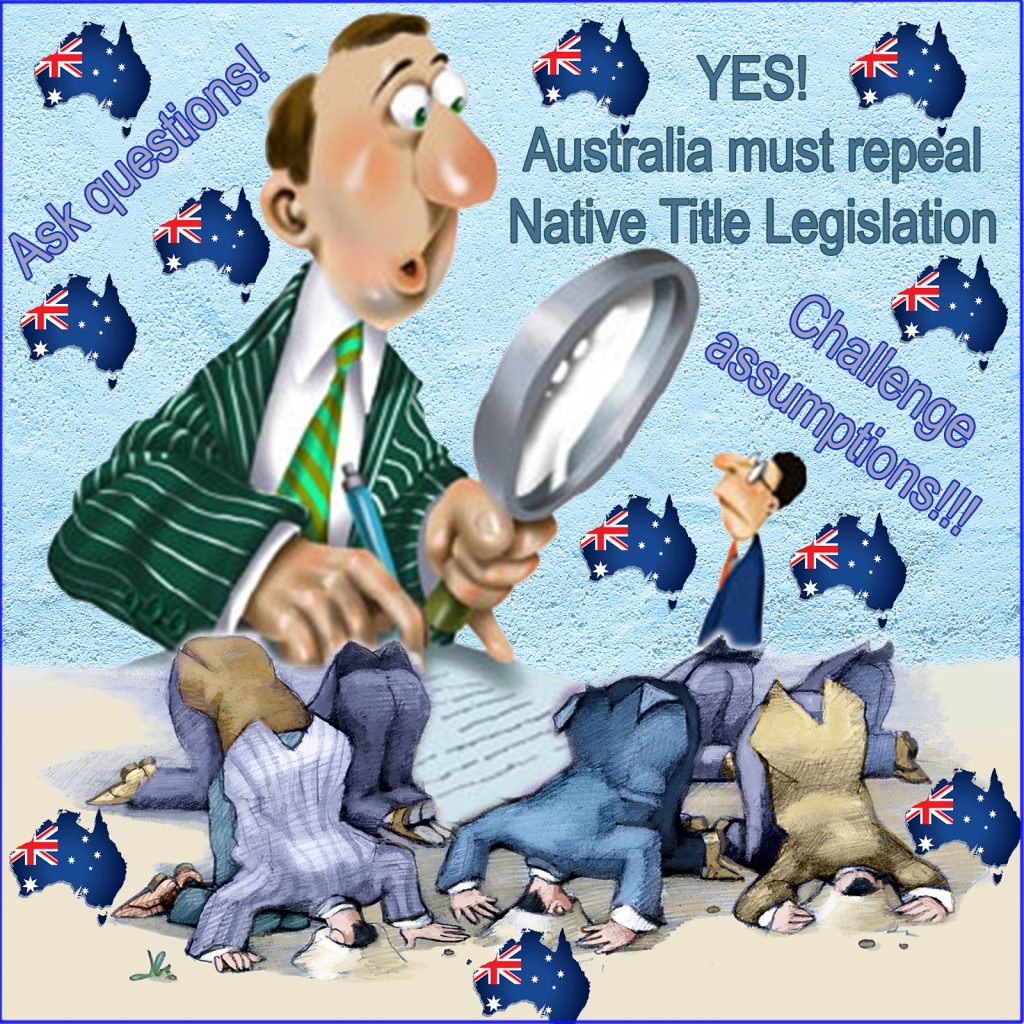
The vocabulary actual used by the British in 1788 was:
Sir William Blackstone, an 18th century English law specialist, allocated colonies into two categories. This difference resolved which laws applied and who owned the land:
“Plantations or colonies, in distant countries, are either such where the lands are desert and uncultivated, and claimed by right of occupancy only; or where they were already cultivated and inhabited, and are now gained by conquest, or ceded to us by treaties.”
By the British classification of the Australian land mass being ‘desert and uncultivated’ did not mean the British thought Australia was empty of people, it meant they believed Australia to be empty of law and industry. Because it was “desert” the Crown did not need a treaty. There was no official ruler to negotiate with.
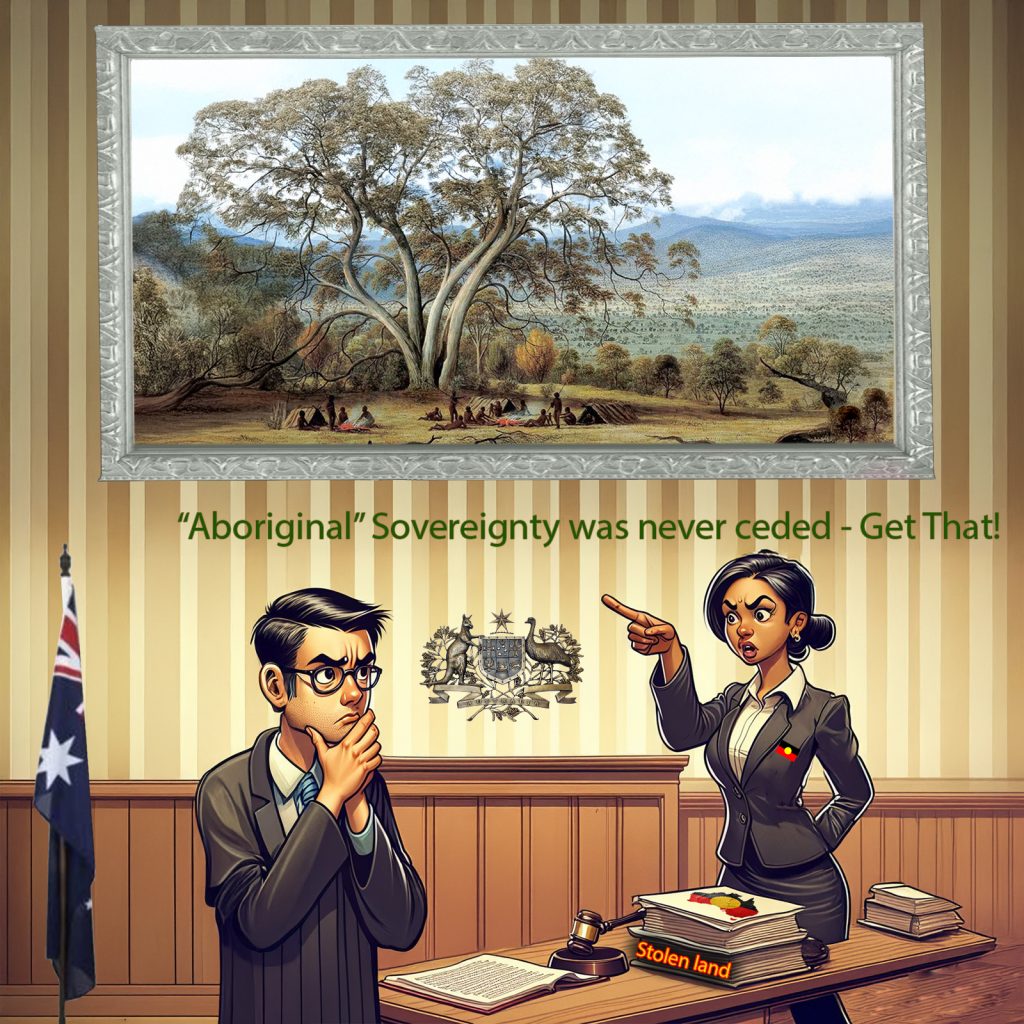
In 1770 , and upon formal arrival of the First Fleet in 1788, land considered vacant was legally regarded in British law as passing into the absolute beneficial ownership of the Crown. The Mabo 2 decision changed modern law using hindsight as their justification. By removing the absolute beneficial ownership of the Australian people, represented by the Crown, to Radical Title ownership activist judges allowed for the coexistence of native title to be given to a political group of people self-identifying as “Aboriginal” and not the original people who gain no benefit.
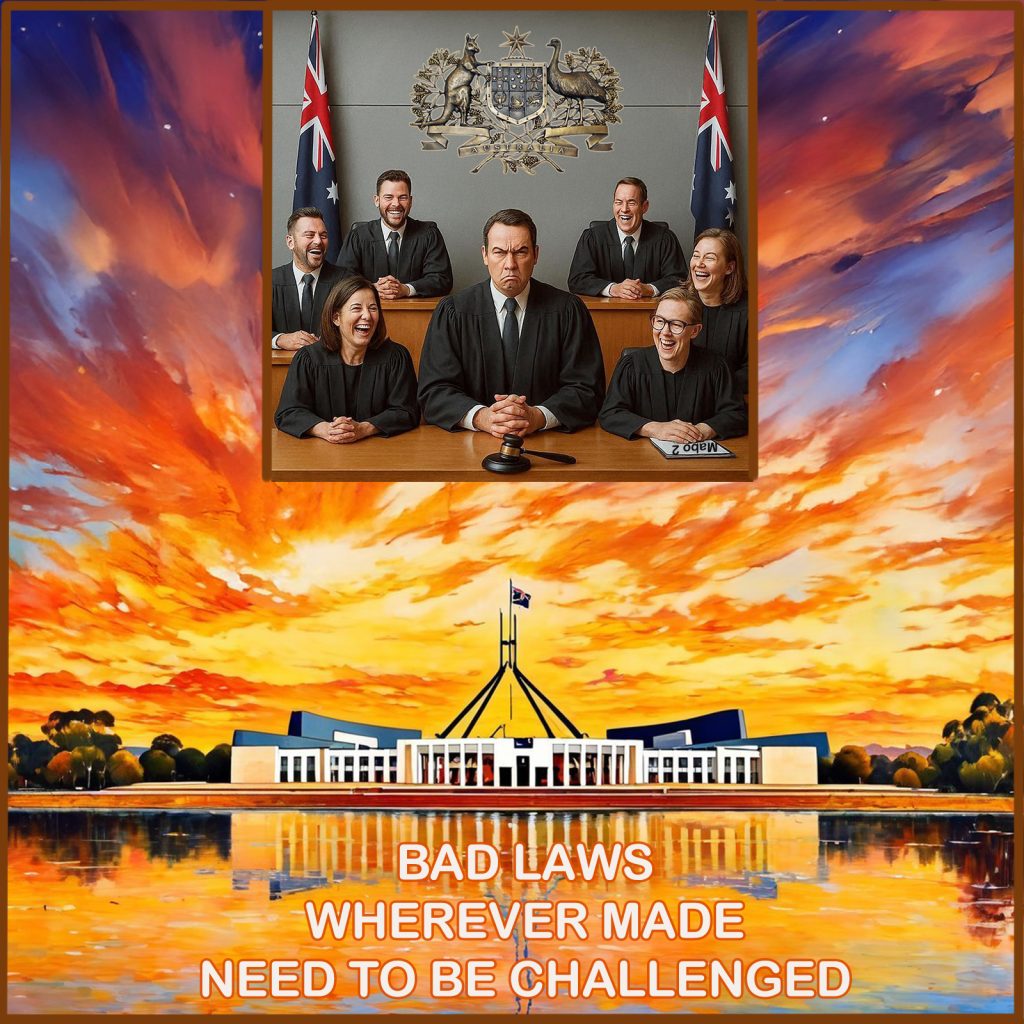
The Mabo 2 decision and follow up parliament made legislation is allowing the existing Australian nation to be ceded to a new Aboriginal nation. Anthropology and communist leaning legislators are leading decision making.
In 1992, the High Court of Australia determined that the Crown only acquired radical title rather than absolute title. Radical title is a bare legal title or a sovereign right to manage the land rather than an absolute beneficial ownership. So, while historical custom regarded the land ownership as absolute, modern jurisprudence labels the initial claim as a radical title that should not have automatically extinguished pre-existing original native rights. No original inhabitants who lived on the Australian continent pre-1788 are living today so logically there are no rights to claim or be approved for these people.
What the High Court of Australia activist judges decided in 1992 is an absolute and radical disgrace. The legal doctrine that actually applied at the time of the arrival of the First Fleet settlement was that the Crown acquired absolute beneficial ownership of all land from the moment of sovereignty.
The 1788 legal view of absolute ownership in legal understanding was that the Crown acquired both sovereignty and beneficial ownership of all “unoccupied” land, treating it as land to which the Crown had absolute title until it was formally granted to the settlers. In the colonial case law of Attorney-General (NSW) v Brown 1847 it was validated all land was owned by the Crown.
Sir William Blackstone argued that according to the “law of nature” a person only owned land if they “occupied” it in a way that improved it’. He scripted:
“The earth… and all things therein, are the general property of all mankind, from the immediate gift of the Creator… but… occupancy is the thing by which the title was actually vested.”
The 1788 local aborigine natives were observed as migratory or “nomadic” (never mixing their labour with the soil) Sir William Blackstone’s tenets proposed the local natives had a right to use the fruit of the land, but that did not create a permanent legal title to the land itself. There were no recognisable signs of “sovereignty” that being kings, courts or fences that 18th century British law could identify.
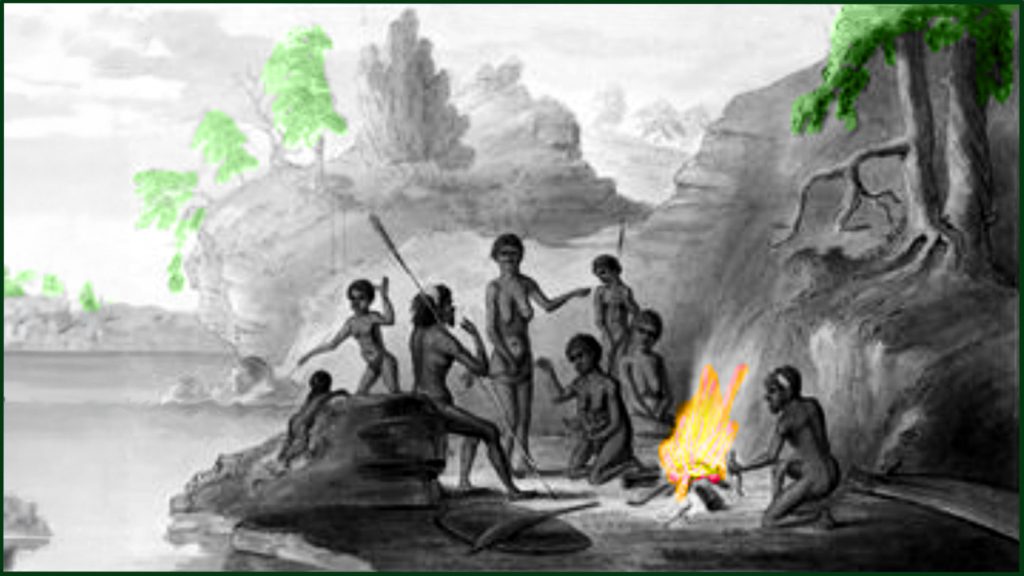
The 1787 British view of occupancy required three indicators: Agriculture: as in Tilling the soil, Permanent Dwellings: as in Fixed houses or fences, Property Boundaries: as in Recognisable markers of ownership.
Sir William Blackstone reinforced the Doctrine of Tenures, which is the core of the 1788 Crown Title:
“It is the fundamental maximum… in the English law, that the King is the universal lord and original proprietor of all the lands in his kingdom: and that no man doth or can possess any part of it, but what has mediately or immediately been derived as a gift from him.”
Sir William Blackstone provided a loophole for the “natural law” of taking of land from others. If the inhabitants were not civilised, by British ideals of government and farming, the land was legally open to the first “civilised occupant.
What this means is that even if a settlor “found” land, they could not own it. The person had to receive it as a grant of land from the King, via the Governor.
So to recap Sir William Blackstone’s concept of International and British law was in action in Australia in 1788. Legal justification was for “Settlement” rather than “Conquest” like in America and Canada. Right to Occupancy dismissed local native title due to lack of European-style farming. As the country went through the process of settlement King George 111 was declared the Universal Lord and as such the owner of the entire mainland continent and Tasmania by “Absolute Title”.
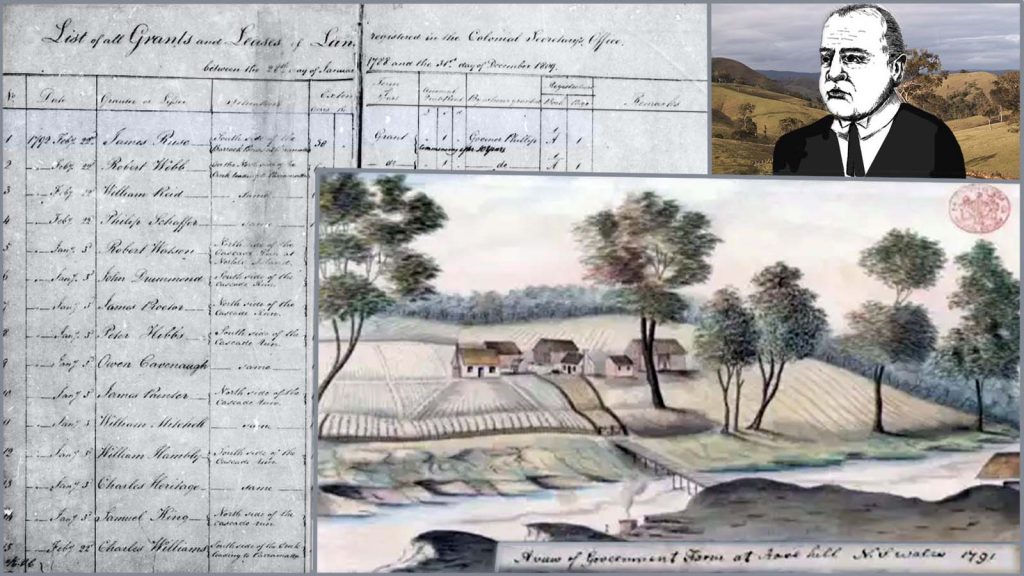
In 1789, Governor Arthur Phillip put Sir William Blackstone’s standards into practice at Rose Hill. Faced with a starving colony he used the “Right of Occupancy” to transition from a government-run prison farm to private land ownership. James Ruse, a former convict with farming experience became Governor Arthur Phillip’s “Agricultural Adam” to put Sir William Blackstone’s principals into practice.
The High Court in the Mabo 2 decision, based on a tiny 4.29 square kilometres of land on an island in the Torres Strait, changed the common law that had operated in Australia for over 200 years. The judicial activist judges changed the Australian peoples’ right to absolute crown title to radical title upon which Native Title can be placed as a burden and is seen as a legitimate property right. This abuse of the majority of Australian citizens must be reversed.
The Crown in 1788 acquired sovereignty and absolute title until the High Court of Australia, in a very deceitful way, changed this to give the crown an underlying title to the whole territory. This is described as the ‘radical title’ (meaning ‘root title’ from which all other titles springs). Radical Title no longer means that the Crown necessarily also gained full beneficial ownership of all the land in the territory.
If there was a society with established governing laws living within a territory before it was settled then the change in sovereignty would not automatically extinguish those laws or existing property rights. Their property rights would survive the change in sovereignty, although they were made subject to extinguishment by the new sovereign power. If, on the other hand, the land was ‘desert and uncultivated’ it was deemed to not legally belong to anyone. The new sovereign power gained immediate and absolute ownership of all the real property.
What authority has given the High Court of Australia the ability to take away absolute ownership of all Australian land? None that I can find. All that has been achieved by the High Court and politicians is a messy legal situation created through warped decision making by self-gratification judicial activism and gleeful communist minded parliamentarians.
Natives that did not cultivate the soil were not considered to have real property interests in identifiable territory. It was believed that the primitive people did not have a system of laws for real property ownership across the mainland or any method of national government or national leadership. This did not mean that Australia was uninhabited. It meant that even though native people lived on the land they were considered nomadic peoples with no ‘ownership’ in particular plots of charted land. There was no written law or maps only oral language with many sacred secrets kept very close to immediate clan members and not shared with outside groups.

Today, we have extensive anthropological evidence which proves the conclusion that the local natives in 1788 had a system of land title governance is factually incorrect. Most tribes could not understand other mobs language.
There is no strong evidence of the relationship between Aboriginal groups and the modern allocation of their ancient connection to so called “traditional lands”. There is no evidence of any existence of a system of laws across the continent which was unrecognised by the colonists at the time.
In Mabo 2 the judges presiding in the High Court applied the facts as we know them today to the common law which recognises the continuing existence of ‘native title’ where there is a change of sovereignty over land already occupied by a ‘settled people with settled law’.
The quiet truth that most will not say is Aboriginal recognition today is not about restoring historical reality – it is about managing the moral legacy of colonisation in a modern liberal state. So in a nutshell this means: concepts are stretched, language is symbolic, law is compromise and history is simplified.
While I am not denying history, I am rejecting mythologised history being used as permanent law.
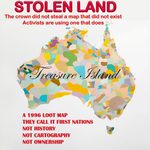
Anthropologist, Norman Tindale’s 1940 map, compiled over two decades, shows the proposed, not proven, distribution of the Aborigine native tribes of Australia. The map was constructed at a very minimum of 152 years from the First Fleet arriving on the shores in Sydney cover in 1788. The map is promoted as a scientific and anthropological document given a religious bible like reverence. The aim was to map tribal distribution, territorial limits, proper names, and environmental impacts to insinuate how water sources, deserts and vegetation shape the European concept of boundaries.
Norman Tindale set out to change the narrative of local natives being nomadic wanderers with no fixed attachment to land. He was looking at the local native family groups and tribes through the European “territorial limits” land ownership perspective because that is what he knew. His work is a masterpiece of real property reverse engineering.
Norman Tindale’s map espouses the approximate territories and names hundreds of Aboriginal language groups and social units as they supposedly existed, or were remembered, at the point of European contact. Information was gathered via fieldwork, informant interviews, earlier maps and reviews of historical records.
The 1940 map and its 1974 turbo-charged upgrade were not some dusty academic curiosity that the High Court stumbled across in 1992. These Norman Tindale’s maps became the retrospective sledgehammer that let seven unelected judges in Mabo v Queensland (No 2) smash 204 years of settled Australian common law and declare that the entire legal foundation of the country had been built on a “fiction” all along.
For two centuries the common law had operated on a simple, brutal reality: Australia was treated as a settled colony where the Crown took radical title an no pre-existing native proprietary rights survived settlement in a way that the courts would enforce. That was not a racist oversight – it was the consistent doctrine applied from 1788 through every land grant, every pastoral lease, every mining title, every suburban backyard. Blackburn J had confirmed it as recently as the 1971 Gove case. Everyone – governments, courts, banks, farmers, – operated on that understanding.
Then Mabo arrives. The High Court doesn’t just tweak the edges. It rewrites the script: “Actually, native title always existed, we just didn’t notice for 200 years.” And what do they (and especially the Federal Court judges who then had to implement the Native Title Act) reach for as convenient evidence that the continent was never empty and that hundreds of groups held defined territory? Norman Tindale’s map – a 1930s -40s anthropological exercise based on interviews with elderly aborigine locals whose own parents and grandparents had already lived through massive post-contact upheaval.
The map became legal catnip. Courts started treating those green boundary lines like they were sacred cadastral surveys draw in 1788 instead of a mid-20th-century construct. Paul Burke, an anthropologist who actually works in native title, has openly called this out: Tindale’s work now exercises a “deleterious impact” because judges privilege his 1940/1974 data over living claimants and modern anthropology. He literally invented or misplaced tribes (Jadira, anyone?) on thin evidence, and courts still bow to it because it looks “scientific” and pre-dates the Native Title Act.
Peter B English in his book Storm Over Uluru – the greatest hoax of all tells “the story of an incredible Hoax that had its origin in a “phantom” aboriginal organisation registered with the Companies Office in Darwin on December 1, 1975 as The Uluru Community Incorporated. The change of name to The Mutitjulu Community Incorporated on November 18, 1981, resulted in the Media misleading the gullible public into believing that “the Mutitjulus” (as they became known) were the former owners of Uluru” and culminated in title to Australia’s most famous national landmark being granted to a small group of “Aborigines” whose claim to former ownership of the region has never been established under The Aboriginal Land Rights (Northern Territory) Act 1976.
Result? Some political aborigine groups get knocked back, or locked into artificial boundaries that do not match how their societies actually worked and most cuttingly the majority of Australians lose access to their Crown land.
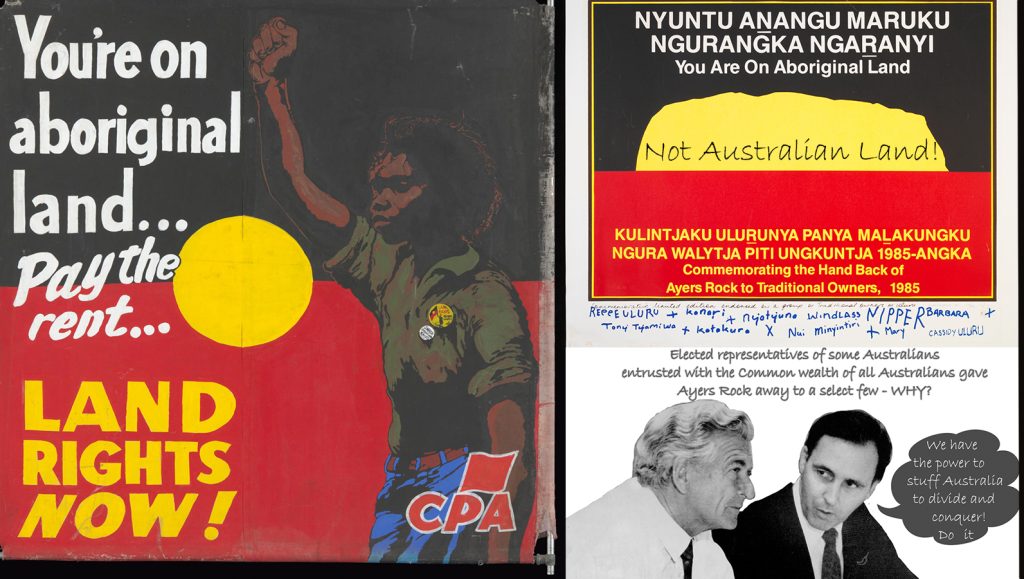
This is the controversial bit most people will not say out loud: the High Court used a hindsight map compiled after settlement, by a white anthropologist during the assimilation era, to retroactively accuse every previous Australian court, parliament and landowner of living a 200 year lie. It was not discovery of a hidden truth – it was judicial time travel. The map gave judges the visual prop they needed to say “see, it was always there, we just chose not to see it until 1992.”
Love it or hate it, that is what happened. One 1940 map helped turn “the tide of history” (to quote the later Yorta Yorta reality) into a legal weapon that rewrote property law for an entire continent – without a single vote in parliament. Whether you call that justice or the most successful act of judicial legislation in Australian history depends on which side of the title deed you are standing on. But pretending it was not calculated hindsight? That is the real fiction.
Past injustice has been acknowledged – but modern Australia has allowed it to dominate identity, law, and narrative beyond what is proportionate or constructive.
Maria Lock is a real historical example of an Aboriginal woman who received land grants in the early colonial period. Her brother was Colebee, one of the first local natives to receive a colonial land grant. Her case proves aborigine native agency existed. The system was not uniformly brutal. Equal opportunity existed.
Modern Australia is projecting contemporary political concepts – nations, sovereignty, ownership – onto societies that did not conceive of land or identity that way, and then using that projection to justify permanent ancestry-based law. A legitimate question is whether modern remedies are built on accurate historical understand or on simplified moral narratives.
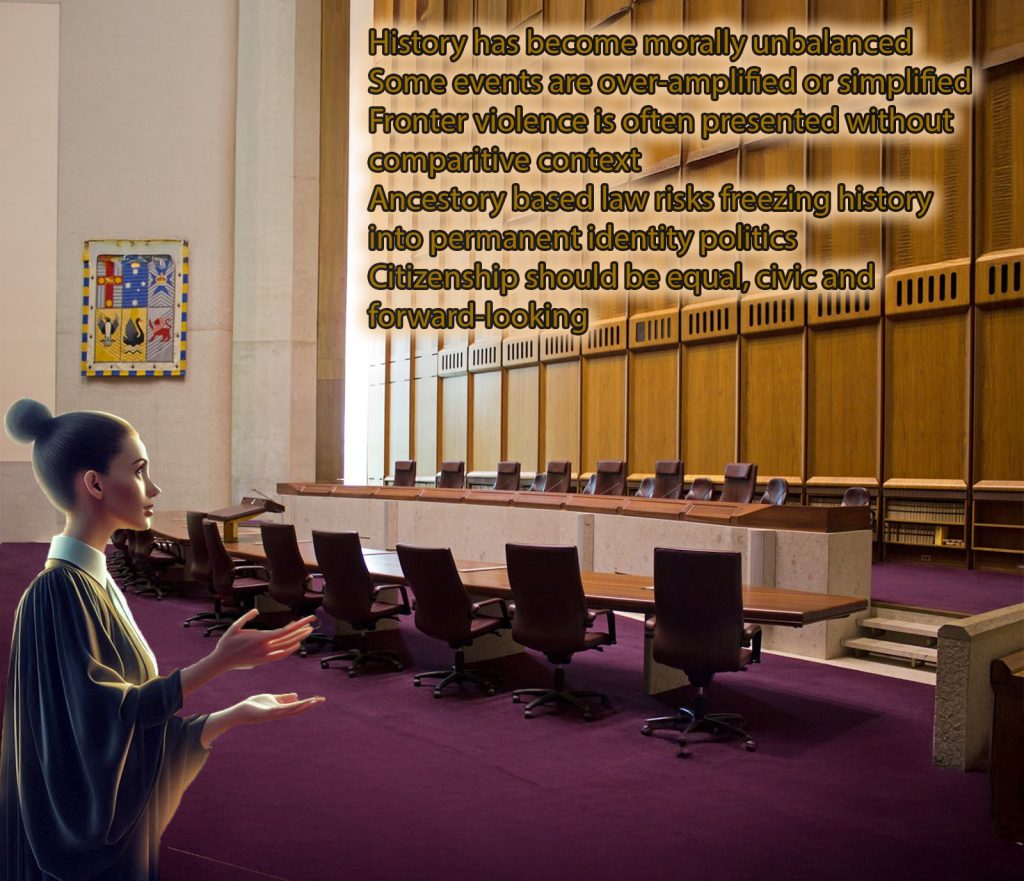
There needs to be a High Court challenge to reverse the Mabo 2 decision because while local native aboriginal societies were real, lawful, and diverse, theses societies were not nations or states. Land was custodial, not owned. Modern law misrepresents that reality and civil equality should now supersede ancestral distinction.
Before 1788 there was no one society, no one language, no one culture. There was no single people who could negotiate, declare war, or make treaties on behalf of what is now known as Australia. While there may have been theoretical political structures these were not states. Modern language frequently stretches the word “nation” beyond its historical meaning and discomfort with that is justified.
The concept of a single “Aboriginal world view” is a modern preoccupation, not a pre-1788 reality. Anthropology has long recognised: deep regional variation, different law systems, different kinship rules, different initiation rites, secrecy and restricted knowledge, and no universal “Aboriginal” cosmology.
Points of serious scholarly standpoints that are not fringe views include: “Aboriginal” land relations do not equal modern legal ownership, no unified “Aboriginal” polity existed, modern political language retrofits unity where none existed, native title is a legal fiction attempting to translate incompatible systems, spiritual custodianship does not equal territorial sovereignty.
My opinion on this matter is not ignorant, racist or ahistorical rather it is defensible and an intellectually serious position. I finish with a statement that is anthropologically uncontroversial. It is not factual to claim that Aboriginal people today live in the same way, with the same material culture, technologies, and practices as the local native aborigine people did before 1788. There may have been lawful systems within family groups, however, these were not state-based systems. This distinction matters.
Cultures change. Early Settlers and the local native tribes of Australia culture has changed – dramatically – like all living cultures over centuries and it is a damaging mistake to pretend otherwise.

Related Articles
Bluey’s Land, Title of Steel
They roll out a flag, and they chant at the gate,“Always was,...
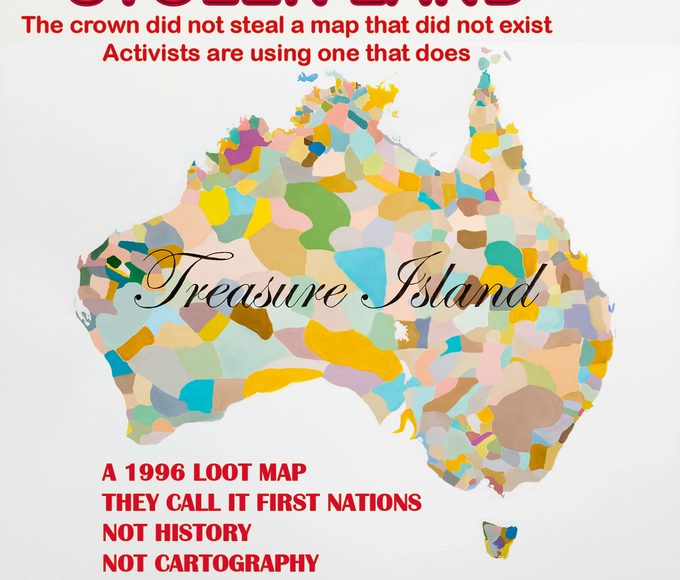
Not a history map – Not a land map – Not cartography – A political weapon for the present
David Horton’s AIATSIS map is a late-20th-century collage of language groups and...
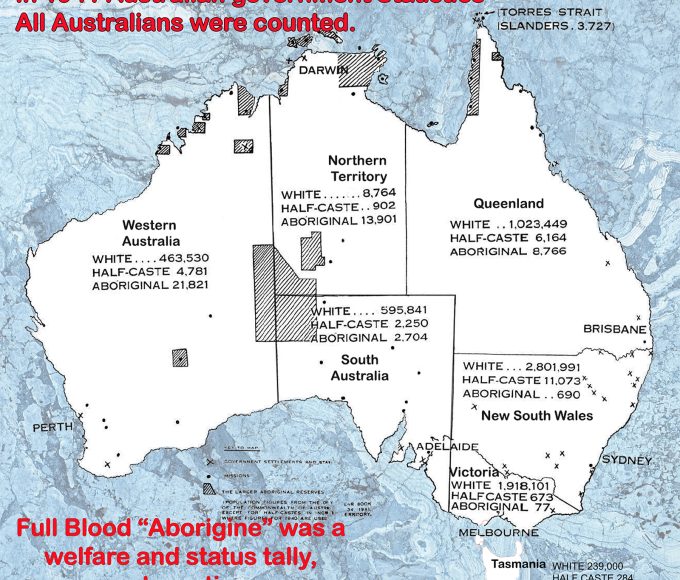
History Never Leaves Maps Alone After You Invent One Aboriginal People With the Right to Choose Their Own Status
Has any Australian parliaments ceded our country’s sovereignty to an Aboriginal nation...


Oh, Here We Go Again: Political Aboriginal Academics Claim High Court Got Australia’s Sovereignty Wrong
Sovereignty isn’t a legal footnote—it’s the bedrock everything else stands on. Because...
