Oh, Here We Go Again: Political Aboriginal Academics Claim High Court Got Australia’s Sovereignty Wrong
 Maria Rigoni11/08/202611 Mins read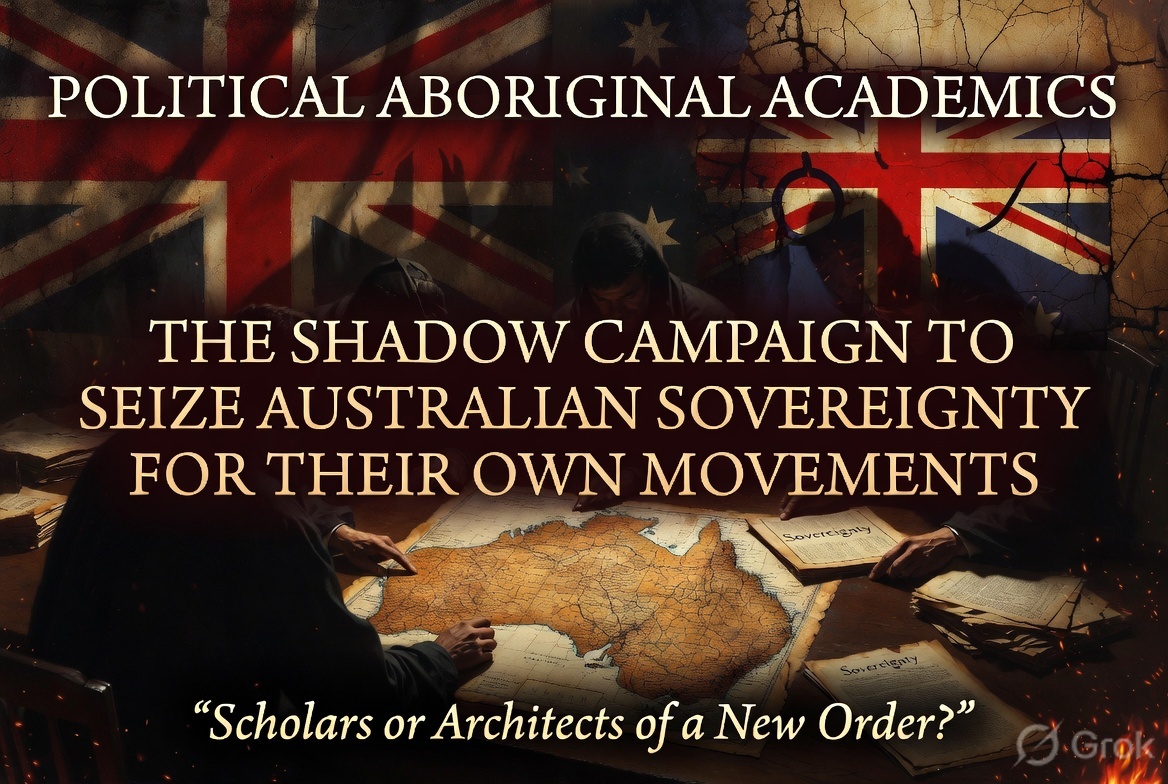
Sovereignty isn’t a legal footnote—it’s the bedrock everything else stands on. Because sovereignty determines the very foundation of legal systems, it cannot be solved by law alone; it requires historical legitimacy, political agreement, and mutual recognition. In law, sovereignty is the supreme, independent authority a state possesses to govern its territory, make and enforce laws, and manage its relations with other nations, free from external interference. It is the foundation of a nation’s legal and political identity.
Yet in Australia today, activists push “shared sovereignty” and native title overreach that treat this foundation as negotiable. Blunt truth: one country cannot have two sovereign powers without cracking apart. Australians built one nation under one law. We won’t surrender it to political games.
Just like how academics coached Eddie Mabo and the High Court of Australia judges quietly went along with the political agenda of the political Aboriginal rights movement, today we have another University of Melbourne academic – Professor Barry Judd, predictably presenting as a Pitjantjatjara Nations descendant – promoting his university’s new legal research. Published in the University of New South Wales Law Journal, this work claims to have uncovered a “legal error” in past High Court rulings and argues there’s now a fresh opportunity to force the Court to abandon its long-standing position that it has no power to rule on questions of political Aboriginal sovereignty. This isn’t neutral legal scholarship. It’s the next step in a long-running political Aboriginal activist campaign.
The deceit is obvious to any reasonable Australian. First they used the courts to hand over property and land rights to this new political Aboriginal movement under the guise of “native title.” Now they’re coming for sovereignty itself, arguing it’s only “reasonable” to share the continent with the so-called First Nations. The same High Court that once refused to touch political sovereignty claims is being softened up and infiltrated, step by step, to take Australia’s sovereignty in a completely different direction – dividing what was always meant to be one indivisible nation.
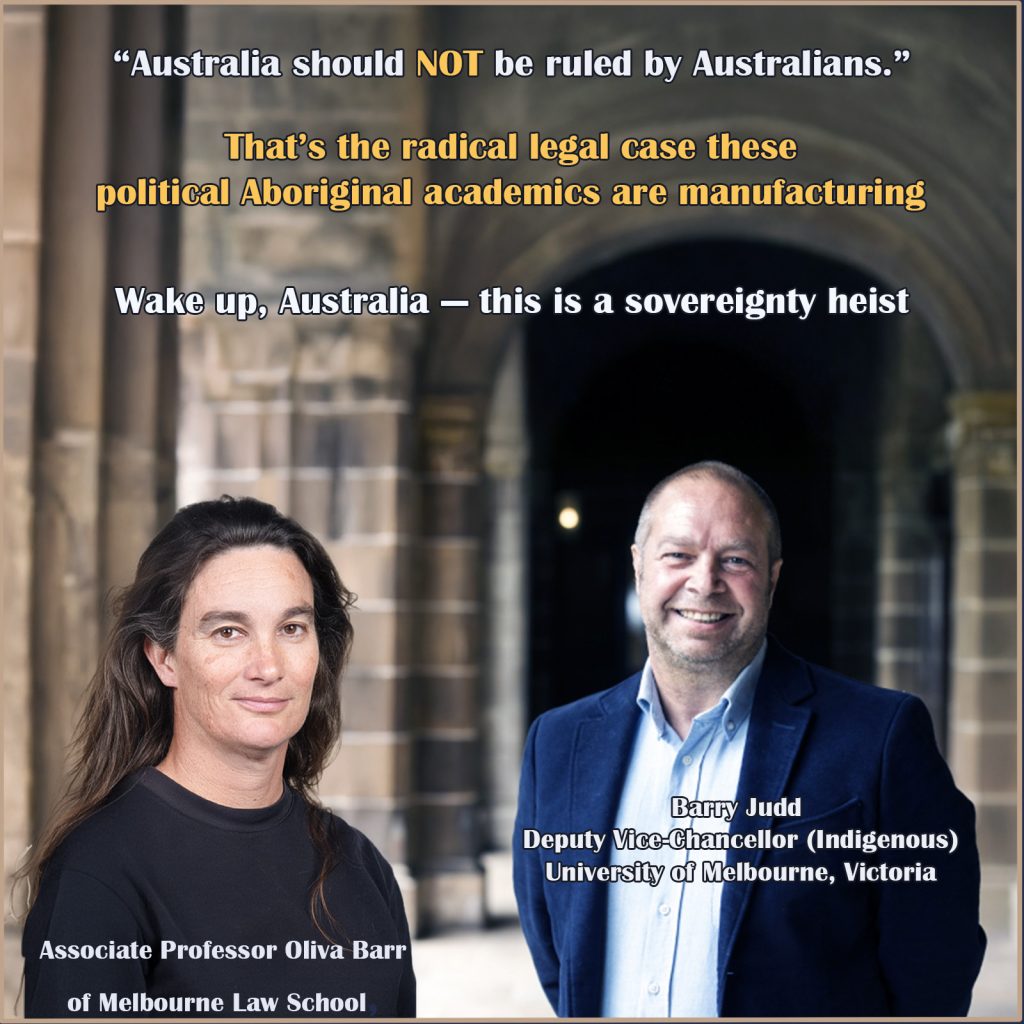
(Note: The actual author of the research paper is Associate Professor Oliva Barr of Melbourne Law School, not Barry Judd himself. Barry Judd, as the university’s Deputy Vice-Chancellor for political Aboriginal matters, has been prominently quoted in media coverage enthusiastically endorsing the paper and linking it to “truth-telling” and the post-Voice referendum context.)
No soldier at Gallipoli, including my grandfather James Gerald Kennedy AIF soldier number 800, believed he was defending “Aboriginal Land”. The Australian soldiers enlisted and fought in the theatre of war, for what Sir Henry Parkes (the Father of Federation) famously proposed a toast to ‘One People, One Destiny’. Australian military members fought for Australia as a united Commonwealth, not as a hodgepodge of local native tribal privileges.
This is not about ancient, continuous local native tribes or honest history. It’s a political agenda dressed up in legal robes, pushed by political Aboriginal activist academics and enabled judges who have already shown they’re willing to bend the Constitution to fit the narrative. While politicians look away, the High Court is being prepared to deliver the final fork in the road: the slow quiet replacement of one sovereign Australia with a divided, unprovable ancestry-based system that ‘no one ever voted for’. In fact the people’ voted NO to it in two referendums one in 1967 and the second in 2023.
The Mabo Parallel:
The Mabo v Queensland (No 2) decision was not a principled evolution of the common law. It was a profound act of judicial legislation that betrayed the foundational assumptions on which Australia was built – a disgusting betrayal of trust in three interlocking ways. It usurped the democratic will of the Australian people, shattered the legitimate expectations of every generation that had relied on settled land law since 1788, and opened the door to a radically based political movement that now claims effective veto power over vast swathes of the continent.
In 1992 the High Court’s Mabo decision supposedly overturned the “old legal fiction” of terra nullius – the idea that Australia was land belonging to no one. Nice story.
In truth, “terra nullius” was a sheep in wolf’s clothing. The phrase itself never existed in the settlement era. It was later dug up and weaponised in the 1970s and 1980s as the perfect slogan to reframe British colonisation as one big legal mistake. This created the ideal doorway for what most people still don’t understand: this was never really about neutral “native title.” It was about establishing a distinct political Aboriginal property title – a new form of land ownership in Australia based on unprovable ancestry, descent and political Aboriginal identity.
This was no accidental history lesson. It was a deliberate political project, heavily shaped by academic activists, historians, and political Aboriginal campaigners who strategically framed the case. The timing lined up perfectly with the international United Nations push on Indigenous rights and human rights pressure. The High Court didn’t simply follow strict legal precedent – it helped deliver this political Aboriginal property title outcome the activists had been working toward for years.
The new claim:
For decades the High Court has said questions of sovereignty (who ultimately holds supreme authority in Australia – the Crown/Parliament or First Nations peoples) are “non-justiciable.” In other words, they are political matters for governments and voters, not something judges can decide.
This position traces back to cases like Coe v Commonwealth (1979), where the Court refused to entertain claims of ongoing Aboriginal sovereignty. Later cases, including the 1993 follow-up to Coe and the landmark Mabo decision, reinforced the same line: Australia’s sovereignty was acquired by the Crown and is not open to legal challenge.
Then why does it feel like the door has been quietly left open?
The High Court’s decision to treat sovereignty as purely political has had an unintended consequence. It turned one of the most fundamental questions about Australia’s identity into a political football – something activists, academics, and certain politicians can kick around endlessly without ever needing to win a proper legal argument.
And into this opening stepped the term “First Nations.”
Let’s be blunt and honest: “First Nations” is not an Australian term rooted in our history or culture. It is an imported phrase, heavily promoted through United Nations indigenous frameworks and global activist networks. It was never the everyday language of the original local native Aborigine or Torres Strait Islander peoples. It is a political construct designed to imply that Australia is made up of multiple separate “nations” rather than one sovereign country.
This is the wolf in sheep’s clothing. It sounds respectful and inclusive on the surface. In reality, it subtly undermines the foundational idea of Australia as a single, united sovereign nation built on British legal and parliamentary traditions. It reframes our country as a collection of peoples who never truly ceded sovereignty – a claim the High Court has repeatedly refused to accept.
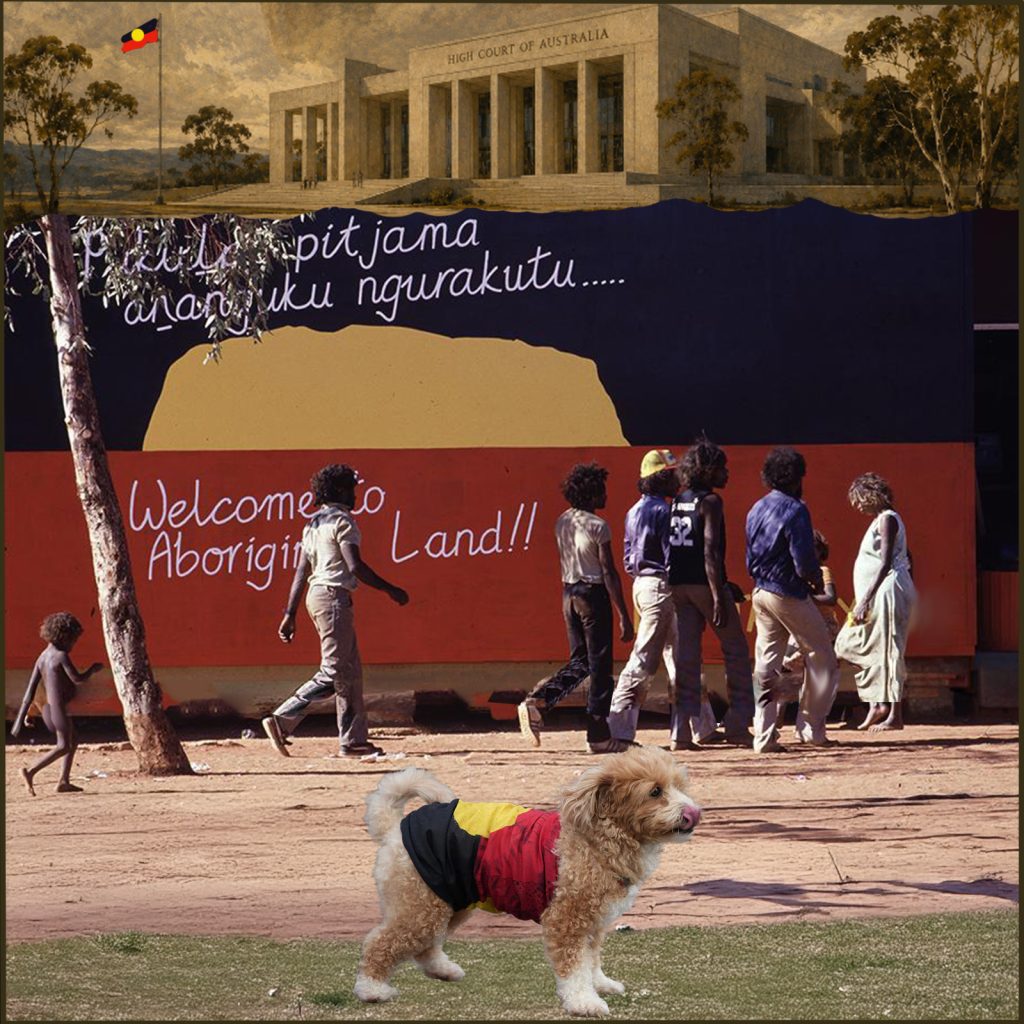
What actually makes Australia Australia?
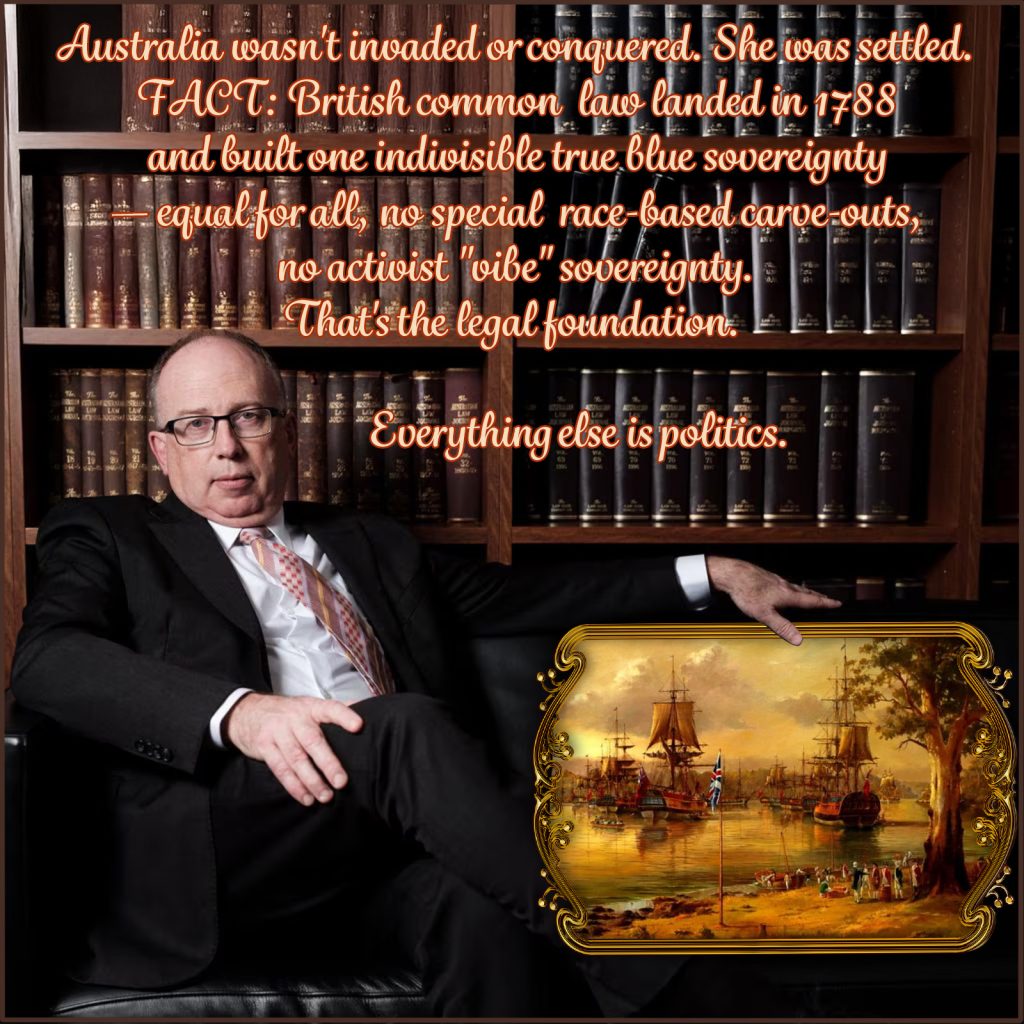
Australia wasn’t conquered or invaded – it was settled. FACT: British Common Law forged a single, undivided sovereignty that belongs to all Australians under the Crown. No dual system. One law, one country!
Until now, Australia works because we have one Constitution, one rule of law, one Parliament, and one sovereign authority. That sovereignty was established through settlement, federation, and the consent of the Australian people over time. Pretending otherwise doesn’t honour anyone – it creates division and endless grievance.
By declaring sovereignty a political issue rather that a settled constitution fact, the High Court effectively invited this ongoing challenge. It allowed “First Nations” rhetoric to flourish in politics, education, and public debate without ever forcing a clear legal reckoning.
Australians deserve straight talk on this. The original local natives had their own societies and history, but they have no connection to modern sovereignty or exclusive land rights over Australia. That idea is a political construct pushed by “Aboriginal” activists. Australia belongs to all Australians – full stop. Sovereignty is being slowly replaced and undermined unchallenged by politicians. It is a weakening of the foundation that holds this nation together under one equal law for all.
The real question now is whether our political leaders and the public have the courage to push back against this imported framing before it does more damage to the idea of one Australia.
Victorian example in real time
“Tip of the spear” is the sharpest, most exposed point of any dangerous charge – the first strike.
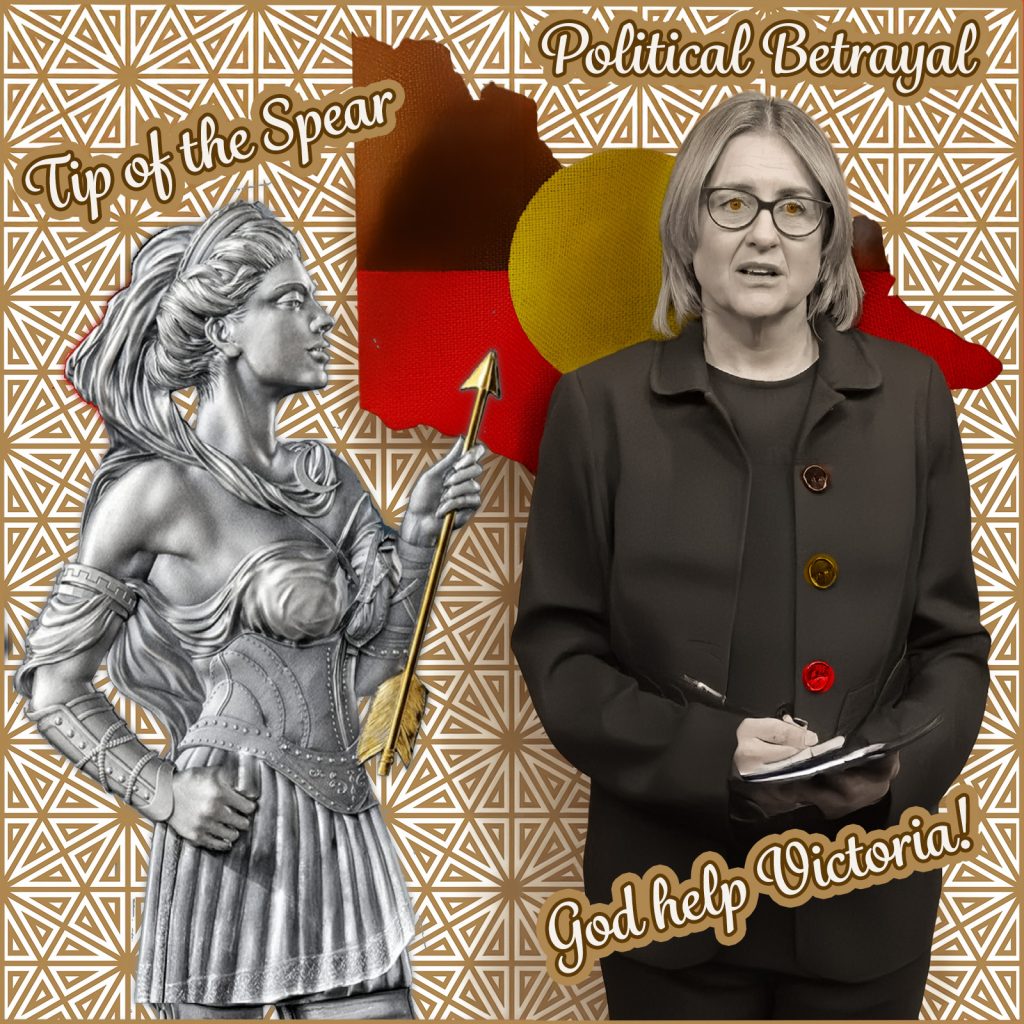
In Victoria, that spear now has a name: Gellung Warl.
Its Gunaikurnai political Aboriginal name literally means “tip of the spear” – and ex-Premier Jacinta Allan and now Ben Carroll’s corrupt Labor government together with the Jess Wilson’s lead Liberal Opposition are the ones hurling the spear straight at ordinary Victorians.
Political betrayal is front and centre. The Jacinta Allan Labor government rammed through Statewide Treaty Act 2025, defied the national No vote in the 2023 Voice referendum, and created this permanent, taxpayer funded, political-false-race-based with real power over laws, policy, truth-telling and accountability. Next look at the Education and Training Reform Amendment Bill 2026 an absolute sovereign betrayal.
This isn’t about some ancient, continuous ‘race’ with unbroken sovereignty. That story is a modern myth that doesn’t survive honest scrutiny. Let’s cut the bullshit. They’re embedding a new parliamentary-level “First Nations” of the First Peoples division for Victoria, driven entirely by a political Aboriginal movement. The claim that this is about some pure, ancient, continuous ‘race’ of local nomadic native tribes is pure fantasy – it doesn’t exist in reality.
This is a direct attack on the foundation of Australia: one sovereign people, one parliament, one set of rules that apples equally to every Australian. Not split by bloodline or activist fairy tales.
Worse still, this push comes hot on the heels of Melbourne Law School academic research arguing that the High Court’s long-standing refusal to even hear political Aboriginals ‘sovereignty never ceded’ claims could now be challenged. In other words, activists are using both the courts and state parliaments to slowly dismantle the single, undivided sovereignty that has held Australia together since federation – and they’re doing it while most politicians look the other way.

So what are the details this new ‘academic’ development
In April 2026, Melbourne Law School academic Olivia Barr published research arguing that the High Court’s long-standing refusal to hear political Aboriginal sovereignty claims rests on shaky precedent – specifically, the 1979 Coe v Commonwealth case (a split decision that, under a 1935 rule, does not bind future courts).
This has revived the “sovereignty never ceded” argument in legal circles, with some calling it potentially “the next Mabo.” It suggests the door might now be open for a properly framed case to test whether First Nations sovereignties survive as a matter of Australian law.
The way Australians talk about the history of the continent has been deliberately mixed up with the history of the nation itself. This confusion has become one of the biggest mistakes in the modern reconciliation project. History ceases to be a discipline and becomes an instrument of activism rather than a record of events.
The formal reconciliation process started in 1991 under the Keating Labor Government with the Council for (political) Aboriginal Reconciliation Act. Since then, the story of the local native family groups has been steadily twisted and reshaped to fit the political Aboriginal movement’s picture. That picture is designed to undermine the idea of a single Australian nation and gradually claim sovereignty over the country.
The simple historical facts are these: When the British arrived, they entered a thinly populated continent inhabited by people living at the most basic level of technology and social organisation. Australia as a nation was not created by those local native mobs. Their culture was not built into Australia’s conventions, laws, religion, or systems. No characteristic of local native tribal law, religion, or social structures were amalgamated into the new country. Yet today these facts are routinely ignored or denied.
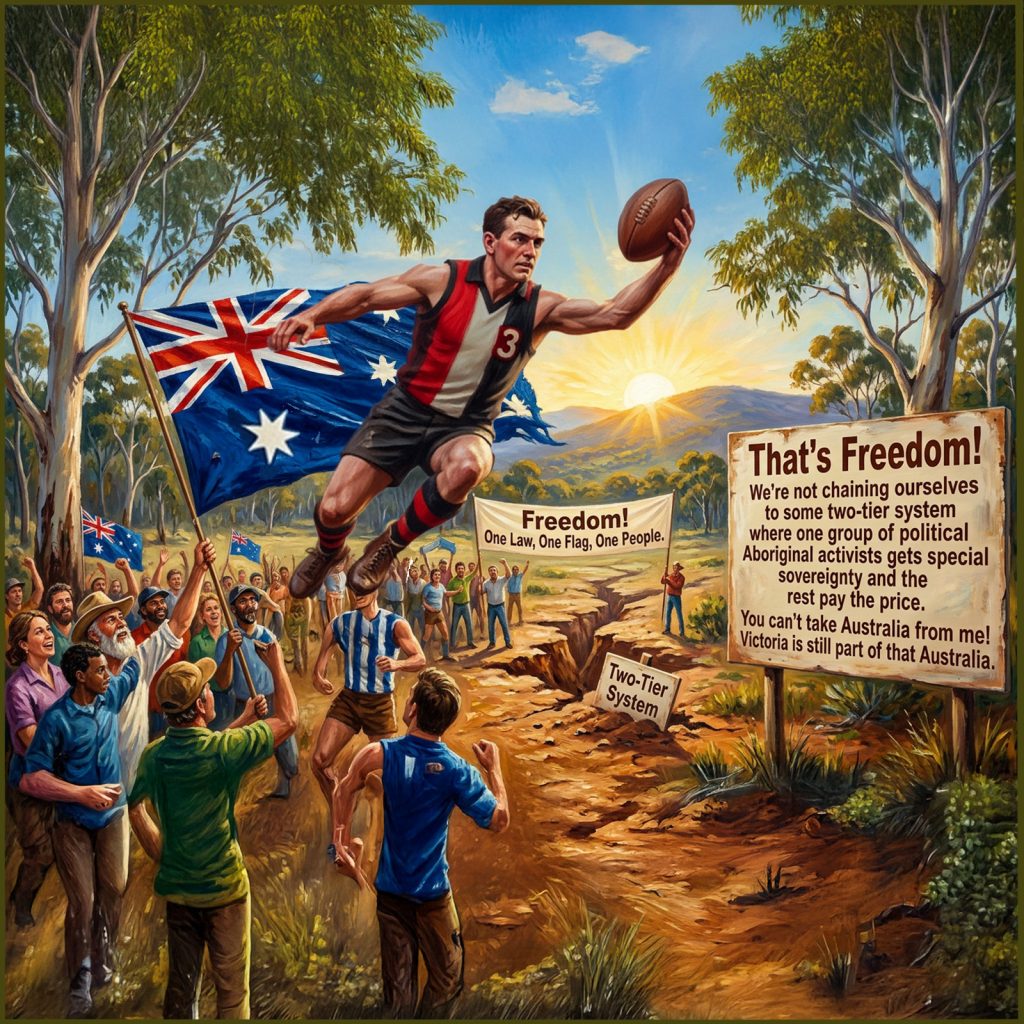
Instead, a carefully curated narrative has taken over. History is no longer treated as fact – it has become a story shaped by dishonesty, lies, exaggeration, and selective memory, all aimed at defaming Australia and making people feel guilty. Political Aboriginal culture is now mythologised and presented as a central part of our “shared national heritage.” Schools, public establishments, and the reconciliation industry constantly push the version of the past, teaching guilt, historical obligation, and prescribed way of seeing events. This version of events serves one clear purpose: to support political Aboriginal claims that treat political Aboriginal groups as separate nations still entitled to control parts of the country. The push for political “Aboriginal sovereignty” relies on this rewritten story.
This rewritten narrative serves a clear political purpose to portray modern Australia as a temporary occupation on political “Aboriginal land” rather than a legitimate sovereign nation. That is why you hear claims that Sydney is “Gadigal land” in a sovereign sense. Melbourne – known as “Naarm” is said to be located on the unceded traditional lands of the Eastern Kulin Nation. In truth, Melbourne and Sydney are modern Australian cities in Victoria and New South Wales that belongs equally to all Australian citizens, regardless of ancestry. Until now, Australia has been one nation under one Constitution, with one citizenship, one legal system, and one democratic order with the never was and hopefully never will be sovereign nations inside it.
The romantic story also pretends the British walked into a peaceful utopia that was only destroyed by European violence. The reality is very different. The continent already had plenty of inter-tribal conflict, payback injury and killings, territorial fights, infanticide, cannibalism, and ritual coercion – just as most societies at that stage of human development did around the world. Brutality did not begin in 1788. What shifted was the arrival of a much more advanced civilisation that eventually imposed a single sovereign command across the whole continent.
Modern Australia was not a gentle evolution of pre-contact local native aborigine society. It was a complete civilisation break. Australia is the direct no-frills heir of the British colonies founded after 1788 and of Western civilisation more broadly.
What the current story-telling conveniently omits is that many local native tribes actively chose to move toward the new colonial society. Albert Namatjira’s parents, David Gulpilil himself and even Bennelong are a typical example of this local native motivation. They came into missions, settlements, stations, and towns looking for food (including flour, tea, sugar), tools, metal implements, tobacco, blankets, medicine, wages and safety. They quickly saw the practical benefits of the British way of life. Many did not have a new way of life forced on them – they willingly entered the colonial economy, took jobs, converted to Christian, learned English, adopted new tools and weapons, and joined the frameworks of the new society. The shift from traditional camps to towns and cities was frequently driven by attraction, adaption, and personal choice, rather than mere forced removal.
The dominant political Aboriginal movement, however, prefers the “noble savage” version of events. It presents the local native family groups as inherently noble, spiritually pure, and morally superior, and uses that image to justify its claims . This romantic dreaming was behind the “homeland” or “outstation” movement that began in the 1970s. The idea was to stop the policy of assimilation and move political Aboriginal people far away from mainstream Australian society back to remote “Country” to protect them from white Australian culture and influence. The urban elite sent the message this would restore dignity and self-esteem. In practice, as David Gulpilil demonstrated, it has largely failed.
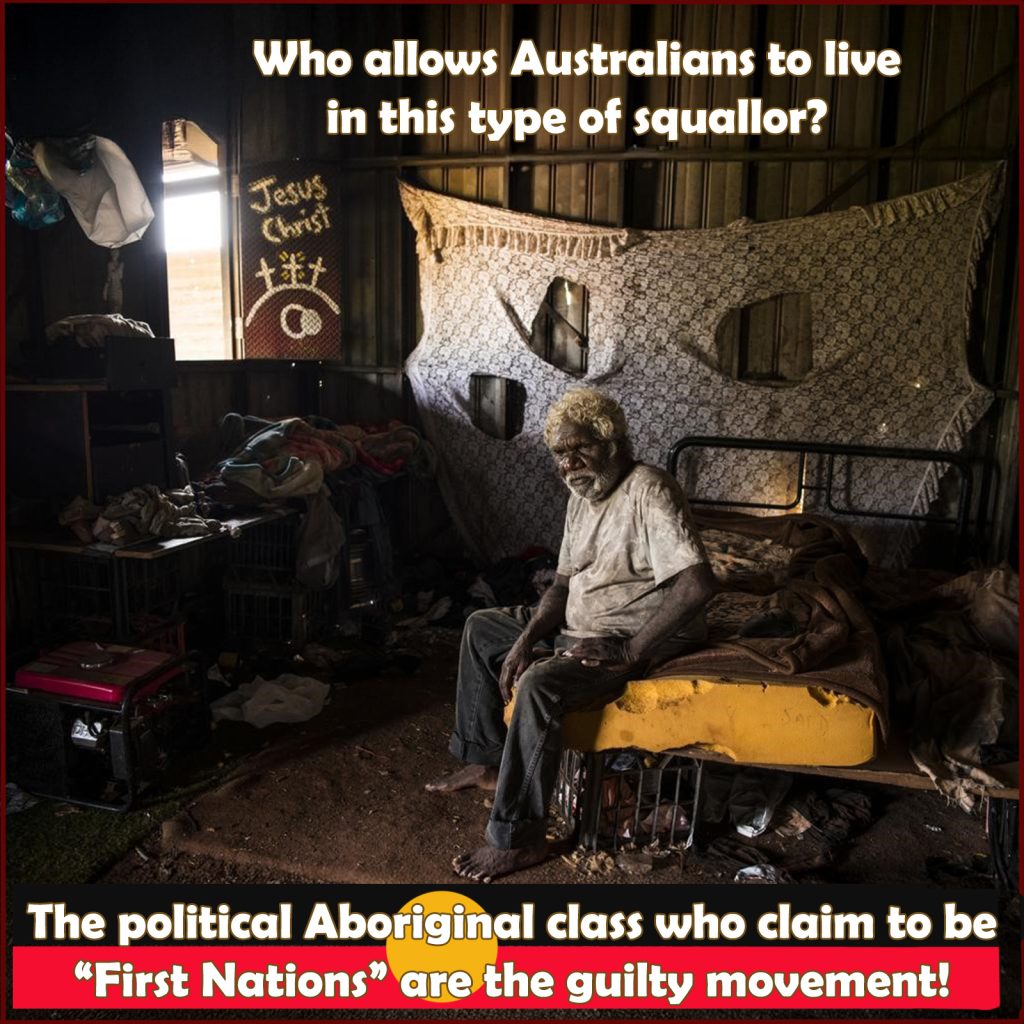
Some remote communities have done well, but many others are now marked by broken houses, wrecked cars, rubbish, alchol abuse with empty beer cans and liquor bottles everywhere. These places were built and are still largely sustained by Australian taxpayers’ money. Most residents live on welfare. There is little real work, little self-reliance, and little sense of purpose and self-worth. The same problems exist in many town camps near regional centres. The romantic vision of returning to a pure traditional life has not delivered the promised results for the majority of people.
In short, the narrative around the original local native family groups has been carefully reshaped and mythologised to serve the political goal of challenging Australia’s sovereignty and turning the country into something it never was – a place of multiple co-existing sovereign nations instead of one clear constitutional democracy. This is why genuine reconciliation feels impossibly far away.
The proposed “sovereignty never ceded” is not based on a legal claim it is based on ‘spiritual’ utter nonsense.
Let’s cut through the fairy dust. The phrase “the land owned them” sounds profound in a musty-eyed political Aboriginal activist speech, but in any real-world context of humans living on this planet, it is complete and utter nonsense. Land is not a sentient being. It has no brain, no will, no consciousness, and no capacity to “own” anything. Dirt, rock, trees, and the water do not enter into contracts, exercise rights, or form relationships. They simply exist. Humans have always understood this at a basic survival level: you work the land, build on it, defend it, or it will swallow you whole through flood, fire, quake, or cyclone. That’s not spirituality. That’s reality.
Native Title: A burden on the Crown that everyday Aussies pay for in delays and lost opportunity. To fix this whole mess there needs to be a High Court challenge to reverse the legal mistake of Mabo v Queensland (No2) which created a new ‘political Aboriginal’ property title and allowed the Keating Labor government to give away Australians’ sovereignty through the creation of the Native Titles Act 1993. Combined with the Racial Discrimination Act 1975 and the Race Power under section 51(xxvi) of the Constitution as empowered by the 1967 referendum, this has opened the door to the treaty process with the fictious First Nations peoples.
Enough is enough. It is time to start a reversal of the sovereign takeover!

Related Articles
Bluey’s Land, Title of Steel
They roll out a flag, and they chant at the gate,“Always was,...
Not a history map – Not a land map – Not cartography – A political weapon for the present
David Horton’s AIATSIS map is a late-20th-century collage of language groups and...
History Never Leaves Maps Alone After You Invent One Aboriginal People With the Right to Choose Their Own Status
Has any Australian parliaments ceded our country’s sovereignty to an Aboriginal nation...


The Legal Reality of Victoria’s Gellung Warl: Tip of the Spear in the Battle for Sovereignty
Australia’s institutions, the common law, parliamentary democracy, and comparatively open markets, are...
