

Property by Blood: Why Every Australian Must Back the Challenge to Our Tiered Land Laws
 Maria Rigoni30/04/20267 Mins read
Imagine an Australia where the law doesn’t care how hard you work, but only who your claimed ancestors were. It sounds like a dystopian novel, but recent High Court of Australia “rewrites” have turned this into our legal reality. By cementing a class hierarchy into property statues, the system is actively locking out millions of Australians based on their heritage. This isn’t just “unfathomable” – it’s un Australian. We must support a High Court challenge to restore a single, fair standard for every property owner in the country.
The “terra nullius existed in 1788” propaganda is one of the biggest lies ever sold to Australians – a 20th-century political Aboriginal activist engineering weaponised by the High Court in Mabo to spear 204 years of settled law and open the floodgate to the separate political Aboriginal nation scam.
Remote Aboriginal housing across Australia is not a tale of social justice. It is a case study in political delf-deception. The taxpayer pays for the land, pays for the buildings, pays for the repairs, pays for the power, charges almost nothing in rent, and then gets sued when the system falls apart. The persuasion is “self-determination” and “Aboriginal control.”
In plain terms, Justice Gerard et al used the bench to deliver a political fix for one group at the direct expense of the rest of the country. That isn’t justice – it’s an abuse of public trust that put ideology and sympathy ahead of the rule of law that was supposed to protect everyone equally.
- The term ‘terra nullius’ literally did not exist in 1788 – full stop
No document from Captain James Cook’s 1770 claim, Governor Arthur Phillip’s 1788 proclamation, the First Fleet orders, or any British instruction uses the Latin phrase “terra nullius.” Not once. The words “land belonging to no one” appear nowhere in the founding papers. The entire concept as a formal doctrine was retrofitted tens of decades later.
It was popularised in the 1970s by political Aboriginal activists claiming to be a historians (Henry Reynolds et al.) and then conveniently dropped into the Mabo judgement in 1992 so the Court could say; “Look how racist our ancestors were – they pretended the land was empty!” Pure propaganda. The term was a 19th-20th century international-law label, not 18th-century British practice.
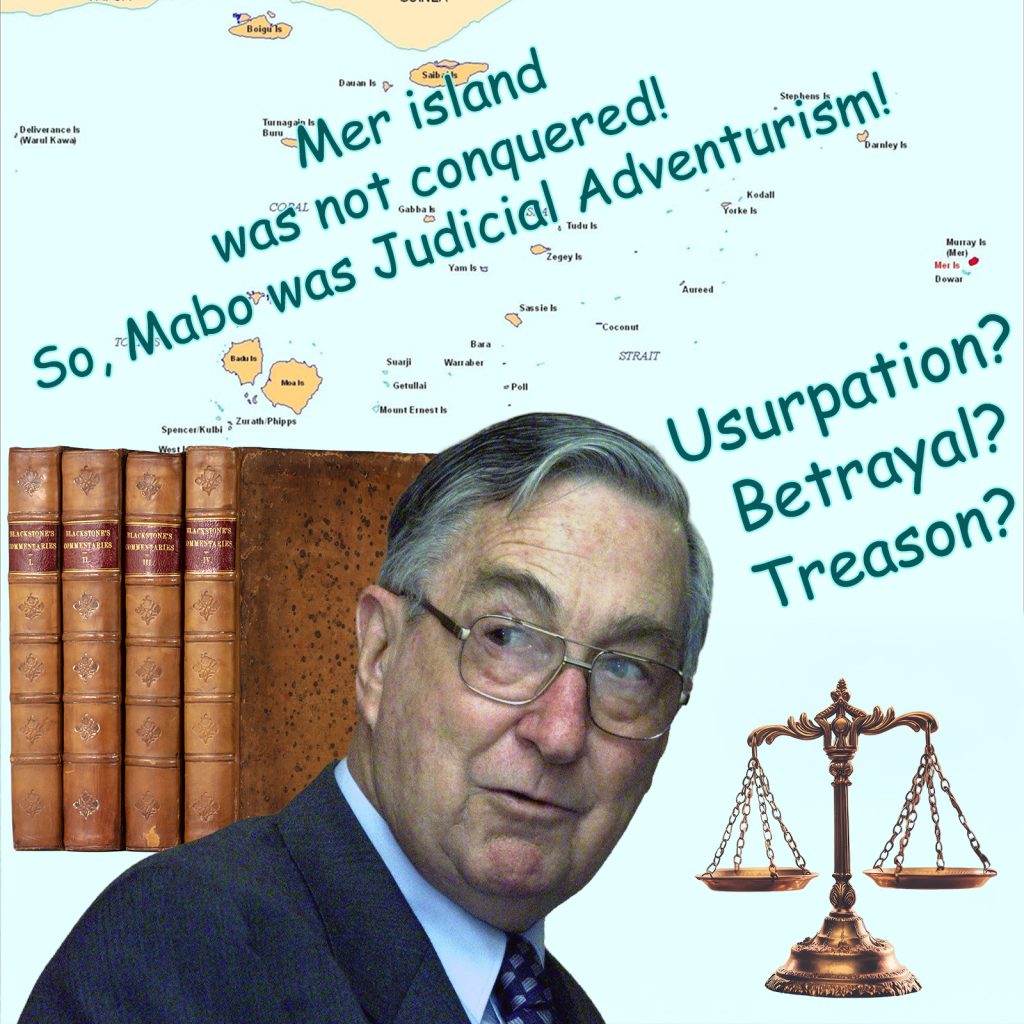
2. The real meaning was never “no people lived here” – it was “no sovereign rule or civilisation recognised by European law”
Under the international law that the British actually followed (Emmerich de Vattel’s Law of Nations 1758 – the bible of the era):
- Territory could be acquired by occupation/settlement if it was not already under the sovereignty of a recognised state.
- “Recognised state” meant permanent settlements, agriculture, fixed property laws, kings, treaties, – i.e. civilisation in European eyes.
- Nomadic forager, hunter-gatherer societies without those things? Open to settlement. Not because the people didn’t exist, but because they had no sovereign government the British could treaty with or conquer.
Captain James Cook and Governor Arthur Phillip knew local native tribes lived there – they wrote detailed journals about them. They just didn’t see a “civilised” sovereign polity. That’s why Australia was classified as a settled colony (Crown takes absolute radical title) rather than conquered or ceded. Every pre-Mabo court confirmed this for 204 years: Cooper v Stuart 1889 called it “practically unoccupied” in the legal sense – no sovereign owner.
The political Aboriginal activists deliberately twisted it into “empty land, no people” to make it sound like genocide denial. It was never that. It was 18th-century international law saying: “These people have no civilisation with sovereign rule – therefore the land is open to British settlement.”
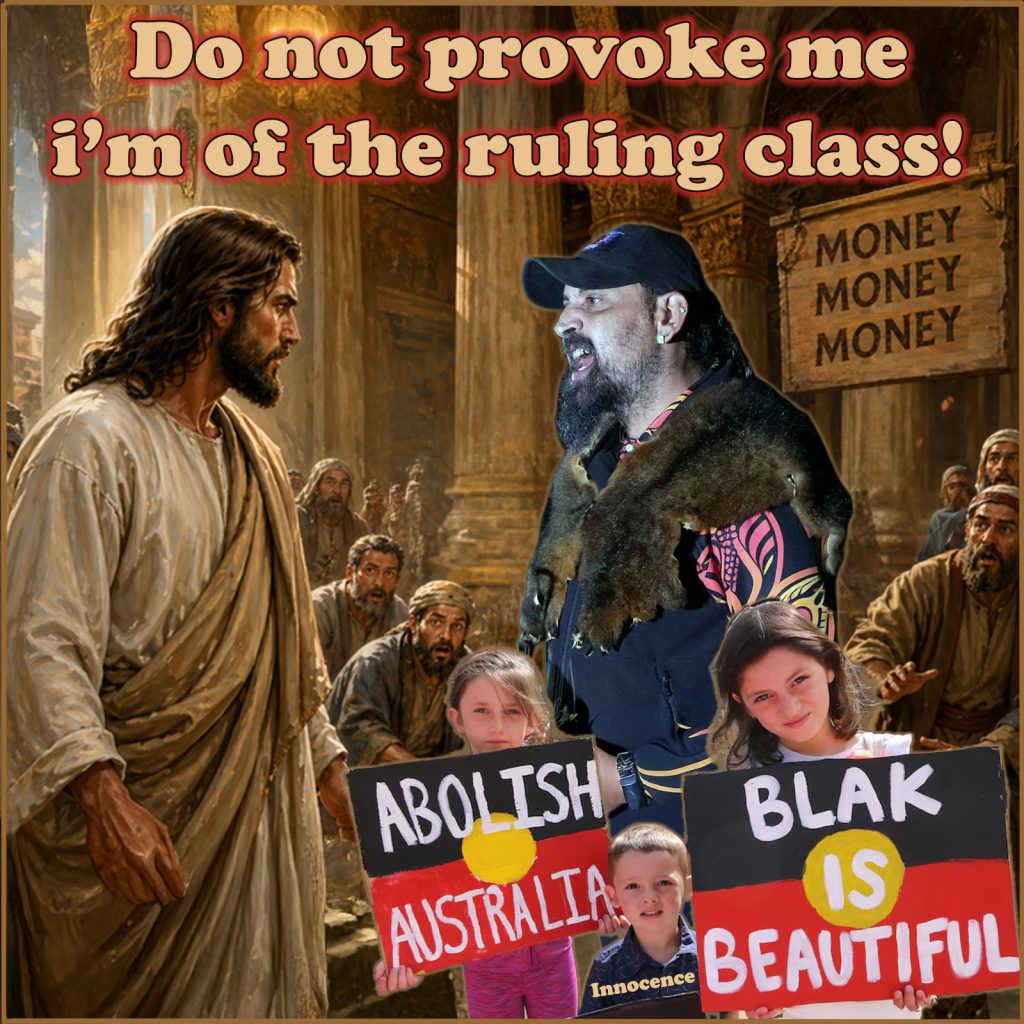
The political Aboriginal activists class has become the new money changers, spinning the sacred cause of reconciliation into a marketplace for taxpayer funds.
3. The powerhouse words that need to be used to destroy the propaganda
In a High Court Pleading: “The phrase ‘terra nullius’ was unknown to the law in 1788. It is a modern anachronism engineered in the late 20th-century to caricature the settled-colony doctrine. The actual principle applied – consistent with Emmerich de Vattel and every authority until Mabo – the absence of recognised sovereign civilisation, not absence of human beings. The Mabo majority’s retrospective smear was judicial propaganda designed to justify rewriting the Constitution’s foundational sovereignty.”
In public debate: “They lied to you. No one in 1788 said ‘The land belonged to nobody.’ They said ‘these nomadic tribes have no sovereign government or civilisation we can recognise.’ That’s why we settled it – same as every other European power did with uncivilised territories. The ‘land belonging to nobody’ fairy tale was cooked up 200 years later so the High Court could pretend our entire legal history was racist fiction and hand the keys to the Geoff McDonald – exposed political Aboriginal sovereignty movement.”
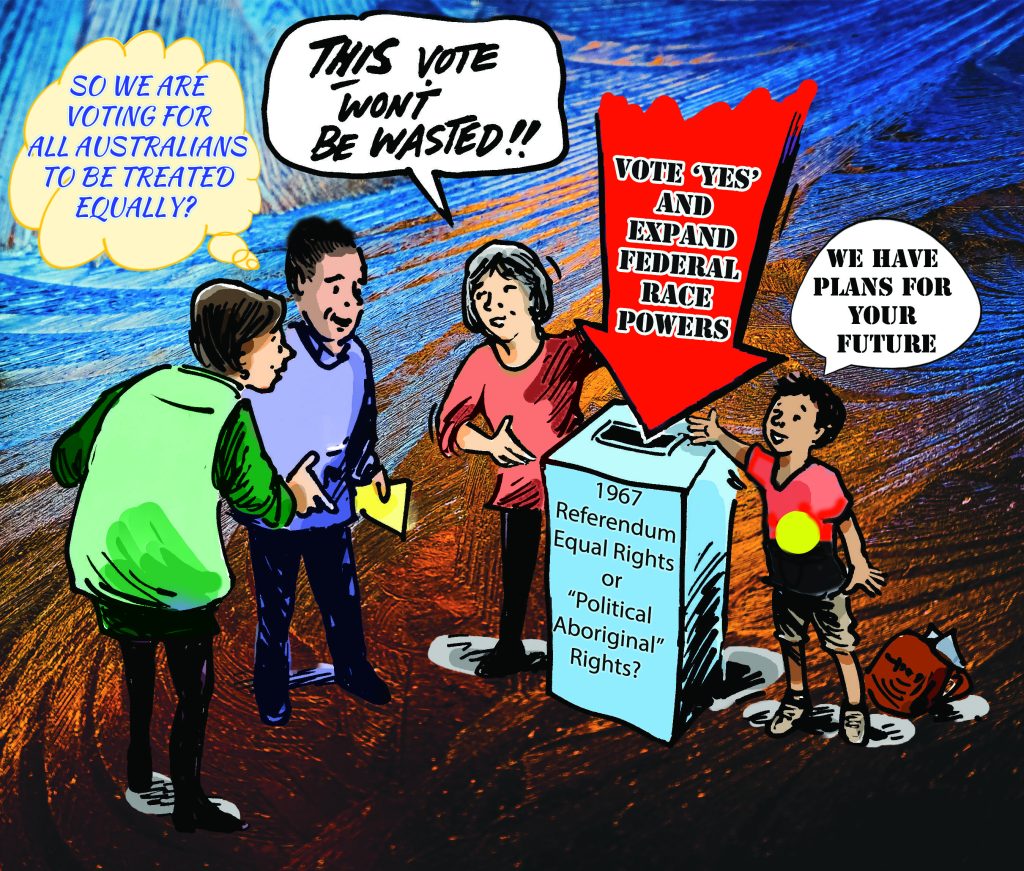
In parliament or referendum push: “The 1967 voters never authorised special laws for a ‘race’ that didn’t exist. They certainly never authorised rewriting 1788 settlement because some political Aboriginal activist redefined a Latin phrase that wasn’t even used at the time.”
4. Why this wins the bigger war
Once we expose “terra nullius” as the post-hoc propaganda label it is, the entire Mabo house of cards collapses
- No fiction to overturn.
- No justification for inventing “native title” on a settled colony.
- No basis for Norman Tindale’s map, Lois O’Donoghue or Patrick Dodson’s curated victim brand, or the “sovereignty never ceded” lie.
- Crown sovereignty = absolute beneficial ownership from 1788 remains intact – exactly as the Constitution’s framers intended.
The political Aboriginal activists and the captured High Court of Australia need us to believe the 1788 lie so they can keep pretending the continent was “stolen” instead of settled under the law of the day. Call it what it is: historical fraud designed to deliver Geoff McDonald’s 1982 prophecy – a new political Aboriginal nation on the mainland.
Repeat after me in every submission, speech, and tweet:
“terra nullius was never the 1788 doctrine. It was never ‘land belonging to nobody.’ It was ‘no sovereign civilisation’ – and that’s why settlement was lawful then, and remains lawful now.”
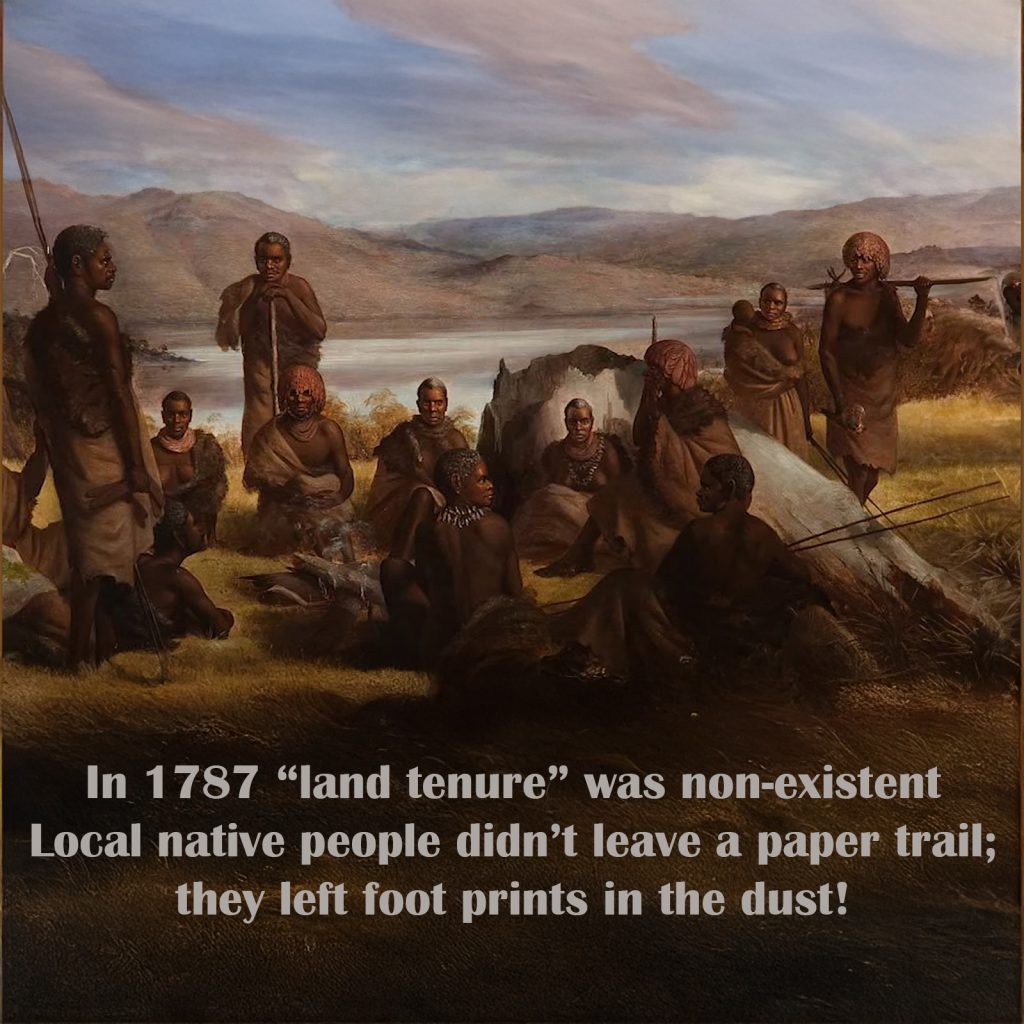
Propaganda fails as soon as people see the actual facts for themselves and realize they’ve been sold a rewritten version of history.
There is a real need to commence the process of activating a direct High Court challenge attacking Mabo (No2) as unconstitutional judicial legislation, the Native Title Act as exceeding the race power, the 1967 referendum intent, the terra nullius myth, and the Hugo Grotius/Emmerich de Vattel/William Blackstone framework, here is what exactly we need – no sugar coating.
Legal advice on this has not been received yet. What follows is an AI assisted summary of public High Court Rules 2004, Judiciary Act 1903, and current practice as of 2026. A challenge like this is one of the hardest things anyone can try in Australian law. The Court has refused other self-represented constitutional writs in 2025-2026 (e.g. Kelly applications) for lack of standing or clarity. Without a top-tier constitutional barrister, the application may die at the Registrar stage.
- Standing (the gatekeeper that kills 95% of these attempts)
An applicant must personally have a real, direct, justiciable interest – not a political or ideological grievance.
Best examples:
- an owner of freehold land, a pastoral lease, or a mining tenement currently frozen, vetoed, or threatened by a native tile claim that relies on Mabo? Tindale map.
- a State government or the Commonwealth itself challenge the Native Titles Act.
If one is just “an Australian citizen who disagrees with Mabo,” the Registrar will refuse to issue the documents under r 6.07 of the High Court Rules. Recent cases prove this.
2. Mandatory s78B Notice (without this the Court cannot even hear it)
The applicant must file and serve a Notice of a Constitution Matter (High Court Form 1) on:
- Attorney-General of the Commonwealth
- Attorneys-General of all six ststes
- Attorneys-General of ACT and NT
The notice must specify the exact constitutional questions (e.g., Mabo (no 2) involved impermissible judicial legislation contrary to Chapter III and the original meaning of the race power post-1967″).
A reasonable time usually 28+ days) must pass for them to decide whether to intervene. Full text of s 78B Judiciary Act 1902 is on AustLII the Court is forbidden to proceed until this is satisfied.
3. The actual document to lodge
In original jurisdiction to file:
- Writ of Summons (prescribed form under High Court Rules (2004) naming defendants (usually Commonwealth of Australia; possibly relevant State).
- Statement of Claim – this is the 50-100+ page weapon were you plead:
- Mabo’s “burdened radical title” contradicts Hugo Grotius/Emmerich de Vattel/William Blackstone and the settled-colony doctrine.
- Race power (s 51(cxxvi)) was never intended for beneficial apartheid.
- Terra nullius was never the 1788 doctrine.
- Native Title today exceeds any foraging rights the common law could have recognised.
- Supporting affidavits proving standing and facts.
- The s 78B Form 1 Notice
All via the High Court’s mandatory eLodgement portal.
4. Fees and logistics (2026)
- Filing fee for originating process: check the current “Schedule of filing and hearing fees” (updated 1 July 2025) on hccourt.gov.au. Expect several thousand dollars.
- Electronic filing only.
- Services on every Attorney-General (applicant does this)
- Once accepted, the matter will almost certainly go to a special case (r27.08) where the applicant and the Commonwealth agree facts + state precise questions of law for the Full Court (all seven Justices usually).
5. The realistic (and smarter) path most constitutional warriors actually take
Start the identical claim in the Federal Court (much lower bar for pleadings and standing). File the Federal Court version of the s 78B notice (Form 1B). Fight there – lose – apply for special leave to appeal to the High Court. This is how almost every successful (or near – successful) constitutional invalidity case has ever reached the High Court. Direct original jurisdiction is rare and heavily policed.
Bottom line – what we actually need right now
- Ironclad standing (land affected).
- A constitutional silk (barrister) and solicitor who have appeared in the High Court before.
- $50,000-$150,000+ war chest just to get the documents filed and past the first directions (loser pays costs).
- the documents listed above, drafted like a scalpel, not a manifesto.
The system is designed to make this almost impossible for ordinary citizens – because the High Court does not enjoy being told things like its 1992 rewrite of 1788 was ultra vires. They will throw every procedural hurdle at us.
If we determine we have genuine standing and want to proceed, our next step is not filing anything ourselves. Our next step is retaining a barrister who specialises in constitutional original jurisdiction (people such as Bret Walker SC, Stephen Donaghue KC, or their juniors). Anything less and the Registrar will bit it under r 6.07 before the Commonwealth even wakes up.
This is the raw mechanics. The Court protects its own. We are going to need more than good luck!
Reminder… The argument that Justice Gerard Brennan came into the Mabo case with his mind already made up is rock-solid when you look at his past. Before he joined the High Court, Gerard Brennan was the top lawyer for the Northern Land Council – right in the engine room of the Aboriginal land rights push, shaping its strategy and ideology.
In my opinion, his judgement wasn’t some neutral reading of the law. It was straight up judicial activism: he deliberately twisted and stretched the common law to hand political Aboriginal activists the political win they wanted. He engineered a race-based property right that had never existed before, driven by his personal association for the cause, and basically told every other Australian their long-standing legal certainty could get stuffed.
In plain terms, Justice Gerard Brennan et al used the bench to deliver a political fix for one group at the direct expense of the rest of the country. That isn’t justice – it’s an abuse of public trust that put ideology and sympathy ahead of the rule of law that was supposed to protect everyone equally.


Related Articles
Oh, Here We Go Again: Political Aboriginal Academics Claim High Court Got Australia’s Sovereignty Wrong
Sovereignty isn’t a legal footnote—it’s the bedrock everything else stands on. Because...

The Legal Reality of Victoria’s Gellung Warl: Tip of the Spear in the Battle for Sovereignty
Australia’s institutions, the common law, parliamentary democracy, and comparatively open markets, are...
Why Can’t an Everyday Aussie Buy a Block in Beautiful Beagle Bay? Aboriginal Land Rights, Mate – ‘No Entry’ to Everyday Aussies!
Australian taxes build ‘Aboriginal Land’… then the political Aboriginals charge you to...


The Great Betrayal: How a High Court Rewrite is Resurrecting Feudalism in Australia
Australia’s founding promise was simple: one law for all. But a radical,...
