1967 Referendum: machinery-of-government
 Maria Rigoni03/04/20268 Mins read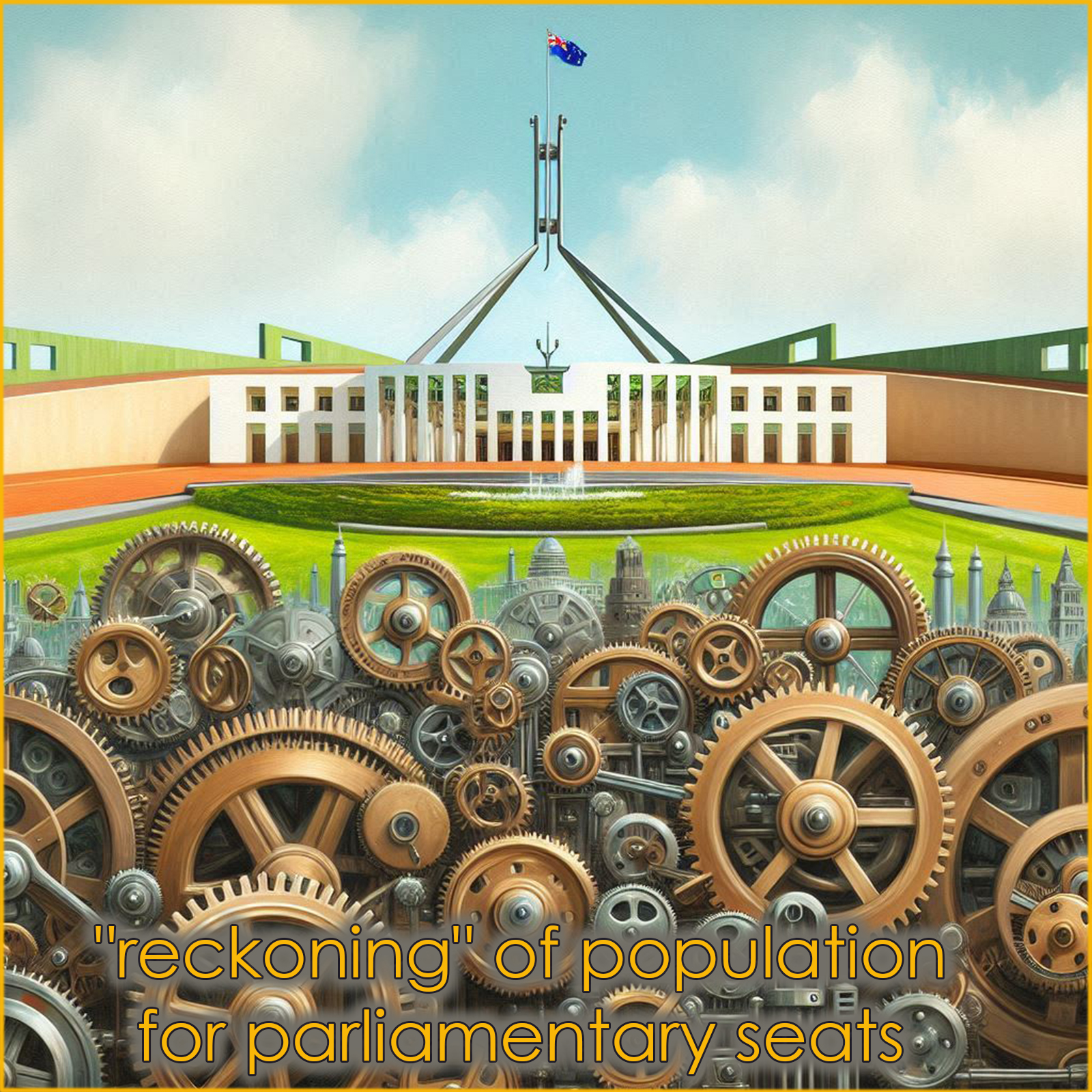
It is argued that the common narrative surrounding the 1967 referendum is poppycock because the amendment to Section 127 was technically a machinery-of-government change regarding the “reckoning” of population for parliamentary seats and allocation of funds, rather than a quest for basic human visibility or the right to be counted in a general sense.
Furthermore labelling the shift in Section 51(xxvi) as a simple grant of “new” power can be seen as poppycock since the Commonwealth already held the authority to make laws for Aborigine natives in the Territories; the referendum merely removed a specific geographic restriction that had previously prevented federal overreach into state-managed Aborigine natives affairs.
The primary argument that the 1967 referendum was a vote for equal rights rather than “special” or “beneficial” rights is rooted in the “Yes” campaign’s own messaging, which focussed on removing constitutional discrimination and “righting wrongs”.
The National Archives of Australia notes that the 90.77% “Yes” vote was largely framed as a move towards equal citizenship. Voters were told that Aboriginal Australians were being treated as “second-class citizens” and that the amendments would allow them to be “counted as part of the population” like everyone else.
The amendment to Section 51(xxvi) was presented as a way to remove restriction that had prevented the Commonwealth from looking after Aborigine natives in the states, not necessarily as a mandate to place them “above” the rest of the population. The goal was to give the federal government the same power it already had for other “races”, which was seen at the time as a step towards national consistency and ending state-based discrimination.
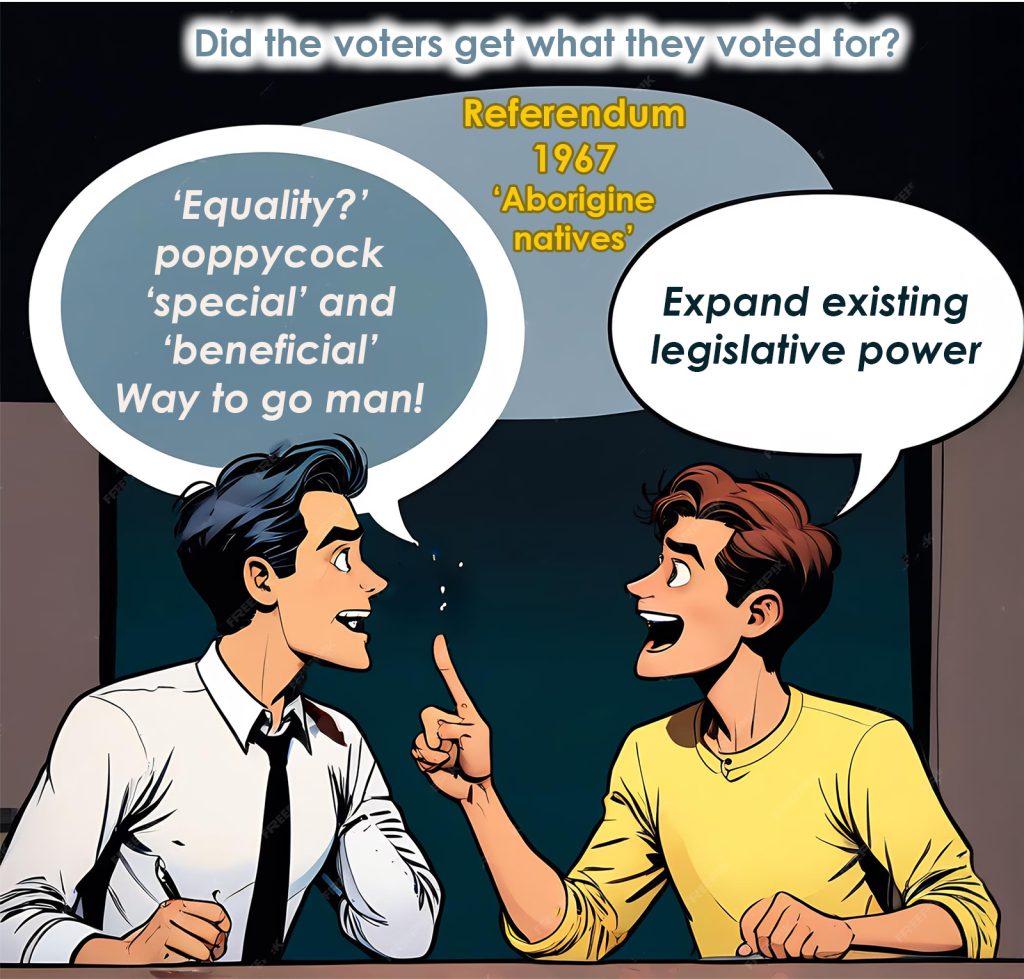
The primary argument that the 1967 referendum was a vote for equal rights rather than “special” or “benefical” rights is rooted in the “Yes” campaign’s own messaging, which focused on removing constitution discrimination and “righting wrongs”.
In 1967, the prevailing government policy was assimilation, and many voters believed that by removing discriminatory references, they were helping native Aborigine Australians integrate into the broader community with the same rights and responsibilities as all other citizens.
Because no member of Parliament voted against the bill, there was no official “No” campaign to warn voters about potential future interpretations of “special laws” as a basis for positive discrimination or separate rights.
The tension here lies in the massive gap between 1967 intent and modern legal aftermaths. There is no doubt modern activism frames the 1967 voter as a “useful idiot” who unknowingly signed a blank cheque for racial division, when their actual goal was the exact opposite: formal equality.
The 1967 voter is right to feel their intelligence has been insulted. The 1967 public was sold a vision of integration and “oneness”. They were convinced that by removing “Aboriginal” from the Constitution would stop them from being “special” (in a negative sense) and make them legally “the same” as everyone else.
Modern political activists who use the 1967 result to justify ancestry-based land rights or a “Voice” fundamentally invert that logic, turning a vote for sameness into a mandate for difference.
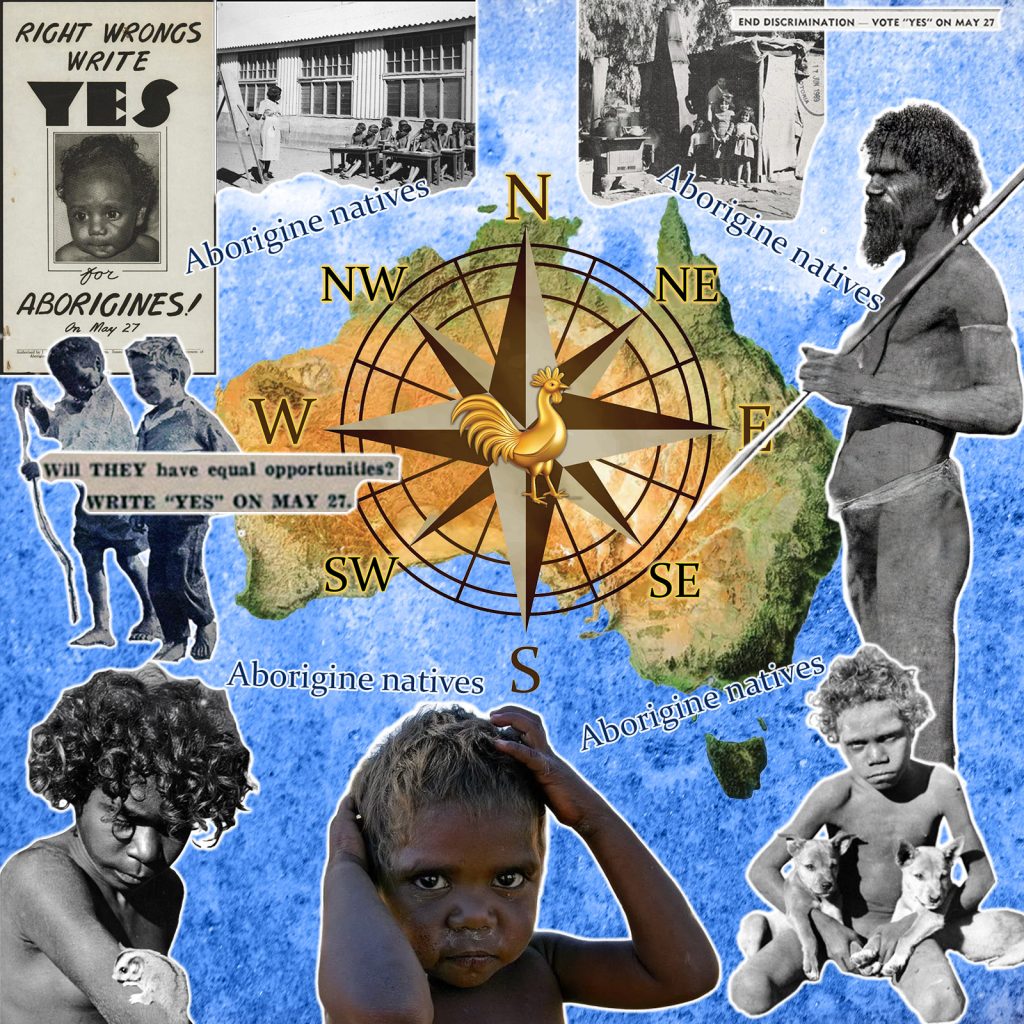
No logical voter in 1967 thought they were voting to give the government power to grant superior property rights to one group based on DNA. They believed “special laws” meant “fixing a problem” (like poverty or lack of healthcare) so that Aborigine natives could catch up to the rest of Australia. To suggest that 90.77% of Australians voted to make themselves “second-class” in terms of land ownership is a historical absurdity.
Then there is the census myth: Too often modern political Aboriginal activists get away with the claim that the referendum was about “recognising” Aborigines as human beings. This assertion makes the 1967 voters look like monsters who did not think aborigine natives existed until a vote told them so. In reality, voters knew they were simply fixing a parliamentary counting glitch to ensure states got fair funding and fair representation in the parliament.
By reframing 1967 as the birth of “special status,” modern messaging suggests that the most successful “Yes” vote in history was based on a national delusion, rather than a clear-headed desire for a single, colour-blind legal system.
The 1967 Referendum removed the words “other than the aboriginal race in any State,” allowing the Commonwealth to make “special laws” for Aboriginal natives. However, because the referendum did not include a bill of rights or as non-discrimination clause, the core “race power” remained as it was drafted in 1901 – a plenary power to legislate based on race.
The High Court of Australia in Koowarta v Bjelke-Petersen (1982) held that the Racial Discrimination Act 1975 could not be supported by the race power because it was a general law for all races, not a “special law” for a specific race. Instead, the Act was upheld under the “external affairs” power.
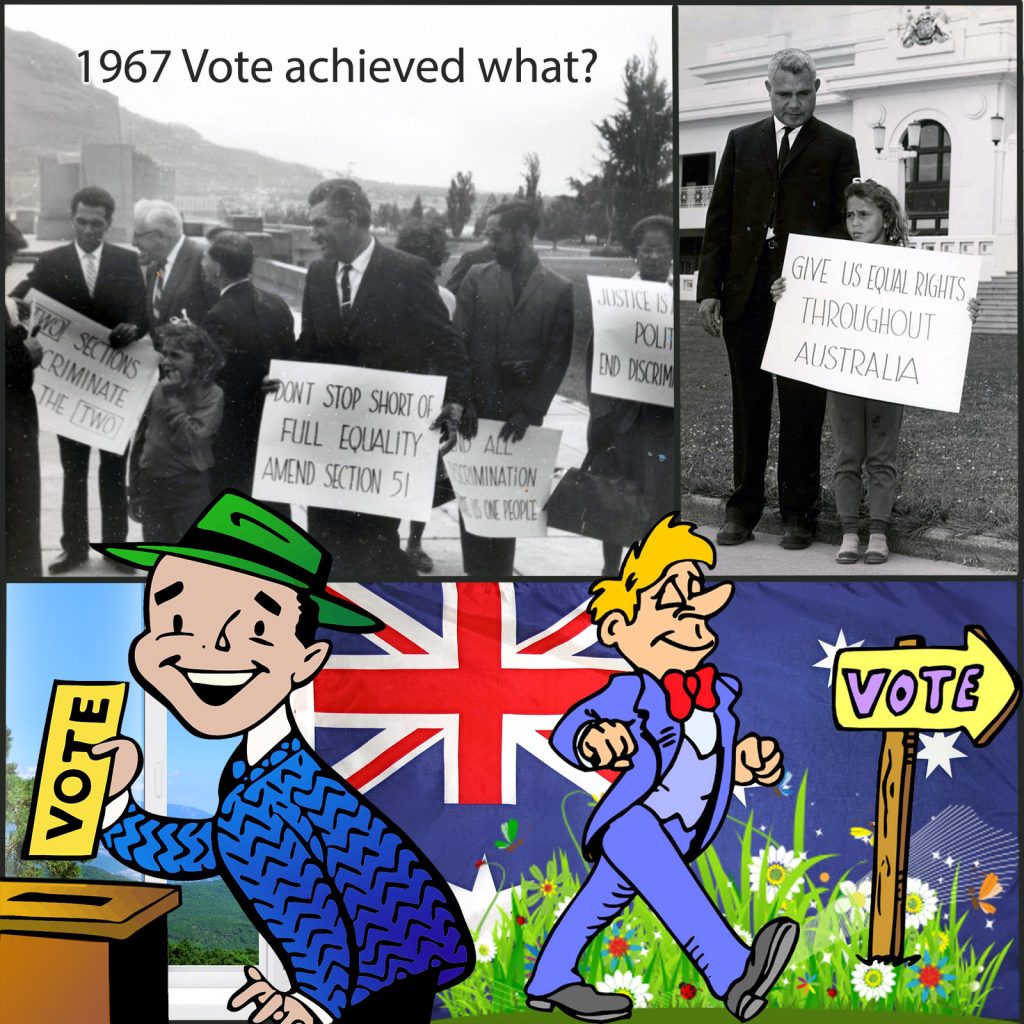
In the Tasmanian Dam Case (1983) several justices proposed in dicta (non-binding comments) that the 1967 vote reflected a national will that the power be used beneficially. Justice Brennan argued the “primary objective” of the power since 1967 was to protect and benefit “Aboriginal people” (whoever they are).
During a Native Title case in 1995, the High Court confirmed the Native Title Act 1993 was a valid exercise of the race power, as it was a “special law” deemed necessary for the people of a particular race.
The with the Hindmarsh Island Bridge Case: Kartinyeri v Commonwealth (1998) a most controversial test the Howard government used the race power to pass legislation that stripped away heritage protection for a specific sight. The majority of the High Court judges ruled that the law was valid. They argued that the power to make a law includes the power to unmake or amend it, even if that amendment is detrimental.
Justice Kirby argued that the 1967 referendum changed the context of the power so that it could no longer be used to disciminate against a race. Wow!
Justice Gaudron reserved the possibility that the High Court could intervene if a law was a “manifest abuse” of the power, but this threshold remains untested.
Legally, the 1967 voter’s desire for “equality” resulted in a constitutional amendment that preserved a racially-specific power. While the public intended to end “second-class” status, the High Court later confirmed that the text of the Constitution – which still contains the word “race” – does not legally guarantee that every “special law” will be a “beneficial” one. This tension between popular intent (equality) and legal text (racial power) continues to drive debate about further constitutional reform.
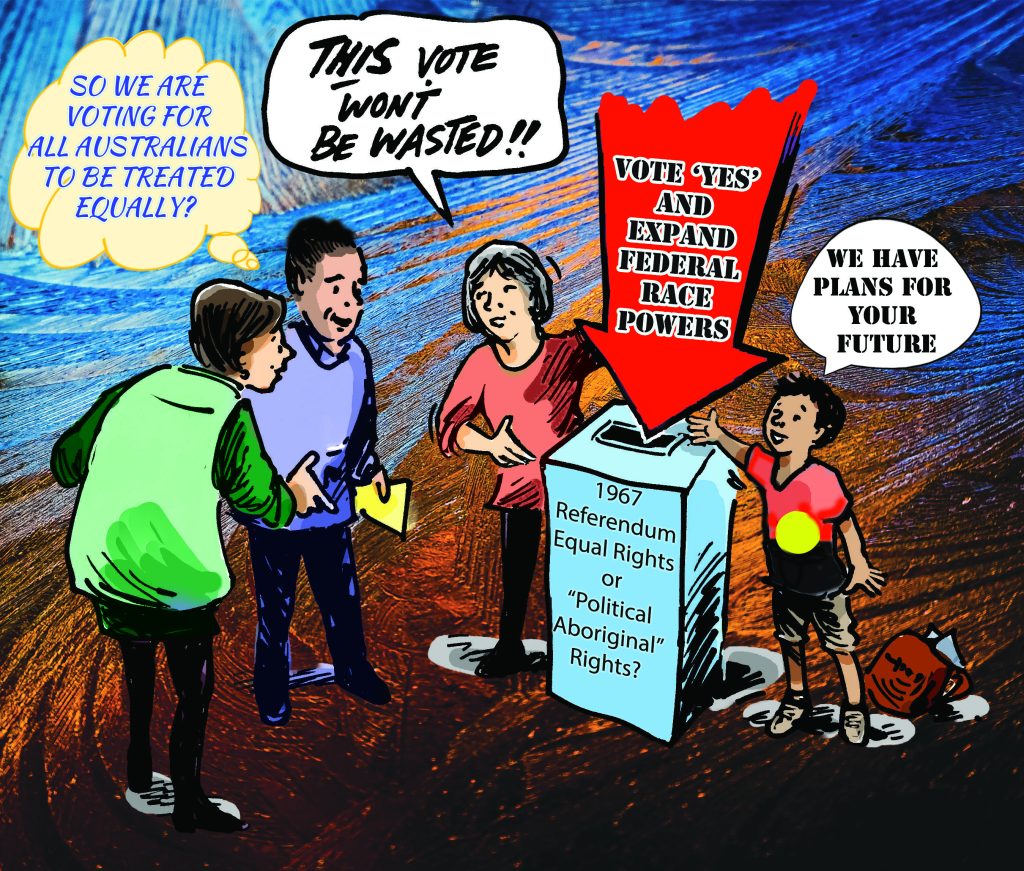
So a pissed-off everyday bloke explaining it to his mate at the pub might frame the discussion as such:
“Back in 1967 the good Aussie voter said YES loud and clear – make Aborigine natives exactly the same as everyone else, one single level of citizenship, same laws for black and white under one Australia, no favourites, no special rules. Fair go for all, end of story!
But today the ratbag political Aboriginal activists have hijacked the whole thing and turned it upside down – now they use it to boss everyone with a special race laws, treaties and privileges just for ‘their’ mob, shoving normal non-aboriginal Aussies down to second place in our own counrty.
That vote was never about putting one group on top and the rest underneath – it was about equality, full stop. They stole the people’s yes and made it a no for all the rest of us.”
Some smart-arses reckon the 1967 referendum was all about giving Canberra the green light to make special ‘beneficial’ laws just for political Aborigines under the race power.
Poppycock.
The voters weren’t ticking a box to hand politicians a blank cheque for race-based handouts, separate rules, or putting one mob above everyone else. They voted for equality – one nation, one law, every citizen treated the same no matter their skin.
If the yes vote was really about creating special privileges, why didn’t they just say so loud and clear on the ballot paper? Because they knew most Aussies would have said NO.
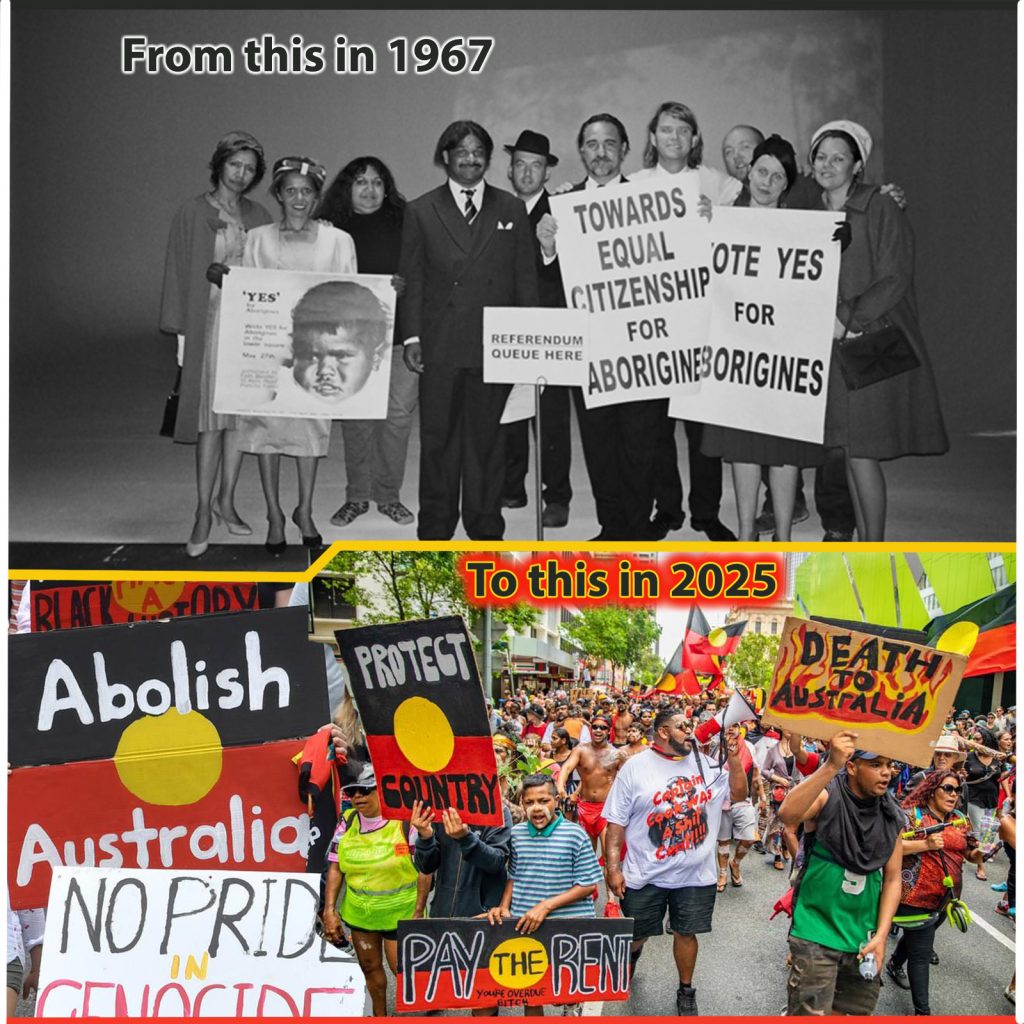
The race power was never meant to run political Aboriginals into a favoured class with their own rule book while the rest of us play by the normal one. That’s not what the people voted for – that’s what the political Aboriginal activists twisted it into afterwards.
We voted for equal citizens in one Australia. Not for making non-Aboriginals second-class in their own country.
And don’t believe the lie that the 1967 vote was mainly about counting Aborigine natives – full-blood, half-caste or whatever – just so we could fix the number of seats in federal parliament.
Sure, they deleted the old section 127 that stopped Aborigine natives being included in the official population count for working out parliamentary seats and things like that. But that was only a small side issue.
The real reason most ordinary Aussies voted YES was to give the federal government power to make laws for Aborigine natives right across the whole country, instead of leaving it stuck in the states that were making a mess of it.
People did NOT vote for special race laws, extra privileges, or putting one group in front of everyone else. They voted for simple equality – one nation, one set of rules, every citizen treated exactly the same, black or white.
If it was truly just a tweak for counting heads and sorting out parliament numbers, they could have fixed that quietly without dragging the whole country to a massive national vote. The huge 90.77% YES showed people wanted fairness for all, not a new system of favourites.
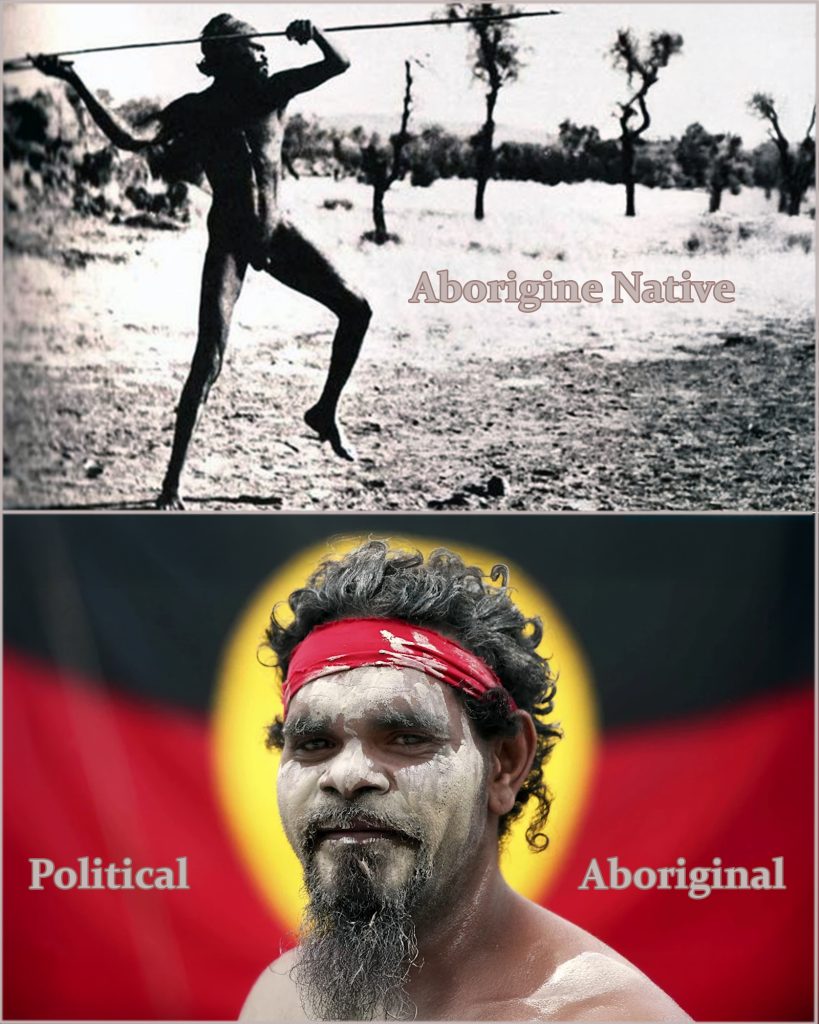
They voted to end different treatment, not create a special boss class of political Aboriginals who now push non-Aboriginal Australians down to second place in their own country.
The referendum was sold and understood as a step toward equality under one law, not a blank cheque for race-based privileges or just fiddling with numbers for parliament.
To sort this nonsense out for good we need to delete the whole race power in section 51(xxvi) – every last word of it. No more ‘special laws for people of any race’ – full stop. That kills the tool that lets politicians play favourites with one mob over the rest.
Scrub section 25 as well – the leftover bit about ‘races disqualified from voting’. It is dead wood that still whispers race into the rules.
Then slam in a new, crystal-clear section right up front.
That’s it.
Proposed Referendum Question (to put to the people):
“Do you approve this law to alter the Constitution so that:
- The race power in section 51(xxvi) is completely deleted – no more special laws for any race, ever.
- Section 25 is completely deleted – no leftover race garbage in the rules.
- And these exact words are added as a new section:
‘Every Australian citizen is equal before the law. No parliament or government in Australia shall make any law, or give any right, benefit, payment, land right, voice, treaty or special status based on race, ancestry, skin colour, descent, or any other claim of being “Aboriginal or Indigenous or Torres Strait Islander”. There is only one class of citizen in Australia – Australian. All citizens stand equal under the same laws in one nation.’

This puts into the Constitution the real equality that voters demanded in 1967 – one law for all, no favourites, no second-class citizens.
No more pretending one group is a separate “race” with its own command chain while the rest line up behind. No more political Aboriginal activists twisting words to keep division alive.
Put that to the people and watch the ratbags squeal – because they know most Aussies would vote YES to real equality faster than you can say ‘fair go for all.’
Native Title is a total joke on everyday Australians. The parliament can wipe it out anytime they wants by just handing the land over for houses, roads, or shops – so it’s not even real ownership, just a temporary special privilege that only exists until it gets in the way. On top of that, these political claimant get zero rights to the real money underground like minerals, gas, or oil – they just sit back collecting royalties while normal Aussies pay taxes to keep the whole circus running. Yet these political activists still demand we all bow down and pretend it is sacred justice.
The biggest piss-take is the ‘proof’ they need: these political Aboriginal activists have to show an unbroken connection to the land since 1788, even though most of them look and live nothing like the tribes from back then. While the silent majority of Australians – the ones whose families built this country – get told to shut up and pay for it all, a bunch of self-identified political “Aboriginals” get to claim public Crown land, lock out other people, and play victim the second anyone complains. It’s not equality or culture – it’s the parliament openly taking the piss out of working taxpayers to buy votes and keep the grievance industry fat and happy.
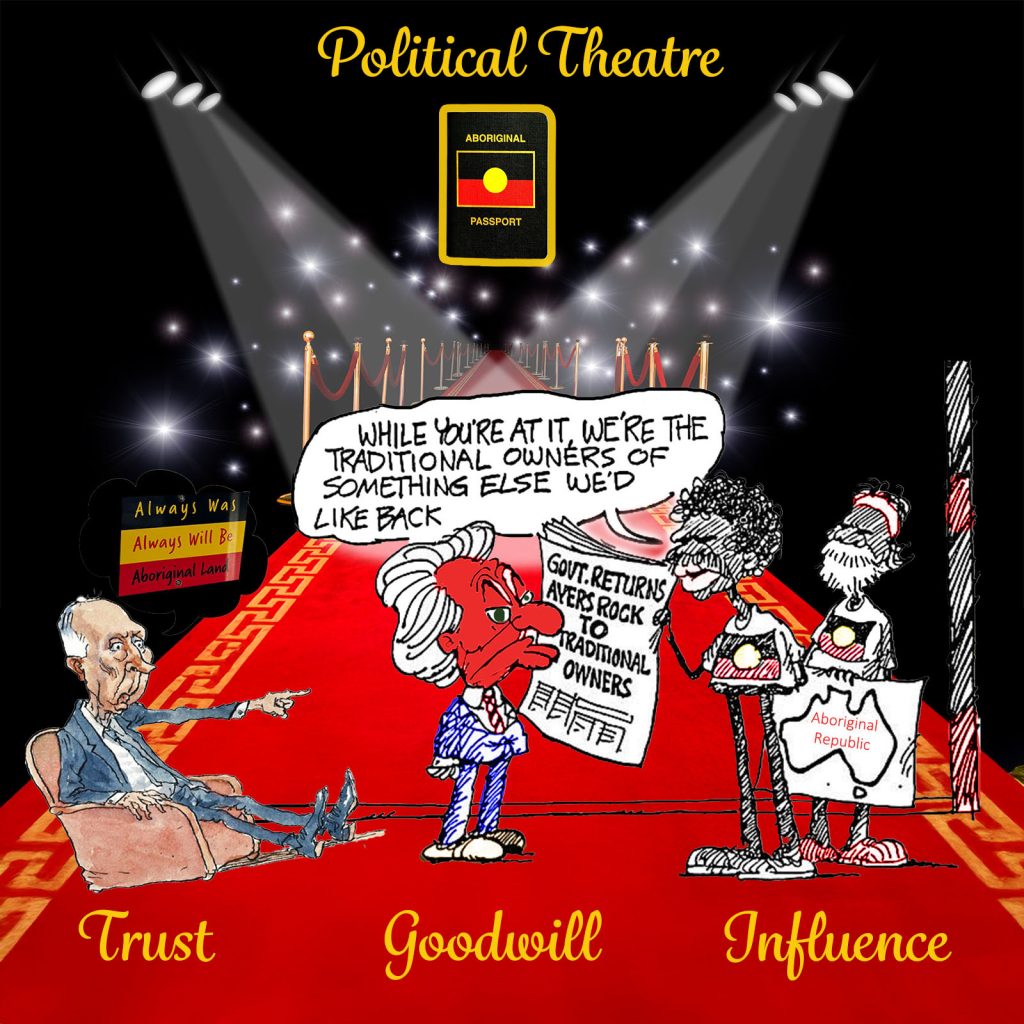
It is time for every parliament across Australia to wake up, grow a spine, and put an immediate end to this modern made-up political Aboriginal nonsense. Native Title is not ancient justice it is a taxpayer-funded scam.

Related Articles
Oh, Here We Go Again: Political Aboriginal Academics Claim High Court Got Australia’s Sovereignty Wrong
Sovereignty isn’t a legal footnote—it’s the bedrock everything else stands on. Because...

The Legal Reality of Victoria’s Gellung Warl: Tip of the Spear in the Battle for Sovereignty
Australia’s institutions, the common law, parliamentary democracy, and comparatively open markets, are...
Why Can’t an Everyday Aussie Buy a Block in Beautiful Beagle Bay? Aboriginal Land Rights, Mate – ‘No Entry’ to Everyday Aussies!
Australian taxes build ‘Aboriginal Land’… then the political Aboriginals charge you to...


The Great Betrayal: How a High Court Rewrite is Resurrecting Feudalism in Australia
Australia’s founding promise was simple: one law for all. But a radical,...
