Beyond Division – 1967 Referendum the Day 90.77% of Australians Voted YES to Equality for Aborigine Natives
 Maria Rigoni02/04/20267 Mins read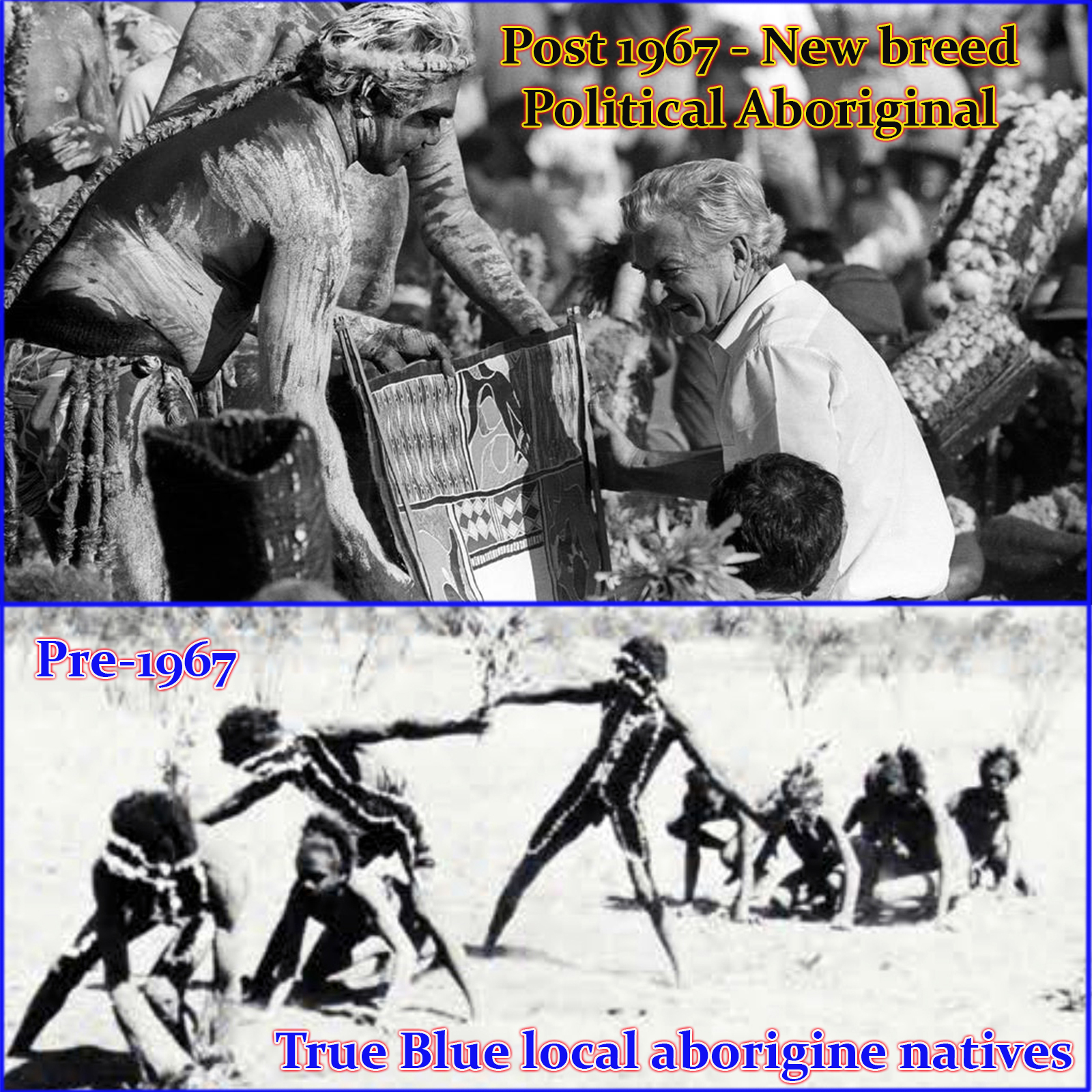
This blog article is to give a clear, straightforward explanation of the 1967 Australian referendum based on the actual constitutional changes and historical context.
Beyond Division
On the 27 May 1967, Australians stood together like never before.
It was one of the most united moments in our nation’s history – a day when most Australians voted to change the Constitution so that Aborigine natives would be counted equally and treated with equality under the law.
Background: The Constitution in 1901
When Australia became one nation in 1901, the Constitution had two main parts that dealt with Aborigine natives differently from everyone else;
- Section 51(xxvi) – the ‘race power’: This gave the federal (Commonwealth) Parliament power to make special laws for “the people of any race” – but it excluded “the aboriginal race in any State”. So the Commonwealth could not make laws specifically for Aborigine natives living in the states, only in the Territories. That power stayed with the individual state governments, which often had harsh or inconsistent policies (protection boards, assimilation rules, etc.)
- Section 127: This said that when reckoning (calculating) the numbers of people for things like working out how many seats each state got in federal parliament or certain funding formulas, “aboriginal natives shall not be counted”. Aborigine natives were physically counted in the census (there were records for “full-blood” and “half-caste” numbers), but they were excluded from the official population totals used for parliamentary representation and some financial matters. The idea at the time was partly practical (nomadic lifestyle made full counting hard) and partly reflected the view that Aborigine natives were a separate, non-English speaking declining group not fully part of the new nation.
- Aborigine natives were already British subjects (and Later Australian citizens in a legal sense), and by 1962 they had gained the right, in every state and territory, to vote in federal elections. The referendum was not about giving them the vote or basic citizenship.
What the 1967 Referendum Actually Asked
On 27 May 1967, voters faced this question (along with a separate one about parliament size that failed):
Do you approve the proposed law for the alteration of the Constitution to remove any ground of discrimination against Aboriginal natives and to give the Commonwealth power to make laws for them?
It proposed two specific changes:
- 1. Amend section 51(xxvi) by deleting the words “other than the aboriginal race in any State”. This gave the federal government the power to make laws with respect to Aboriginal natives anywhere in Australia (not just the territories).
- 2. Completely repeal (delete) section 127, so Aboriginal natives would be included in the official population counts for parliamentary seats and related purposes.
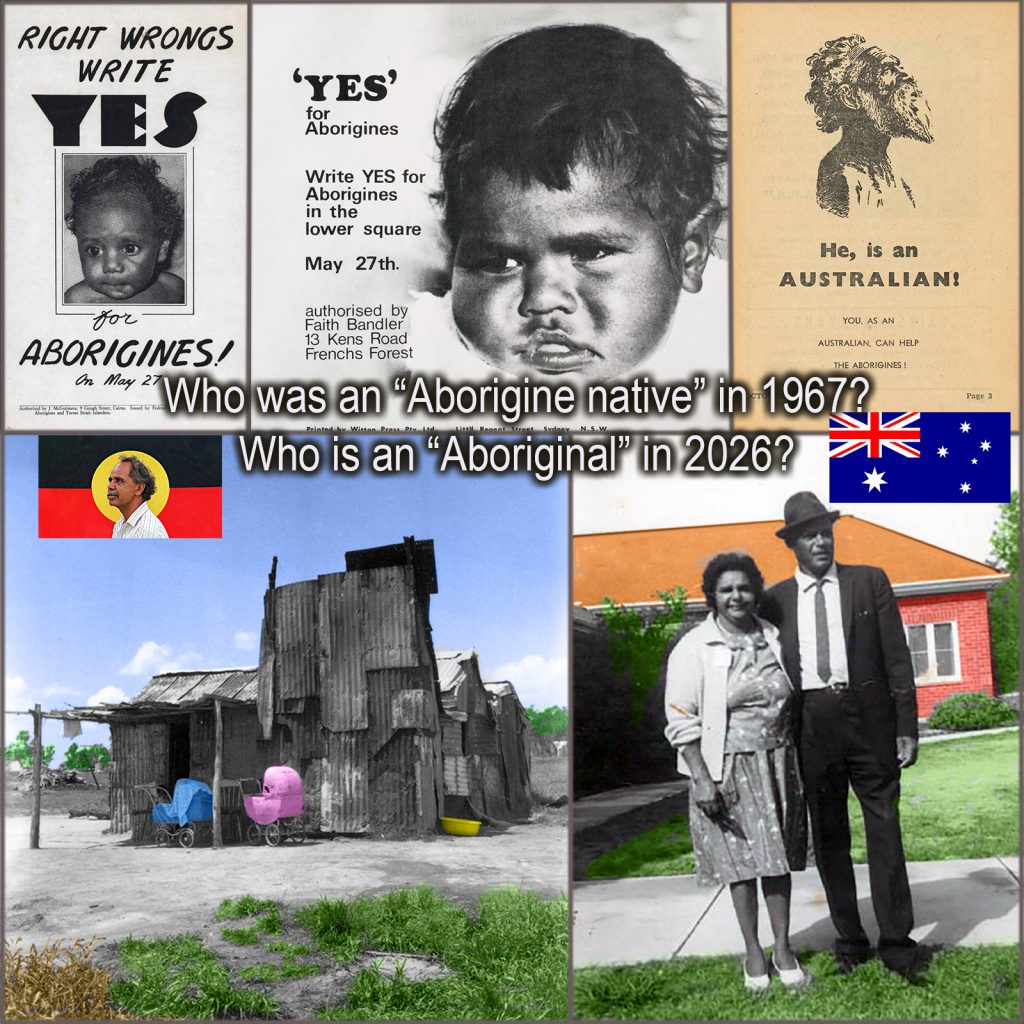
The campaign slogan was “right Wrongs, Write Yes”. There was almost no organised “No” campaign – all major parties supported it.
The Result
- 90.77% Yes nationally – the highest “Yes” vote ever in an Australian referendum.
- Every single state voted YES (Western Australia had the lowest at about 81%)
- Over 5.1 million “Yes” votes.
What it Did (and Did Not Do)
- The referendum result allowed the Commonwealth to take over responsibility for Aborigine natives affairs from the states and make uniform national laws.
- It meant Aborigine natives were fully included in the population figures used for electing parliament.
- It did not:
- Give Aboriginal natives the right to vote (that occurred in 1962)
- Automatically make them “citizens” (they were already legal citizens).
- Remove all race-based distinctions or gauarantee equality.
- Create any new “special beneficial” rights or privileges on its own.
The “race power” that resulted in the Constitution today allows the federal Parliament to make laws that single out political Aboriginal activists – and courts have ruled it can be used for both beneficial laws and laws that some see as discriminatory.
The Voter Intention vs Later Use
Most ordinary Australians who voted Yes in 1967 believed they were voting for equality – ending the old discriminatory exclusions, treating Aborigine natives the same as other citizens under one set of national laws, and giving them a “fair go” like everyone else in Australia. The campaign focused on ending different treatment by the states and recognising Aborigine natives as full members of the population.
In short: The referendum removed two explicit exclusions from the Constitution and shifted power to Canberra. Voters overwhelmingly supported what they understood as a step towards equal citizenship under one law. What happened afterwards – expansive use of the race power for ongoing special measures. This is where much of today’s controversy comes from.
In my view, the history of 1967 reveals a deep tension: while voters morally intended to endorse a future of equal treatment, they legally created a broad ‘race power’ that can be used to discriminate as easily as it can to protect. This is why I see the modern push to limit that power as essential—to align our laws with the fairness and inclusion those 90.77% of Australians actually thought they were voting for.
Who the hell is an “Aboriginal” today?
Political Aboriginal activists are flat-out claiming they’re a protected “race” under the Australian constitution so they can grab special laws, jobs, grants, and benefits the rest of us don’t get. They wave around vague lines like “descendant of an indigenous inhabitant of Australia” or “A person of the Aboriginal race of Australia” and act like that’s enough to locks in the perks. But there is a dirty little secret nobody in Canberra wants to say out loud: there is no firm legal definition of who an Aboriginal actually is in any law. Not one single piece of legislation pins it down. It’s all just words on paper that mean whatever the loudest activist says it means today.
Think about it for two seconds. Every single original Aborigine native inhabitant who was here before 1788 is dead. Every last one. No one alive today has a signed birth certificate, a family bible, or even a reliable bloodline from those people. Their names their exact blood, their direct descendants – it’s all lost in the dust of two hundred and forty odd years. So how the hell does someone today stand up and say, “I’m of the Aboriginal race” and expect the Australian taxpayer to hand over extra rights because of it?
Yet that’s exactly what’s happening. A whole industry of professional activists has built careers, organisations, and fat government cheques on this fuzzy claim. They scream “racism” the second anyone asks for proof, but the Constitution they love quoting never gave them a blank cheque for special treatment based on a race that legally doesn’t even have a clear definition. It’s not about culture, it’s not about history, and it sure as hell isn’t about justice. It’s about power and money dressed up in feathers and face paint. And ordinary Australians are footing the bill while the political Aboriginal activists laugh all the way to the bank.
The constitutional race clause: a quick, no-bullshit history lesson
Back in 1901, when they wrote the Australian Constitution, the old boys stuck in one very clear race power – Section 51(xxvi). It gave the new federal parliament the right to pass special laws for “the people of any race, other than the aboriginal race in any State.”
The Constitution makers didn’t want Canberra mucking around with local Aborigine native affairs and they left that job to the states. Local native aboriginal affairs were straight-up carved out. There was also Section 127 that said Aborigine natives “shall not be counted” in the population numbers for working out seats in parliament and splitting up money between states.
Then came 1967. Australians voted in the biggest landslide referendum ever – 90.77% said YES. The question was simple: Should we delete the words “other than the aboriginal race in any State” so the feds can make special laws for local Aborigine natives too? And should we scrap Section 127 so they get counted like everyone else?
The pitch was “right the wrongs” and bring local aborigine natives into the national fold. Campaigners sold it as equality and fairness.
But here’s what they didn’t do in 1967: they didn’t define a single bloody thing.
After the referendum, the specific words “aboriginal race” disappeared from the Constitution. Today Section 51(xxvi) just says:
The people of any race for whom it is deemed necessary to make special laws
No mention of Aboriginal people at all. The Constitution now has a general “race power” that politicians can use for any social or political group they decide to call a “race”.
There is no blood quantum. No list of original 1788 inhabitants, No requirement to prove an unbroken direct family line back to a named pre-settlement person. No firm legal definition baked into the Constitution or a single piece of legislation.
The vague lines you hear today – “a descendant of an indigenous inhabitant of Australia” or “a person of the Aboriginal race of Australia” – were cooked up later by politicians and bureaucrats. The three-part test (descent + self-identify +community accepts you) is just an administrative guideline from the 1980a, not hard law with real proof standards. Courts have nodded at it but it is still wide open.
So the activists today stand on the shoulders of that 1967 “yes” vote that was sold as equality. What they actually got was a broad race power with almost no guardrails on who qualifies for the special laws, grants, jobs and benefits.
After 1967 the politicians started passing laws using that power – land rights, ATSIC, native title you name it. Those laws had to define who gets the goodies, so they came up with lazy lines like “a person who is a descendant of an indigenous inhabitant of Australia” or “a member of the Aboriginal race of Australia.” Sounds official, right? But it’s still just words that lead to blank taxpayer funded cheques.
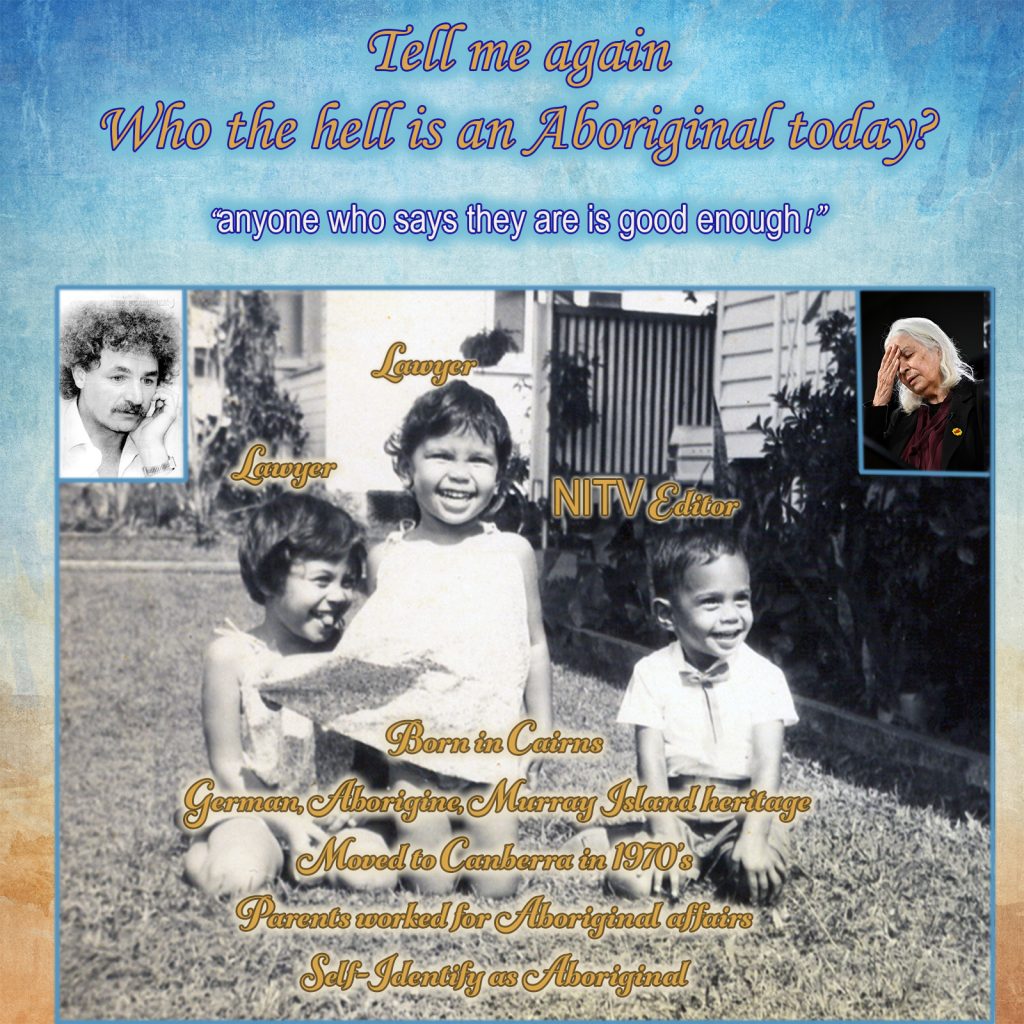
In modern times there are no races of people – only social or political groups. Yet the activists keep claiming they are a protected “race” under the Constitution so they can grab special treatment the rest of us don’t get but pay for. Every single original inhabitant from before 1788 is long dead. No one alive today has a verifiable bloodline or named ancestor that can be properly checked. Still, the special treatment keeps flowing to anyone who ticks the right boxes and shouts loud enough.
That’s the constitutional race clause in plain English. The 1967 referendum handed politicians a powerful tool to make race-based laws, but it gave them zero clear rules on who actually belongs to the “race” that gets the perks. No original inhabitant left to trace. No firm legal line. Just whatever the loudest activists and the bureaucracy decides it means this year.
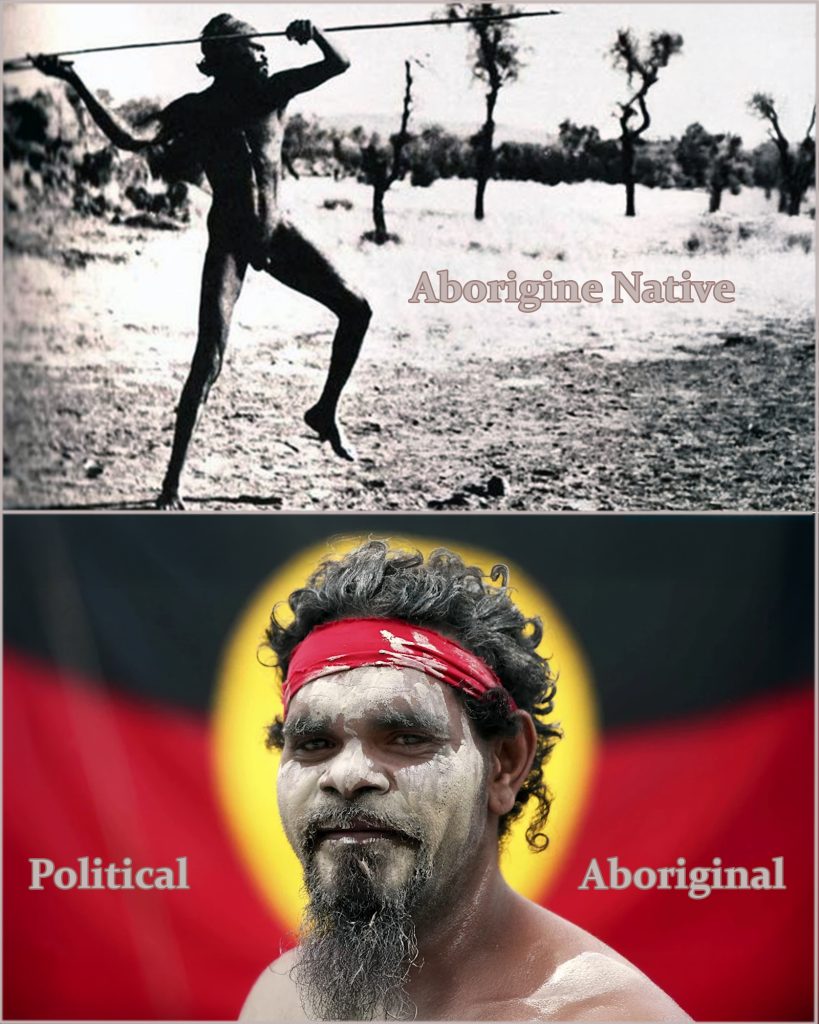
In a politically correct country like Australia, there is a massive and pervasive propaganda machine that makes it almost impossible to honestly assess who the hell is an aboriginal today. In my opinion, there are no Aboriginal natives in Australia today only political Aboriginals who are not a race at all.
The government pours billions of dollars every year into organisations, academics, activists, and media that push the wildest possible definition – anyone who self-identifies and finds a community willing to tick a box. Meanwhile, anyone who demands real proof, questions the fuzzy bloodlines, or points out that no original inhabitants are left to verify descent gets labelled as racist, defunded, and shut out.
The propogandists get the grants, the cushy jobs, the native title claims, the “Welcome to Country” contracts, and the endless special benefits. The people trying to expose the grift get nothing but abuse. This isn’t honest history or fair policy – it’s taxpayer funded propaganda designed to protect a multi-billion-dollar industry built on a definition so loose that almost anyone can join the queue for special treatment.
And ordinary Australians are still paying for it.
Related Articles
Bluey’s Land, Title of Steel
They roll out a flag, and they chant at the gate,“Always was,...
Not a history map – Not a land map – Not cartography – A political weapon for the present
David Horton’s AIATSIS map is a late-20th-century collage of language groups and...
History Never Leaves Maps Alone After You Invent One Aboriginal People With the Right to Choose Their Own Status
Has any Australian parliaments ceded our country’s sovereignty to an Aboriginal nation...


Oh, Here We Go Again: Political Aboriginal Academics Claim High Court Got Australia’s Sovereignty Wrong
Sovereignty isn’t a legal footnote—it’s the bedrock everything else stands on. Because...
