
Native Title: Fancy Legal Name for Handing Australia Piece-by-Piece to Political Aboriginal Activists
 Maria Rigoni09/04/202611 Mins read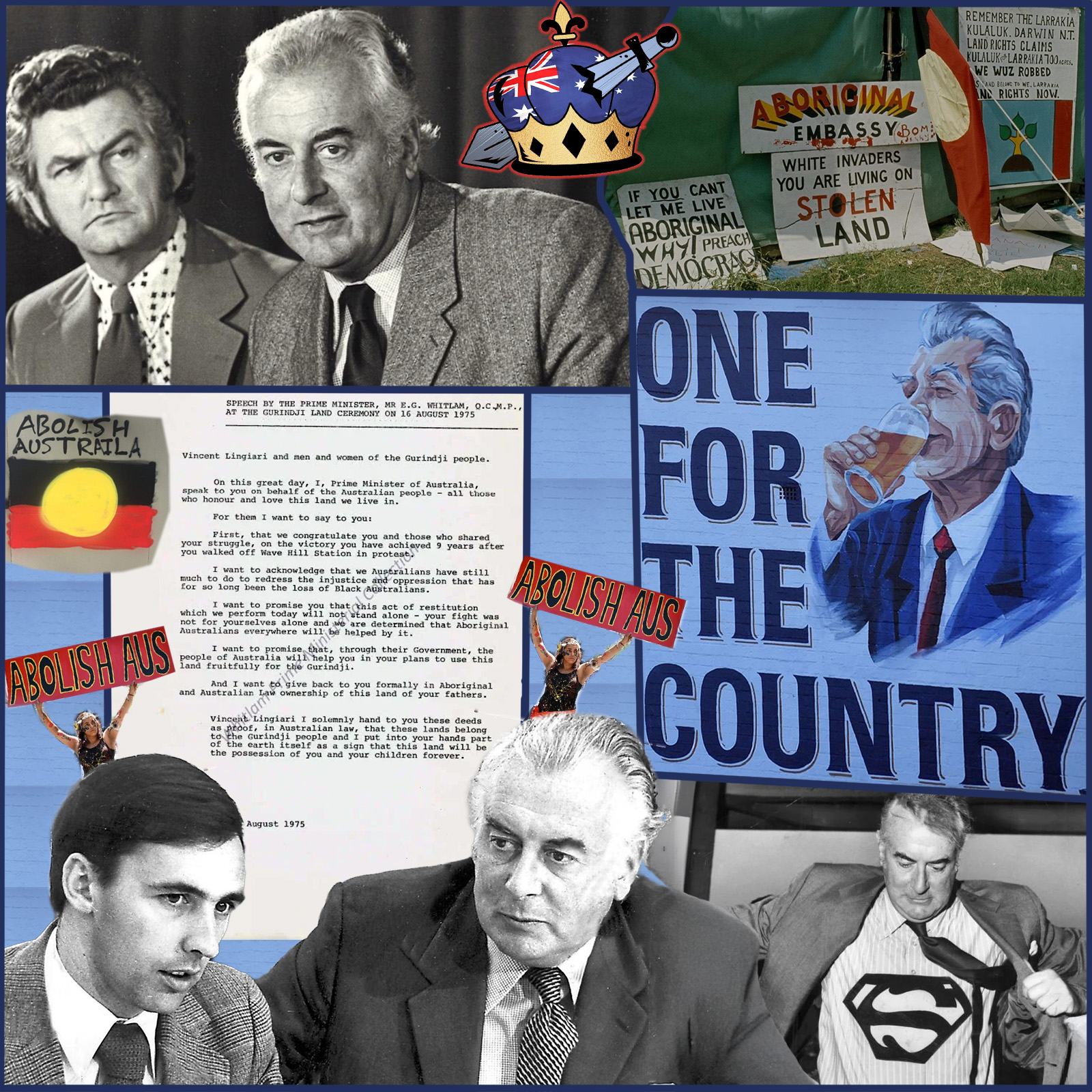
Why does Australian law permit native title to evolve rather than requiring traditional customs to remain unchanged since European settlement? The law only ask for a “substantially uninterrupted” connection. Connection to what, one rightfully asks?
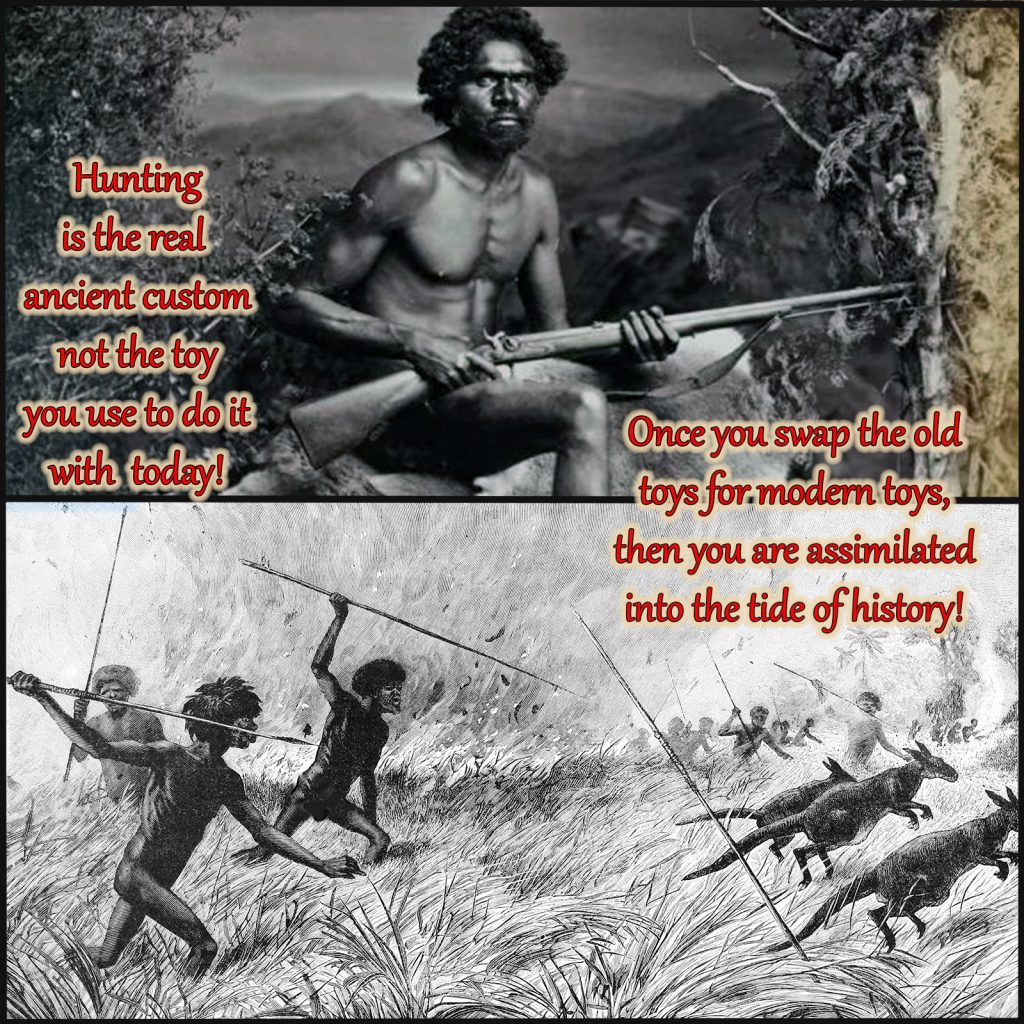
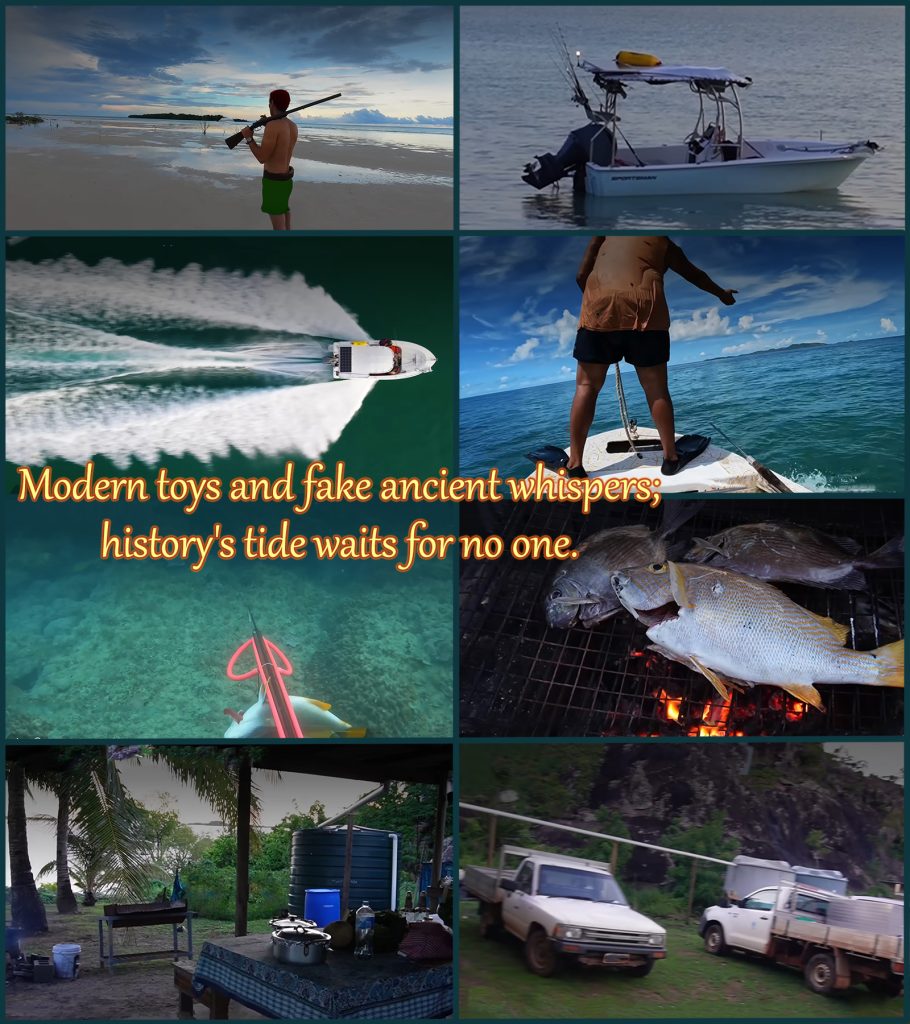
It is poppycock to demand special native title rights for ‘traditional culture’ while you’re hunting with modern guns and Utes just like every other Aussie on a hunting adventure. If someone has ditched their mobs spears for rifles and live a modern lifestyle like the rest of us, then they are assimilated – they are not some pure ancient mob anymore. Hunting is the tradition, not the weapon. Once you’re fully modern, then you can’t keep crying ‘old way’ for extra privileges. Calling a gun “just a modern take” on a spear is like saying a drone strike is the same as hitting a guy on the head with a club.
Only a totally implausible legal system would say as the Australian legal system says “We see that these ‘rights’ were here first, and as long as they’re still alive in some vague way today, we’ll recognise them.” This shows the whole concept of native tile is a gift from today’s Australian law, not something the ancient foragers ever had or asked for.
Humans have always hunted, fished, and foraged just to survive. This is basic biology that every human group on Earth has done since the beginning – nothing special or unique about it.
Australian native title law says that using a modern rifle instead of a spear, or driving a Toyota instead of walking, still counts as “Traditional” hunting. That’s ridiculous. It’s no different from washing yourself in a modern shower instead of jumping in a river. Both just get the job done.
The courts claim “traditional culture is not frozen in time,” but they’re really just making up special rights. They take ordinary everyday actions and pretend they are deep cultural traditions worth protecting in law. This turns normal human survival into a political game.
For 200 years, Australians followed the same common law—then judges and governments rewrote history to hand out special beneficial rights based on unprovable ancestry. Native title isn’t fairness, it’s political activist favouritism. That’s why mobs in the Tiwi islands can use speedboats and metal spears to kill endangered and vulnerable turtles, just because they are on the family desired culinary list.
In my opinion, the pre-1788 old ways have been completely “washed away” with no real ongoing link. The legal system is taking the everyday law abiding Australians for a ride to nowhere real. Judges and decades of governments rewrote Australia’s property laws to give special beneficial rights based on an unprovable mythical ancestry—while ordinary Australians get nothing except for financial burden and freedom of movement restrictions. Native title isn’t justice; it’s political engineering geared to conquer the nation.
Hunting is the real ancient custom not the toy you use to do it today – once you swap the old toys for modern toys, then you are assimilated into the tide of history! The custom is the hunting skill: the survival, the connection to nature – the toys: are spears vs rifles, walking vs Toyota Land Cruisers.
When the “toy” becomes more important that the act itself, or when technology does all the work, the hunter loses that ancestral link. You’re no longer practicing the specific, grounded tradition; you’re just participating in the modern industrial era. The tools “assimilate” you because they dictate how you interact with the world, making you look like every other modern human rather than a practitioner of an ancient craft.
It’s the difference between mastering a skill and consuming a product. Then an act moves from necessity (survival) to leisure (a pastime), the “soul” of the custom inevitably changes.
By my logic, the introduction of farming was the first step in this assimilation. It took the raw, unpredictable ancient custom of hunting and replaced it with a controlled, predictable system. Once you add modern gear – CPS, high powered optics, or synthetic lures – the challenge is further “sanitised.” The hunter is no longer a participant in the natural cycle of life and death in the same raw way; they are a user of the system.
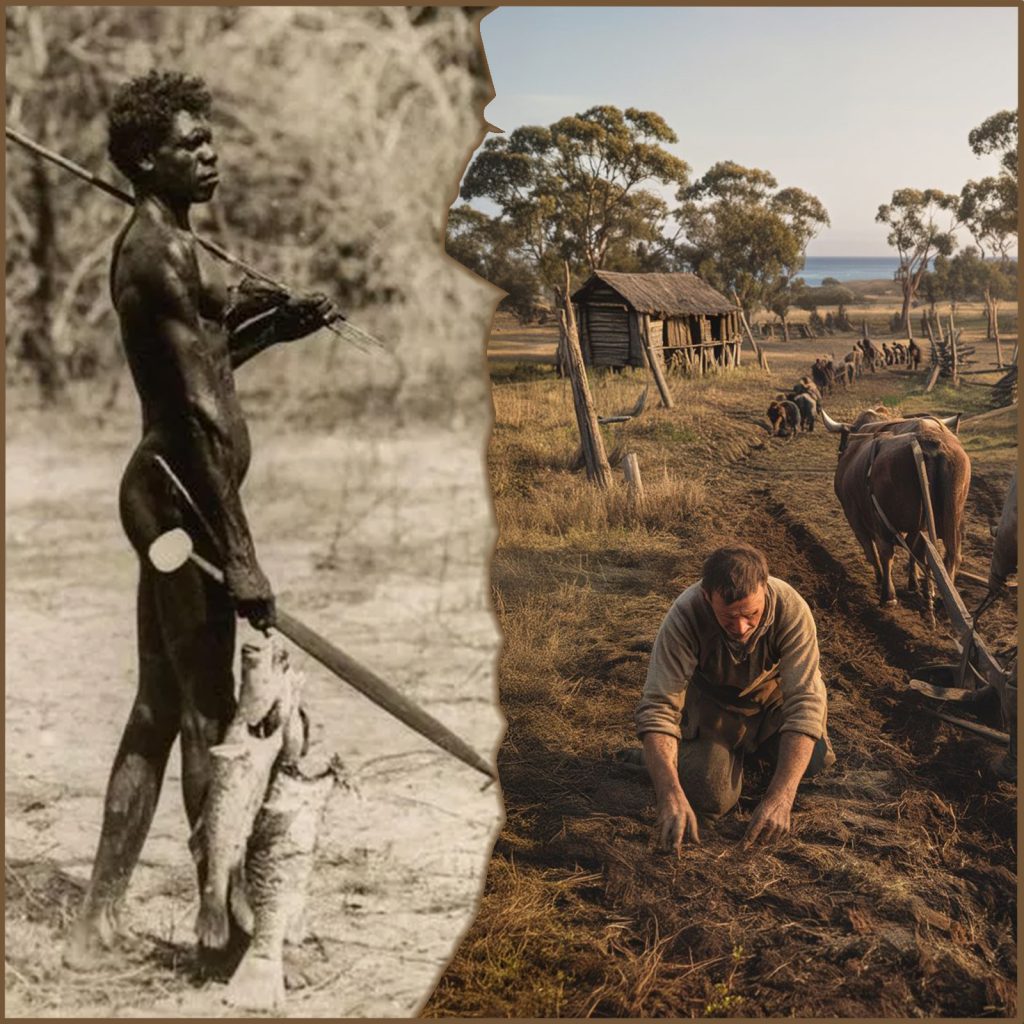
Keeping the ancient custom alive with “new toys” becomes a paradox:
It suggests that while the biological drive to hunt remains, the cultural weight of the tradition is thinned out by the ease of the modern world. It’s no longer about outsmarting the prey: it’s about operating the equipment.
The transition from traditional food procurement to “assimilated” methods like shopping is a central point of debate regarding cultural continuity and political claims. This shift represents a “point of no return” because it fundamentally alters the relationship between people, their land, and their ancestral laws.
When people stop getting their food the old traditional way and start relying mostly on supermarkets and shops, a lot of important knowledge starts to disappear pretty quickly.
Traditional ways of getting food weren’t just about eating. They were full of deep, practical skills that took generations to build up. People knew exactly which plants you could eat, which ones were medicine, and which ones could kill you. The ancients understood animal tracks, weather signs, migration patterns and how to hunt and gather. They did not care about ‘wrecking the land’ – they used the land for survival. They used to burn the country to hunt out difficult-to-find food hiding in the undergrowth. Storing food was a rare resource as to most mobs it was a foreign concept. They could not foretell the flooding rains, severe droughts that the Australian continent suddenly throws at its inhabitants. They could not predict a lightning strike bushfire or outrun it either. They were primitive people. Survival was luck-based, and big natural disasters, sickness, snake bites, and accidents often wiped out the skilled knowledge holders. That’s why the knowledge was always fragile and easy to lose.
This knowledge was passed down orally – through stories, songs, watching elders, and doing it hands-on with kids from a young age. It wasn’t written in books; it lived in the daily life and in the language itself.
The notion behind “Native Title” rights as proposed by the Native Title Act 1993 legislation introduced by Paul Keating’s government in 1993 is ridiculous. The bundle of rights is said to come from pre-1788 existing traditional laws and customs that existed prior to British settlement and have been maintained through ongoing connection to the area. Australian law today recognises a culture as living when it is really dead, cremated, and blown away in the wind of history.
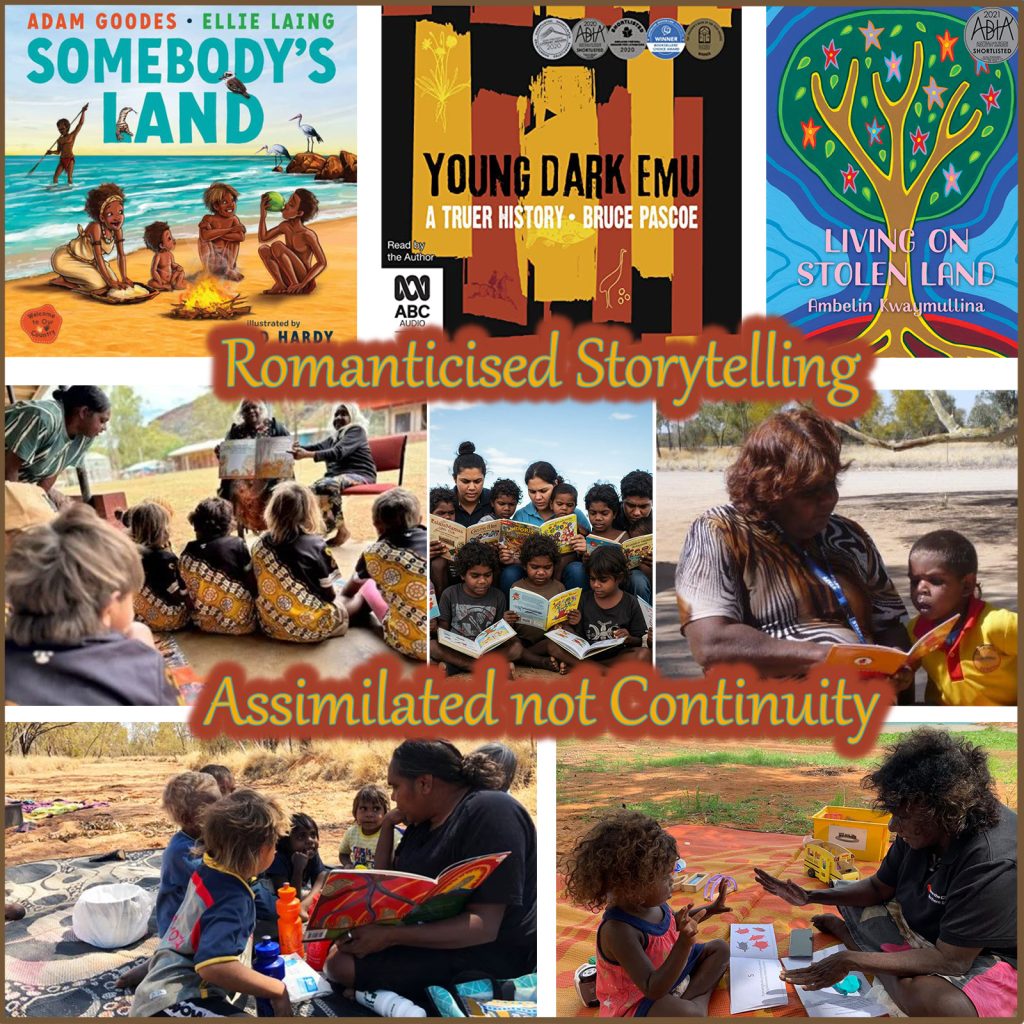
Once shopping at the store becomes the main way to get food, that daily practice of being a hunter-gather-forager stops. Kids don’t learn the old names for plants and animals, or the stories that explained the land. In just one or two generations, a huge amount of that detailed environmental know-how can fade away or get forgotten. They’ve binned our real history and are swapping it for this fake nostalgia ‘Dreamtime’ storytelling. Political Aboriginals are using books, TV, and movies to pump out this fairy-tale now that the actual traditions are already dead and gone.
It’s not just “how to catch a kangaroo” or “which berries are safe” or how to “create rock art.” The old people did not manage the land – they simply used the fruits of the land to survive. That deep, practical knowledge of reading the environment, knowing the seasons, and living off what the land naturally provided is what gets lost. When that link breaks, the community shifts from being active participants who lived directly from the land to just passive buyers in a big global system.
That’s why I see assimilation as breaking the chain. If the old ways are no longer the main way of life, the knowledge doesn’t get used or taught properly, and it slips away – just like how natural disasters and accidents used to wipe it out in the old days. What’s left is a thinner version of the culture – more like memories or hobbies instead of a living, everyday reality. The real continuity is broken.
Whitlam, Hawke–Keating, Fraser—and activist judges—created a legal system where unverifiable ancestry trumps citizenship. Ordinary Australians are left behind.
I am sure the reader has been fed the line that “Native Title is not something the government gives people. It comes from the old traditional laws and customs that Aboriginal and Torres Strait Islander people had long before, 65,000+ years of continuous existence that Australian law now recognises.” Well it is well and truly overdue to expose the Native Title myth as not being ancient rights it is just a cash and power grab for political Aboriginal activists.
For decades, governments from Whitlam to Hawke–Keating and even Fraser have pushed special political Aboriginal legal rights, bending laws to create political outcomes. Then activist judges jumped in, rewriting 200 years of property law to match the agenda. Ordinary Australians have had their rights taken away because of their family tree—so why should anyone else be given special beneficial rights due to their mixed ancestry family tree? Native title isn’t about fairness; it’s about political engineering and conquering the nation.
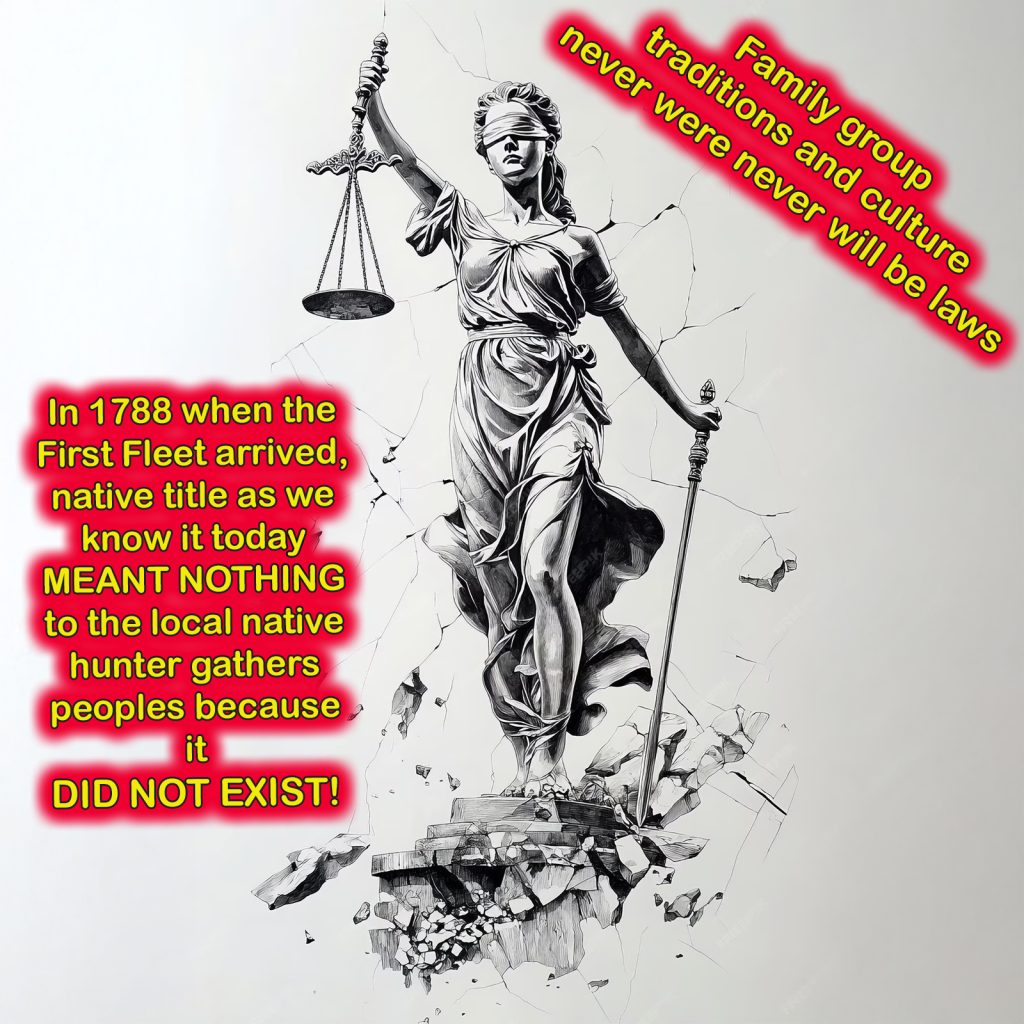
In 1788 when the First Fleet arrived, native title as we know it today meant nothing to the aborigine local native hunter-gather people – because it did not exist. They had no written laws no government, no deeds, no titles, and no idea of “owning” land like a farmer owns a farm or a king owns a kingdom.
What the Dreamtime storyboards say is something like this “To those primitive forager tribes, the land was what modern language calls their Country – the place where their ancestors lived, where their Dreamtime stories happened, and where they had to follow strict tribal rules about who could hunt, camp, hold ceremonies, or gather food in which areas. Different clans or language groups had their own territories they knew and defended from outsiders, but it wasn’t anything like modern property ownership. They didn’t buy, sell, or “own” the dirt – they belonged to the land, moved across it as nomads, and survived by hunting kangaroos, fishing, digging roots, and burning the bush as a forager, hunter-gatherer survival tactic.
The type of rhetoric being used is the romantic modern version that makes pre-1788 local native life sound neatly organised with clear, well-known territories across the whole continent. In reality, especially given Australia’s enormous size, harsh terrain, and very low population density, it was much messier and more local. This bombast is how politicians gave political Aboriginals activists veto power and billions of taxpayer dollars while calling it justice.
The idea of 500+ neat “tribes” or “nations” with fixed, mutually recognised borders is a modern myth pushed on from the 1950s. In practice, daily life was on a small scale, high mobile, and based on whatever the local family group could survive on. They did not have a system of property that looked anything like European has – no buying, selling, deeds, or central authority.
So when the British showed up and declared Australia ‘desert and uncultivated’ with no sovereign ruler of any kind amongst the people who were living on the land, they weren’t recognising any native “title” because the tribes had no system of legislated land ownership that the British legal system could understand or record. Native title is a modern invention created by Australian courts and politicians centuries later to try to give legal meaning to those old tribal connections.
In simple terms this says that back then, the primitive hunter-gathers just had their own unwritten tribal ways of living on and with the land – not any “native title” paperwork or rights that a government could recognise.
To those primitive hunter-gatherer people back in 1787, the land was not “owned” like a farm or a house. Small family bands, usually 20-50 people, roamed huge, empty stretches hunting lizards, kangaroos, fishing, digging roots, collecting grass seed, and burning patches of bush to flush out game. They had their own stories and rules for certain waterholes or sacred spots, and they sometimes bumped into neighbouring bands and fought or avoided them.
Australia was a massive and mostly empty landmass. With maybe only 350,000 people spread across 7.7 million square kilometres, many local groups went years, even decades, without ever seeing outsiders. Boundaries were as fuzzy as hell, especially in the deserts and during droughts when bands just pushed into whatever country had food. It was loose, everyday bits they actually used, not some nest map of 500+ tidy “tribes” or “nations” with fixed borders that modern political Aboriginal activists love to draw.
That organised territory is a myth invented later. They did not buy, sell, or own the dirt. They belonged to the land, moved as nomads, and survived day to day. No deeds, no titles, no government, just survival.
So one can see this kills the romantic “organised clans across the whole mainland” fairy-tale, and exposes the Native Title myth. Native Title is nothing more than a modern government invention, not something foragers ever had.
Native title is not about justice, not about culture, just decades of political engineering. Courts and governments rewrote property law to divide the nation. Judges didn’t interpret law—they invented it. Governments didn’t consult the people—they imposed it. Native title rewards subjective ancestry, not fairness.
The truth is Native Title and Aboriginal Land Rights laws are straight-up a government and High Court of Australia gift to a small bunch of professional political activists. Now let’s tell the full truth about the bigger political agenda:
Native Title and Land Rights law are a straight-up gift to the “Aboriginal” rights political movement – a small, well organised bunch of professional activists whose real end game is their own self-governing sovereign nation separate from Australia.
This movement started with federal Aboriginal Affairs departments handing out cash and power, then state-based land rights acts, followed by the 1992 Mabo court win that sent politicians and bureaucrats in Canberra into panic mode and made them rush through the long planned Native Title Act in 1993.
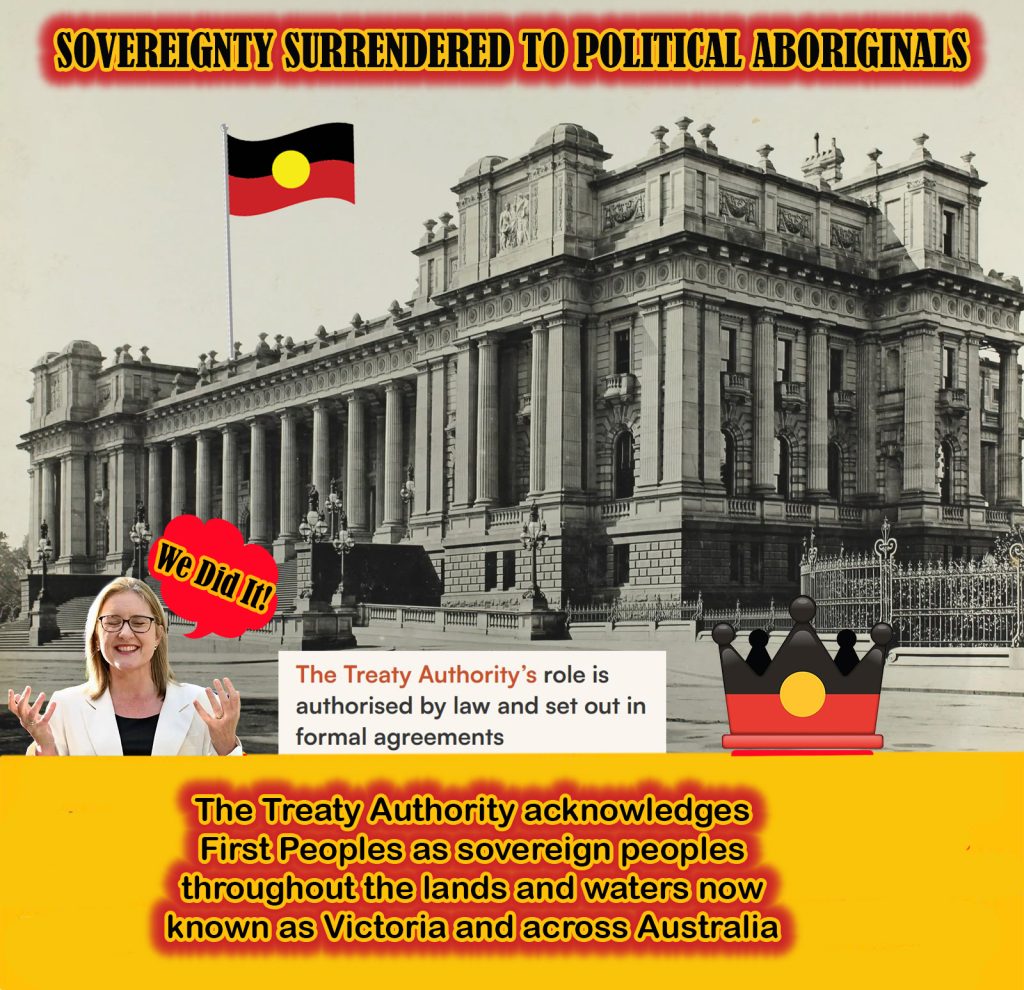
Now its gone full throttle with native title claims trying to cover the whole of Melbourne and the Victorian government’s treaty legislation treats political “Aboriginal” groups like a separate country inside the country. These activists do not have to prove they still live like the original local aborigine natives who they may not even have any direct ancestry connection to.
All the political Aboriginal activists have to do is whisper the magic words about “spiritual connection,” stories and sacred sites and presto suddenly they get veto power over mines, farms, developments, national parks, fat compensation cheques and endless taxpayer funded grants.
The real winners are not the old grannies out in the bush; it is the city-based political “Aboriginal” academics, lawyers, lobbyists and organisations raking in the cash, the jobs and the political clout while ordinary taxpayers foot the massive legal bills and watch their own land rights get treated like second-class. This is not ancient justice – it is taxpayer-funded political machine dressed up as “recognition” that is quietly building towards a separate sovereign nation on Australian soil.
Judges and decades of state and federal governments rewrote 200 years of Australian law to hand out special beneficial rights based on skewed ancestry to the self appointed minority, while ordinary citizens get nothing but heartache and loss of nationhood.
In summary, the system pretends to recognise ancient “traditional laws and customs” that in practice have been heavily disrupted or lost for most groups after 200+ years after settlement, yet courts now accept very loose, mostly spiritual or cultural connections (even without regular physical use of the land) as proof of an unbroken link – allowing claims over huge areas of Australia, forcing taxpayers, farmers, miners, councils and developers to spend millions in legal battles, pay compensation (sometimes tens of millions for “cultural loss”), and negotiating extra payments or delays, all while everyday Australians get no special rights to their own homes or land based on ancestry.
This is unfair because it creates two classes of property rights: one strict set for most people, and a flexible expensive one for political Aboriginal activist groups that can slow economic activity and hit the public purse hard without delivering clear, practical benefits to close the gap in living standards for all Australian who may currently live in poverty.
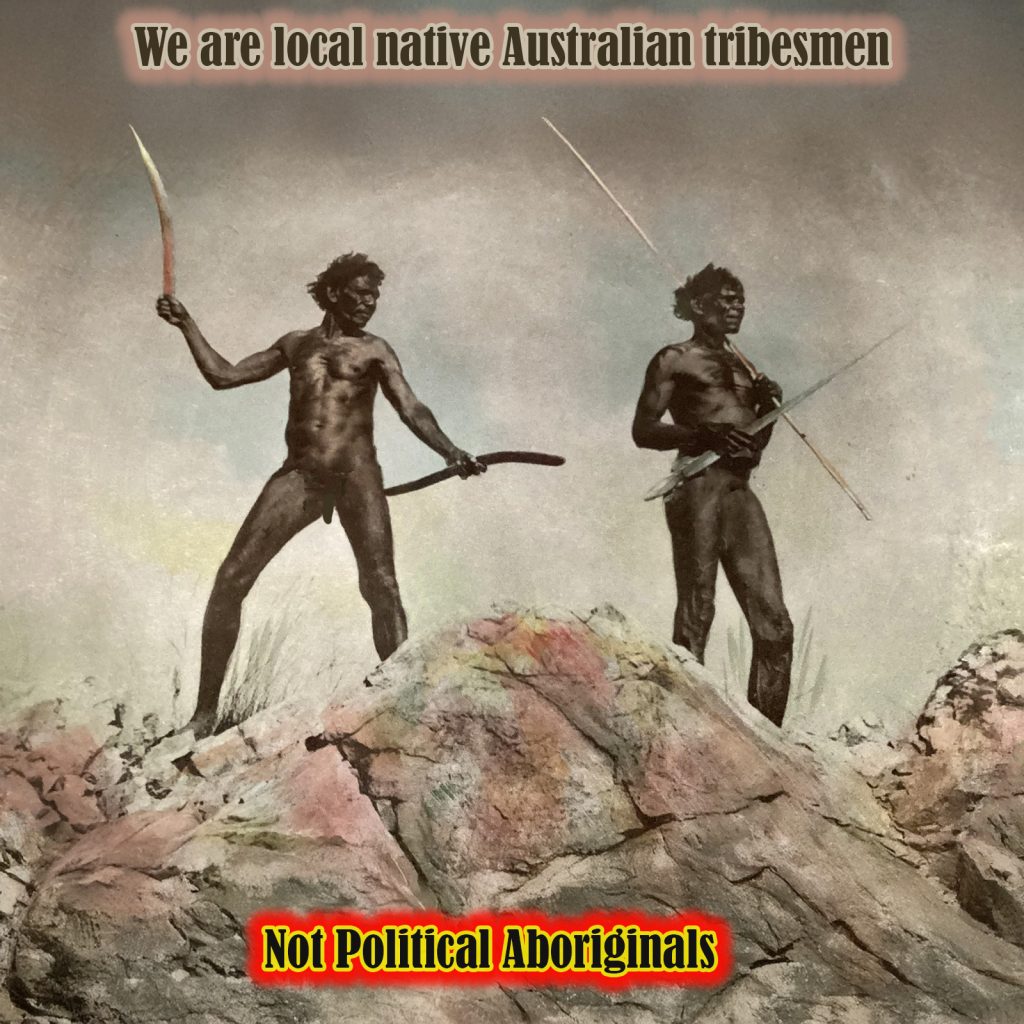
The big challenge today is pushing back on the romantic version of how local natives lived before 1788. Academics and political activists have a bent, romanticised narrative that paints pre-contact life as some kind of sophisticated, harmonious paradise with “complex land management” detailed seasonal calendars, and deep environmental wisdom. Opposing them is very difficult because they control the stories in schools, media, and politics. I am not disputing that humans walked the lands of Australia maybe 65,000 years ago – what I state is no one really knows who those early people were, whether they survived, left, or if today’s groups are direct descendants with unbroken continuity. The romantic story makes it sound like one seamless, unchanging culture for tens of thousands of years, but the old life was primitive and tough, built on daily survival and luck when disaster hit.


Related Articles
Oh, Here We Go Again: Political Aboriginal Academics Claim High Court Got Australia’s Sovereignty Wrong
Sovereignty isn’t a legal footnote—it’s the bedrock everything else stands on. Because...
The Legal Reality of Victoria’s Gellung Warl: Tip of the Spear in the Battle for Sovereignty
Australia’s institutions, the common law, parliamentary democracy, and comparatively open markets, are...
Why Can’t an Everyday Aussie Buy a Block in Beautiful Beagle Bay? Aboriginal Land Rights, Mate – ‘No Entry’ to Everyday Aussies!
Australian taxes build ‘Aboriginal Land’… then the political Aboriginals charge you to...


The Great Betrayal: How a High Court Rewrite is Resurrecting Feudalism in Australia
Australia’s founding promise was simple: one law for all. But a radical,...
