Culture or Crime? Why Customary Law is Sabotaging the Australian Legal System
 Maria Rigoni13/04/202614 Mins read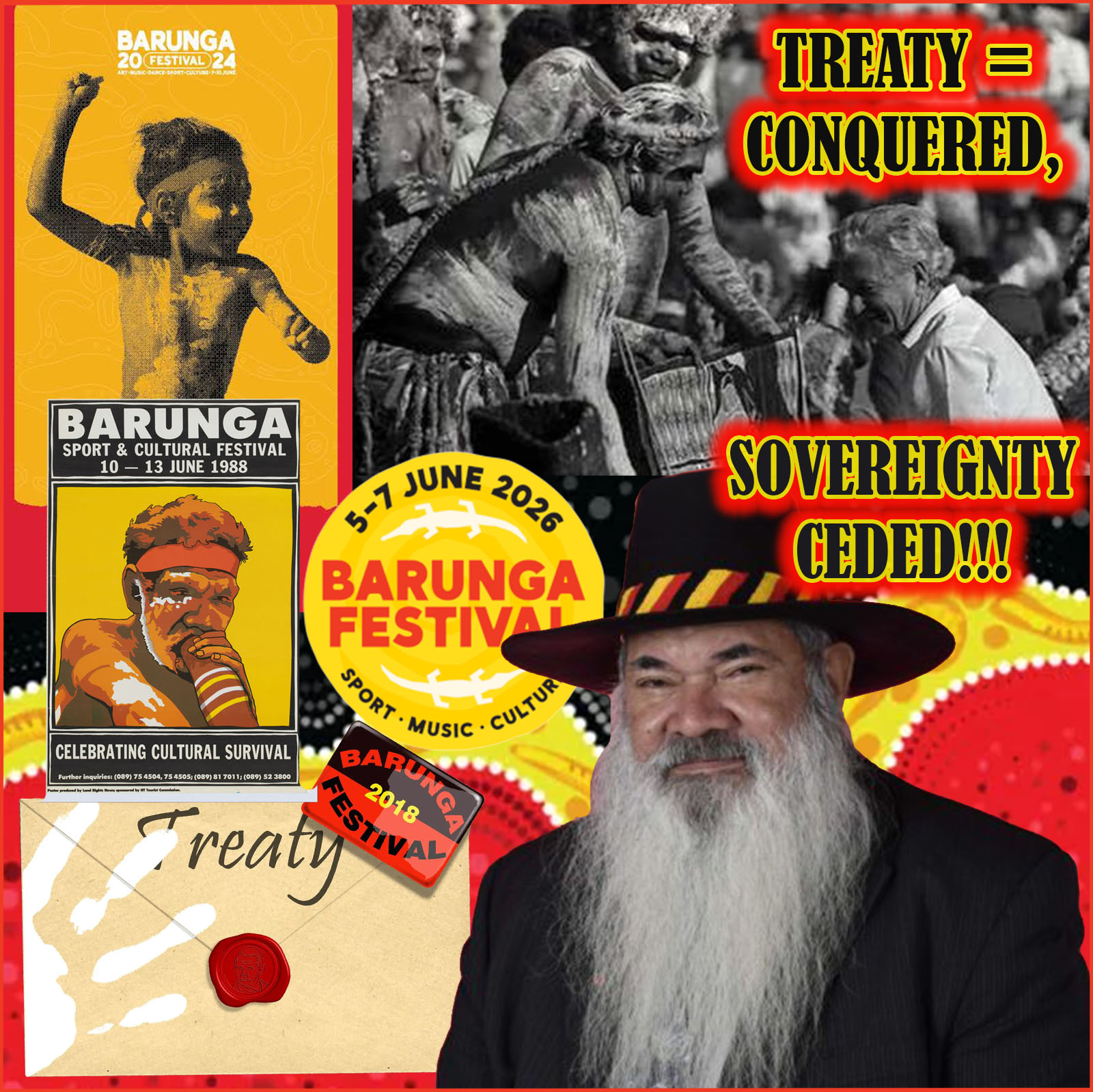
The Rule of Law is being traded for political optics, and the casualty is a unified Australian Nationhood.
When an Aboriginal Elder carries out ‘payback’ to stop a community feud, the Australian government calls it assault. When that same Elder proves that same custom in a courtroom to claim Native Title, the government calls it justice. We cannot keep pretending we respect ‘traditional law’ while we are busy outlawing the people who practice it. It is time to stop the legal cosplay.
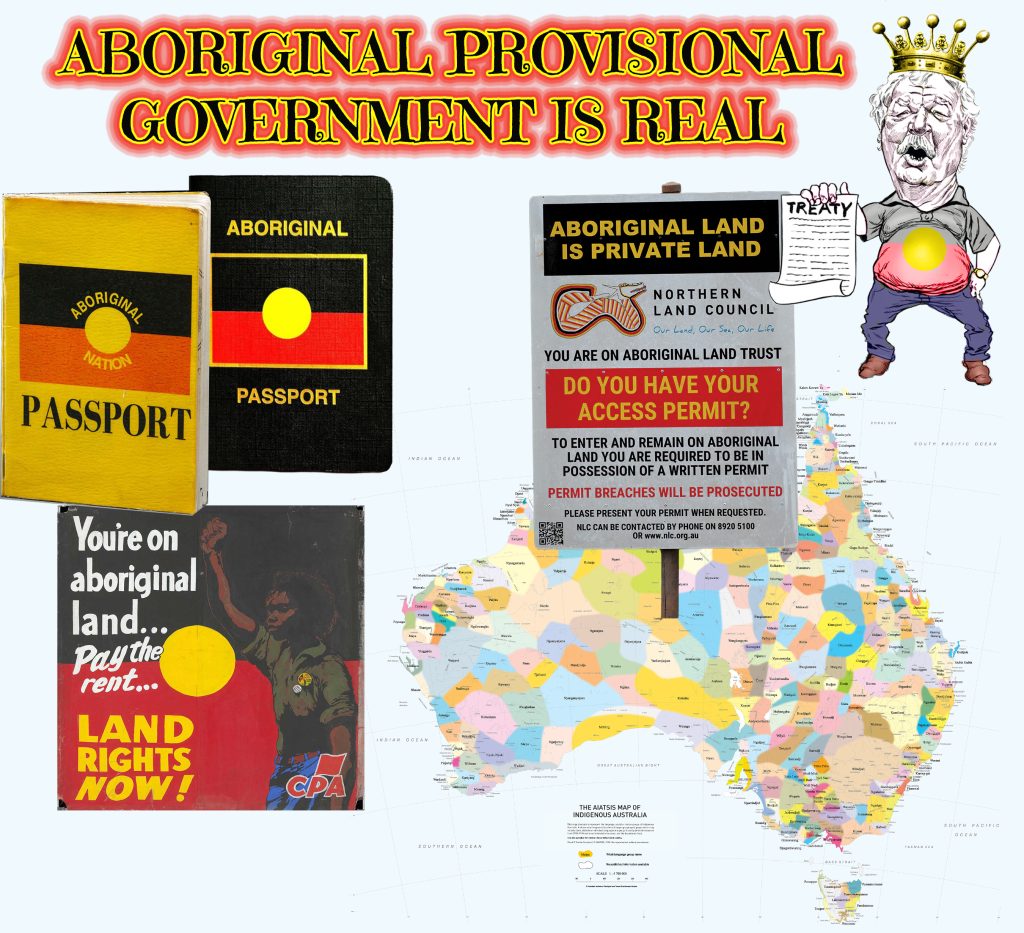
The Aboriginal Provisional Government, established in 1990, has proposed an ‘Aboriginal Nation’ and has issued Aboriginal passports on the basis that the Aboriginal Nation ‘is separate to the Australian Nation’. One of the founders, Michael Mansell, a self-identified political Aboriginal claims that “Aboriginal Australians” give loyalty and allegiance solely to Aboriginal people. In 2017 he stated to the ABC “Acknowledging Aboriginal sovereignty will not harm Australia. It will not upend the constitution… it will not overturn the legal system. It will not take houses or farms away.” Either he doesn’t get what legal sovereignty really means, or he was just trying to trick genuine, caring Australians. The “but” is he is a lawyer.
This group calls itself a “provisional government” for Aboriginal people, but it is not part of Australia’s official Constitution or legal system at all.
The problem is, it’s become quite politically powerful and is now heavily influencing politicians and parliament. That creates a big mess because:
- Our parliament is supposed to be the top authority (parliamentary sovereignty), and the law should apply the same to everyone.
- This group gets its power from somewhere outside the Constitution, so it doesn’t have to follow the normal democratic rules – no elections, no transparency, no proper accountability like real governments do.
When this “shadow” group starts pulling the strings behind the scenes, it can lead to:
- Confusing and messy laws and decisions.
- Cops, courts and governments not knowing whose rules they’re supposed to follow.
- Regular Aussies getting mixed up and thinking this group is officially part of the government, when it’s not.
This is making Australians more divided. Many people have lost faith in our normal democratic system (elections, parliament, courts etc). This group pushes through policies that weren’t properly voted on by the people we actually elected.
The Voice referendum delivered a blunt message to politicians: Australians overwhelmingly reject race-based division in our Constitution and expect leaders to respect the people’s will, not bypass it. With nearly 60% voting No across every state in 2023, it was a clear rejection of identity politics and symbolic gestures. Yet ignoring the result – pushing similar agendas through legislation, treaties, or bureaucracy anyway – only deepens the divide. It signals that voter’s voices only count when they align with the elite narrative, eroding trust in elections, parliament, and democracy itself, Politicians who defy the mandate risk turning public frustration into lasting disillusionment with the system.
Now in Victoria we have the political Aboriginal representative body that negotiates with the Victorian Government, and it holds meetings inside the Legislative Council chamber at Parliament House in Melbourne.
In the Victorian Parliament chambers it calls itself the First People’s Assembly of Victoria. Described as a “reclaiming” of space where laws and policies were historically made “without us” (modern day political Aboriginals not the original local native tribesman).
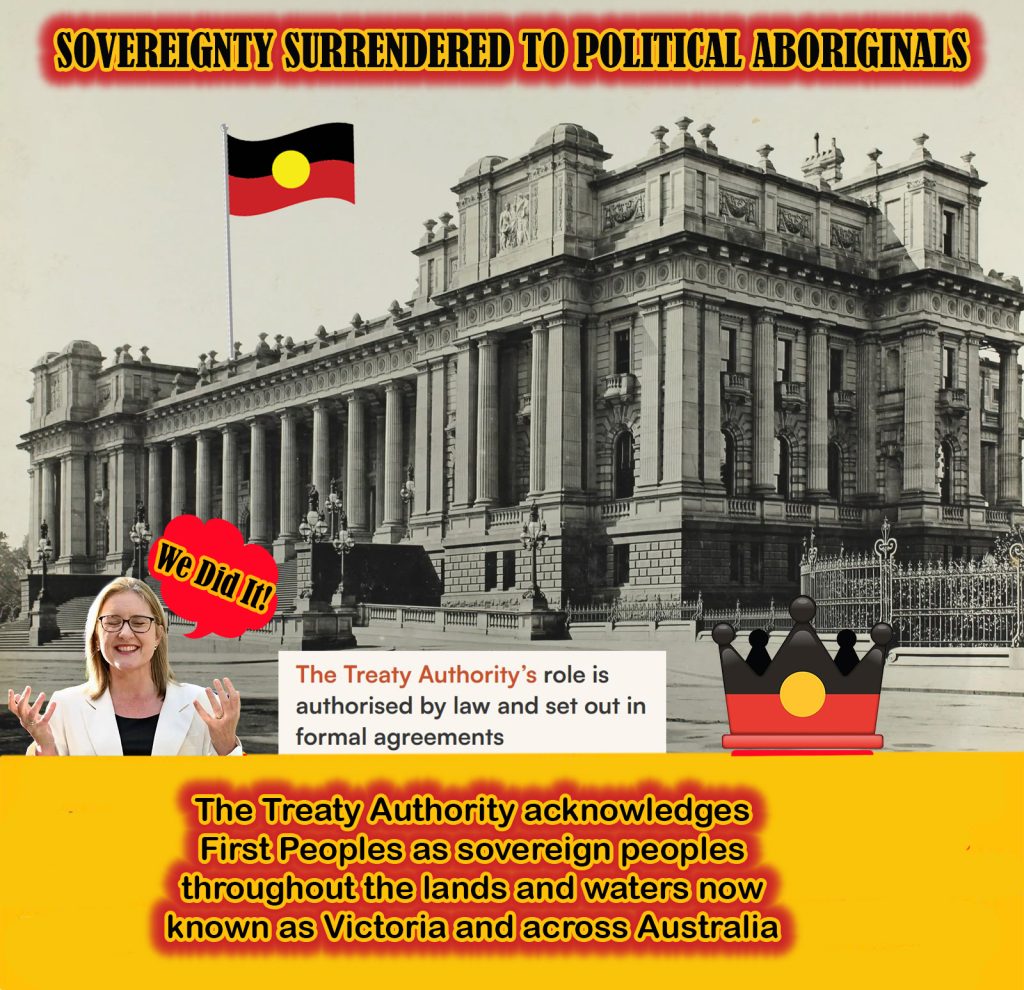
In the end, it risks creating two competing power systems in the country – the real constitutional one and this unofficial one. That makes it much harder to sort out political issues properly, and it gets in the way of all Australians feeling like we’re one united country under the same set of rules.
Basically, it’s a serious threat to the rule of law and fair democracy in Australia.
Yawuru man and political Aboriginal law professor, Mick Dodson stated, ‘The sovereign pillars of the Australian state are arguably, at the very least, a little legally shaky’. Mick is one brother of Patrick Dodson who was a political Aboriginal activist in the Senate, there to represent the Labor Party and the people of Western Australia in the federal parliament.
Born in 1948, Patrick Dodson’s life was defined by total assimilation into Western Institutions rather than a traditional tribal existence. With a mixed heritage including Irish and British ancestry through both parents, he was raised far from any “pre-1788” lifestyle. Born in Western Australia, orphaned at age 13 along with his six siblings, he was raised within the Catholic education system at Monivae College, a boarding school in Hamilton, Victoria. He eventually became a Catholic priest, a role that placed him at the very heart of the Western establishment.
In the Australian Senate, Patrick Dodson concentrated his Labor political agenda on entrenching political Aboriginals advisory mechanisms within the Western legal and constitutional framework. His primary legislative efforts and energies were directed at institutionalising “Aboriginality” through formal government structures rather than private or traditional means.
Patrick Dodson’s transition to political Aboriginal activism in 1981 was a strategic career shift into the modern “Aboriginal Industry”. Rather than returning to a traditional bush lifestyle, Patrick leveraged his Western education and institutional standing to secure a series of high-level, taxpayer-funded positions. From leading the Central and Kimberley Land Councils to serving as a Royal Commissioner, his path was one of professional political management within Australian state framework.
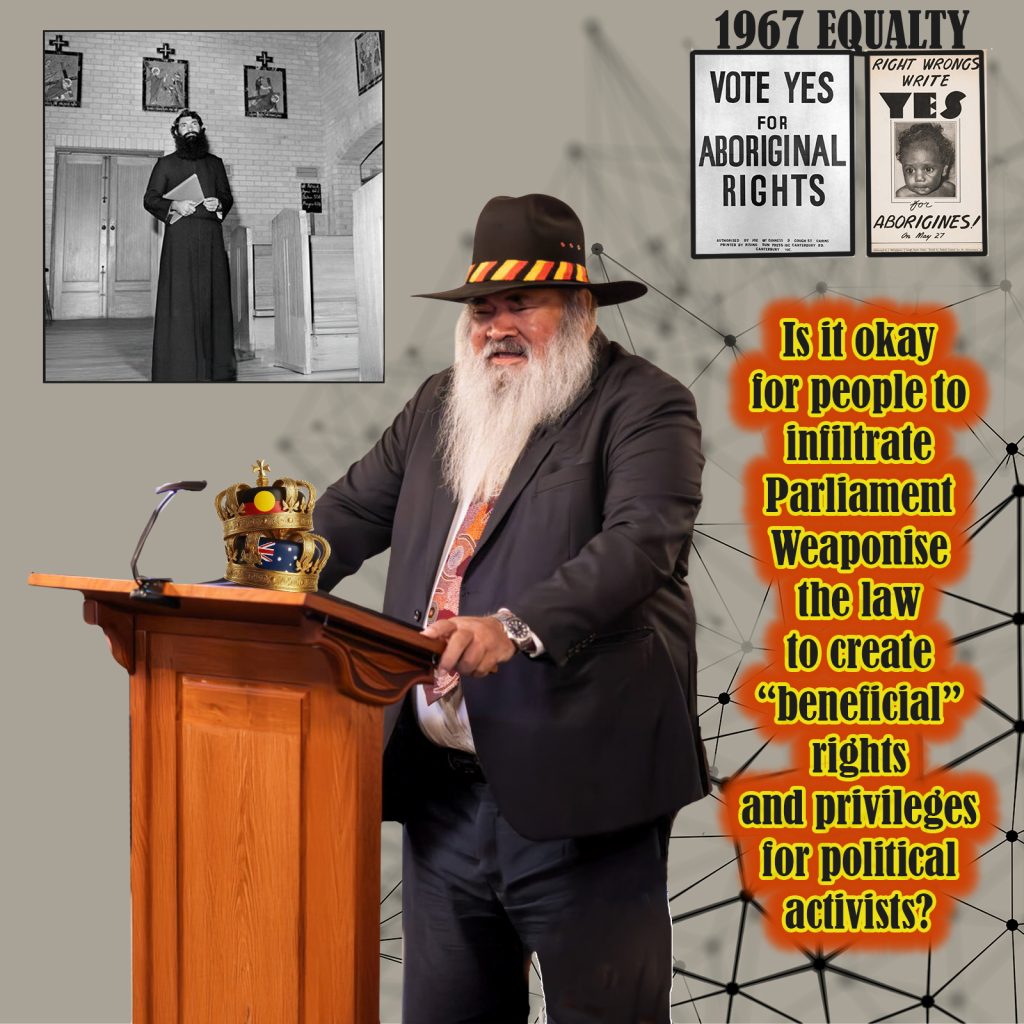
The “Aboriginal identity” Patrick Dodson projected for many, many years, including his status as a “Yawuru Elder,” served as a symbolic political tool to advance modern agendas like the Uluru Statement from the Heart. This was a modern political designation used to provide moral authority to specific movements, rather than a reflection of an ancient way of life that had been fundamentlly altered long before his birth.
Ultimately, Patrick Dodson’s career culminated in a Labor Party seat in the Australian Senate, where he received a substantial six-figure salary and allowances until his retirement in 2024. His life story is less a “fairy tale” of reconciling two mystical worlds and more a successful navigation of the modern Australian political landscape, where he chose a path of professional Aboriginal activism over a conventional, private Australian lifestyle.
Former Labor Party Prime Minister of Australia Paul Keating, put it like this: “Mabo is an historic decision. We can make it an historic turning point, the basis of a new relationship between Aboriginal and non-Aboriginal Australians. The message should be that there is nothing to fear or to lose in the recognition of historical truth, or the extension of social justice, or the deepening of Australian social democracy to include Aboriginal Australians. There is everything to gain.” The intention of his Labor Party government was to make Parliament acknowledge a history of dispossession and give protection to native title rights and interests dictated by political Aboriginal activists.
In the 2018 Barunga Agreement, signed by the Northern Territory government and the Territory’s four Aboriginal Land Councils, both sides agreed that Aboriginal Territorians ‘never ceded sovereignty of their lands, seas and waters’. Meaning the whole of the Australian nation. The Northern Territory Government in 2018 was led by the Territory Labor Party, led by Chief Minister Michael Gunner.
In Western Australia, the 2016 Noongar Settlement that cost the Australian taxpayer a $1,600,000,000 (1.6 billion) payout to people 30,000 people who identify as political Aboriginals.
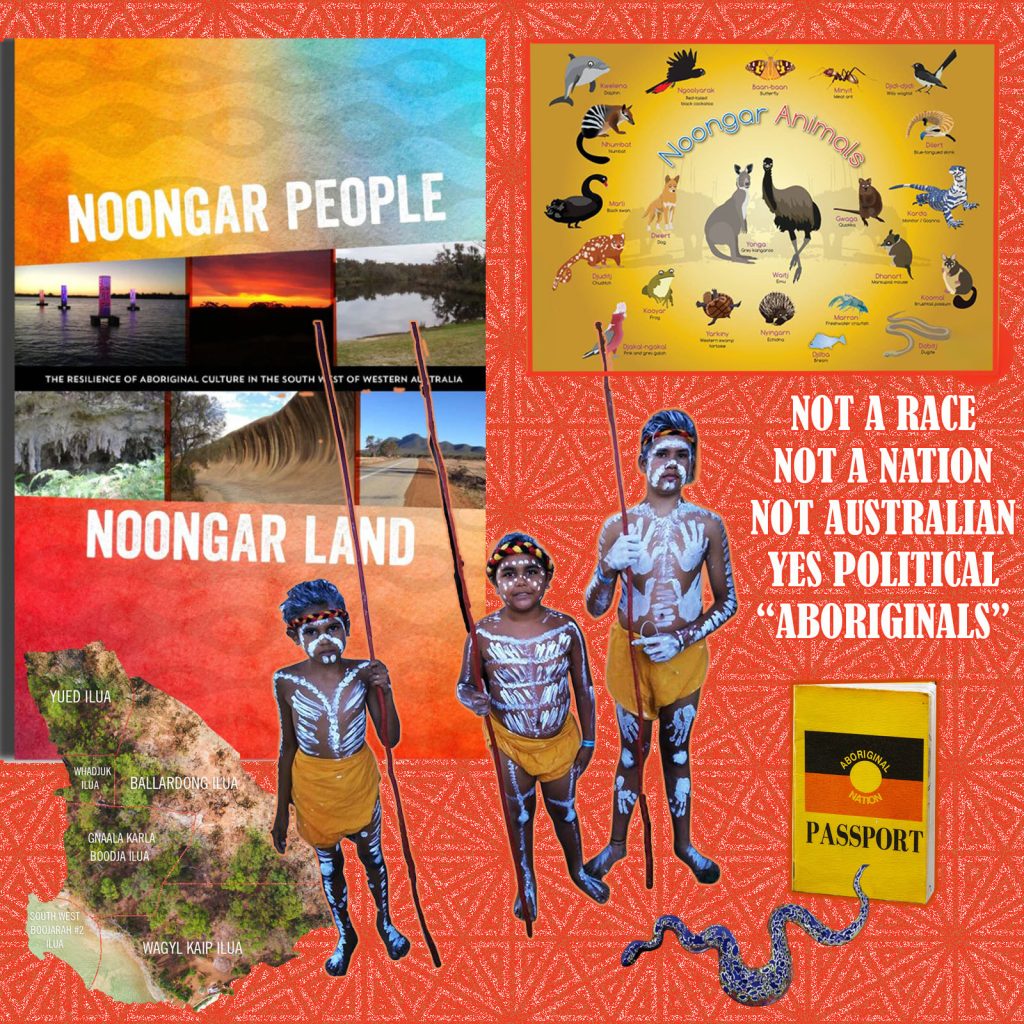
This Noongar Settlement in Western Australia was the biggest taxpayer-funded comedy show Australia’s ever seen! Deputy Opposition leader Labor Roger Cook stood there with a straight face and reckoned the Noongar mob and the Western Australian government were “recognising each other’s sovereignty.” Sovereignty? For a cool $1.6 billion of our hard-earned cash handed over to people who suddenly decided they’re political Aboriginals with ancient claims? Mate, it’s like giving the keys to the country to a bunch of blokes and sheila’s who only remembered they were “traditional” after the lawyers and anthropologists showed up with the chequebook. What a joke – one side gets to pretend they’re a separate nation inside or nation, and the rest of us foot the bill while pretending it’s all fair and square.
And now they’ve gone and rebranded the whole racket. Used to be plain old “traditional native title holders,” now they’re swaggering around claiming to be “traditional owners” of the entire Nation, like they own every rock, river and shopping centre from Perth to Parramatta just because some unidentified ancestor may have camped somewhere, sometime ago. Native title was supposed to be a bit of dirt for a few real old full-blood families to use the fruits of that land, not to be a never-ending ATM for anyone who ticks the box and hires a good activist lawyer or politician. To put it crudely billions vanish into a black hole, endless Welcome to Country ceremonies, and every new mine or housing estate held to ransom while the rest of us cop the higher taxes and rents. An absolute insult. The country’s been conned into thinking a handful of modern political Aboriginal activists speak for the whole Dreamtime, and we’re all just supposed to shut up and keep paying. What a farce.
In 2026, the Labor Party Premier of Western Australia is the same Roger Cook who claims to identify as a “born and breed Western Australian”. It’s true, Roger was born in Cottesloe to parents of European descent – his father was a psychiatrist and his mother an early childhood educator. His personal connection to the Aboriginal community is significant through his wife, Carly Lane, who identifies as a Murri/Kalkadoon woman from Queensland she studied anthropology and is a professional Aboriginal Art curator. Carly Lane has Chinese, European and a mix of local native tribes heritage.
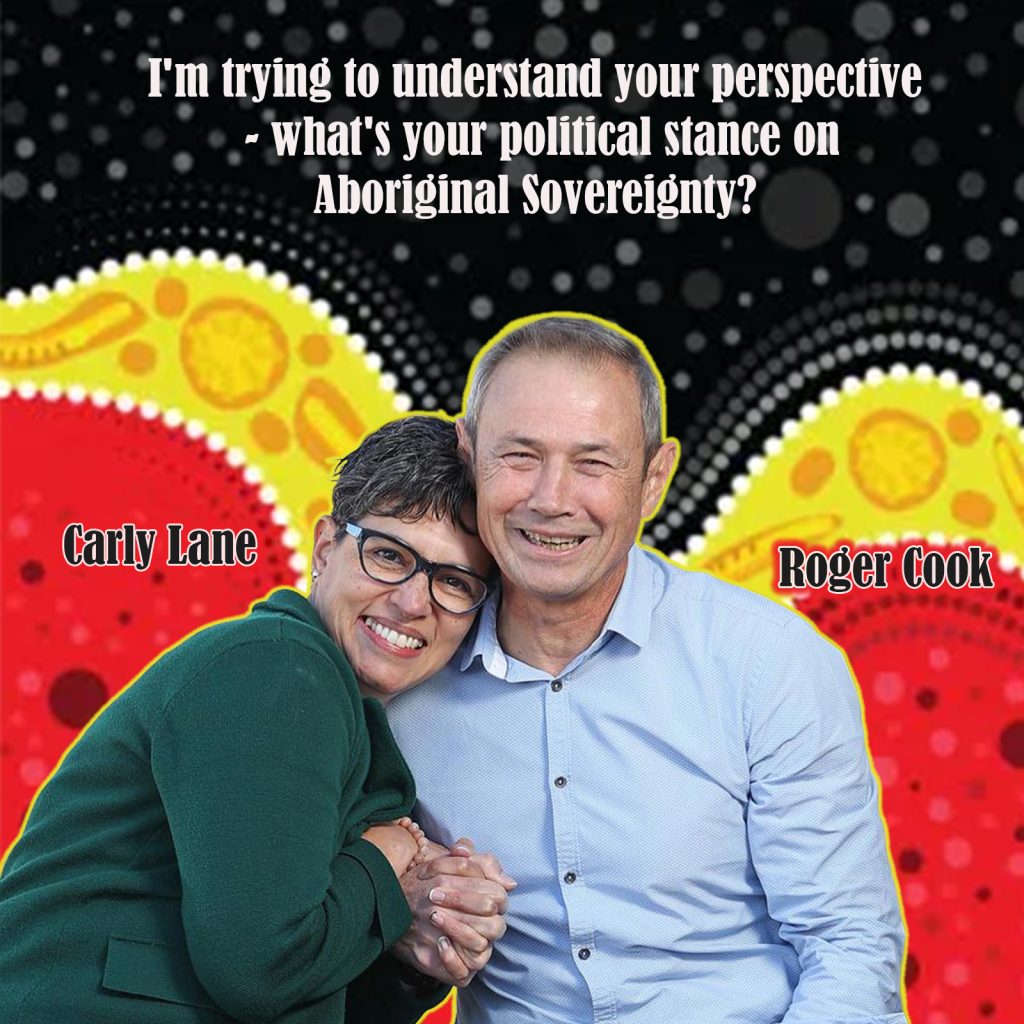
Before entering parliament in 2008 Roger Cook held professional roles as CEO of an Aboriginal Corporation, Government Relations Manger for South West Aboriginal Land and Sea Council and was Policy Coordinator for the WA Aboriginal Title Working Group. In parliament he served as the Labor Party’s Shadow Minister for Indigenous Affairs. As Premier he introduced the WA Stolen Generation Redress Scheme 2025, providing $85,000 payments to political “Aboriginal” survivors.
At the Federal parliamentary level, impulsion endures to hustle the Uluru Statement from the Heart onward. The Statement is a clear expression of how political activists see Aboriginal and Torres Strait Islander sovereignty. Their argument is that their society, whose laws and customs had adapted and changed over time, continued to exist and … continued to occupy Australia, or large parts of it, from before British settlement to the current day.
The Australian Courts are clear that they cannot recognise the political Aboriginal activists sovereignty. The change must come through Parliament, a political act that represents the will of the Australian people.
A convincing case study for this topic is Walker v State of New South Wales (1994). This case nonstop tackles the tension between the “sovereignty” of traditional cultural laws and the singular “rule of law” within the Australian legal system.
Do we have one set of law or two?
In 1994, Denis Walker, a self identified Noonuccal man, was charged with a criminal offence under the Crimes Act 1900 (NSW) after an occurrence on Bundjalung Country. Denis Walker contested the court’s jurisdiction, quarrelling that as a political Aboriginal person, he was only subject to the laws of his own “nation” and that the Australian Common law and statutes did not apply to him without his consent.
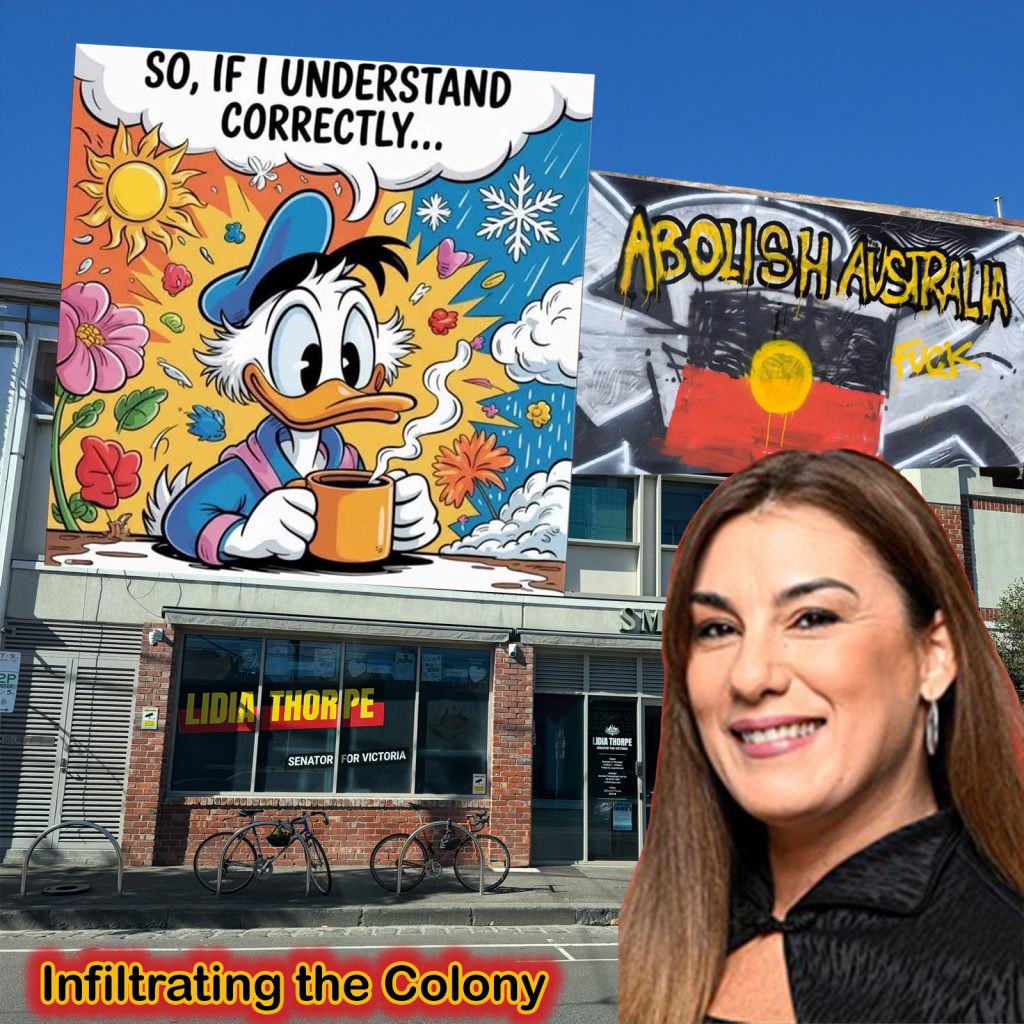
Does “Cultural Sovereignty” exist?
The British legal system, proclaimed that at the time of the British acquisition of sovereignty, the continent was ‘A tract of territory practically unoccupied, without settled inhabitants or settled law’. The assertion of sovereignty by the British Crown ‘necessarily entailed…that there could thereafter be no parallel law-making system’.
Denis Walker’s legal representatives counted on the landmark Mabo v Queensland (No 2) conclusion, which had accepted that traditional laws and customs could form the foundation of land rights (Native Title). He argued that if the Australian legal system could recognise traditional law concerning land ownership, it should logically also recognise traditional criminal law as a valid, parallel legal system.
The Court decided the State was Supreme.
Chief Justice Mason of the High Court of Australia summarily disallowed this “muddied” interpretation. The High Court held there is only one body of criminal law in Australia which applies equally to every person, regardless of their ancestry. The High Court stipulated there were no parallel systems in spite of the fact that Mabo recognised traditional rights to land did not transfer sovereignty or a competing legal system that could override state or federal statutes. The High Court reinforced even if traditional criminal laws had survived British settlement, they were “extinguished” the moment the government passed general criminal laws for the “peace, welfare, and good government” of the state.
Were the waters muddied?
The legal system treats Native Title as a property right derived from culture, however it treats Criminal Law as a non-negotiable rule of the state. This has created a paradox where a person’s traditional identity is legally valid when claiming a beach or a forest, but disappears the moment they enter a courtroom for a criminal offence.
In the Walker v New South Wales (1994) case, the High Court judged that while traditional customs can determine land rights, they cannot form a parallel legal system that exempts individuals from the uniform Rule of Law applied to all Australians.
The insertion of customary punishments such as “payback” in sentencing adds a layer of complexity because it compels the state to concede a second legal system it publicly declines to recognise. This establishes a “legal shadow” where the court attempts to avert double punishment without formally condoning violence.
To ensure the total burden on the individual is proportionate to the crime, Australian courts generally follow the principle that they must take into account any prior or future punishment an offender has faced or will face outside the official system.
Let’s not pretend that spearing another person is an illegal action. Yet a judge is able to reduce a prison sentence if they are satisfied that a traditional punishment (like spearing) is likely to occur, but they must explicitly state that the court does not condone the act.
Double jeopardy rather than accountability is the sick logic that is applied. That being if the state ignores a brutal (illegal) physical punishment, the offender is essentially being punished twice. Once by the community and once by the state which violates the principle of proportionality. This type of legal interference and denial of valid Australian law by judges is just plain poppycock and makes a mockery of Australia’s Rule of Law.
The Sovereign Union of First Nations and Peoples in ‘Australia’ is asserting “genuine pre-existing and continuing sovereignty over First Nations’ territories, lands waters and natural resources… In all, Aboriginal Law remains the Law of the Land, as the Australian Commonwealth, State and Territory governments have territorial rights only, through their dominance in numbers, police and military. The Australian common law now recognises and incorporates Aboriginal Law and customs into their common law jurisdiction. The High Court of Australia made it very clear that Aboriginal Law does not come from the Australian common law but is a construct of the ancient Law of the Land, which is sui generis unique to the world.”
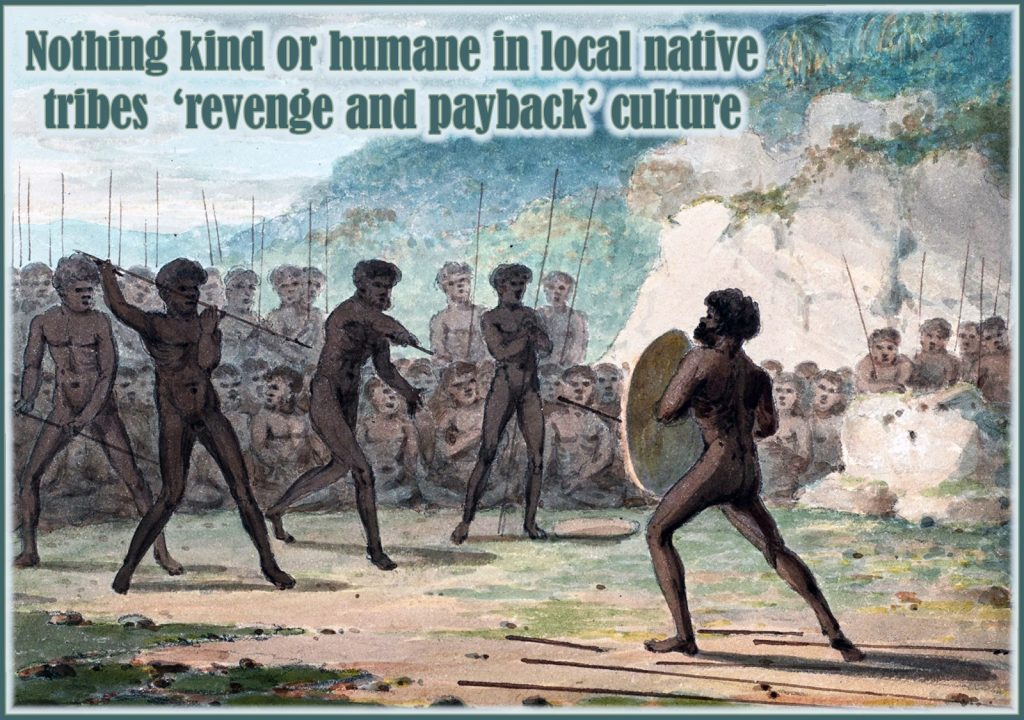
In the raw, brutal arena of primitive survival, without government’s meddling safety nets or rules, the strong thrived by crushing the weak, proving nature’s law that only the fit deserve to live.
The landmark case of R v Sydney Williams (1976) demonstrates the extreme “muddiness” of this crossroad. Sydney Williams was convicted of manslaughter for the death of an Aboriginal woman. Justice Wells notoriously gave the guilty man a suspended sentence on the condition that he return to his tribe and “be ruled and governed by the Tribal Elders” for one year. Yes, correct this happened in Australia in 1976 not 1800.
This madness is true it really happened in our Rule of Law courtroom. It was widely reported that the “orders” from the tribes elders included a traditional spearing in the thighs. This meritoriously signified the state had outsourced a violent physical punishment to a third party group, confirming the Crown was indirectly authorising a criminal assault.
Consider that case was way back in 1976 so what happens in current times?
Today, the “muddiness” is even more unmistakeable due to legislative interventions. Courts now ask for strict expert evidence (often from anthropologists or elders) to prove a punishment is actually “customary” and not just a random act of revenge. In 2007 the “Northern Territory Intervention” the Federal Government passed laws that prohibited courts in the Northern Territory from taking into account “Aboriginal” customary law or cultural practice to mitigate sentences for certain crimes.
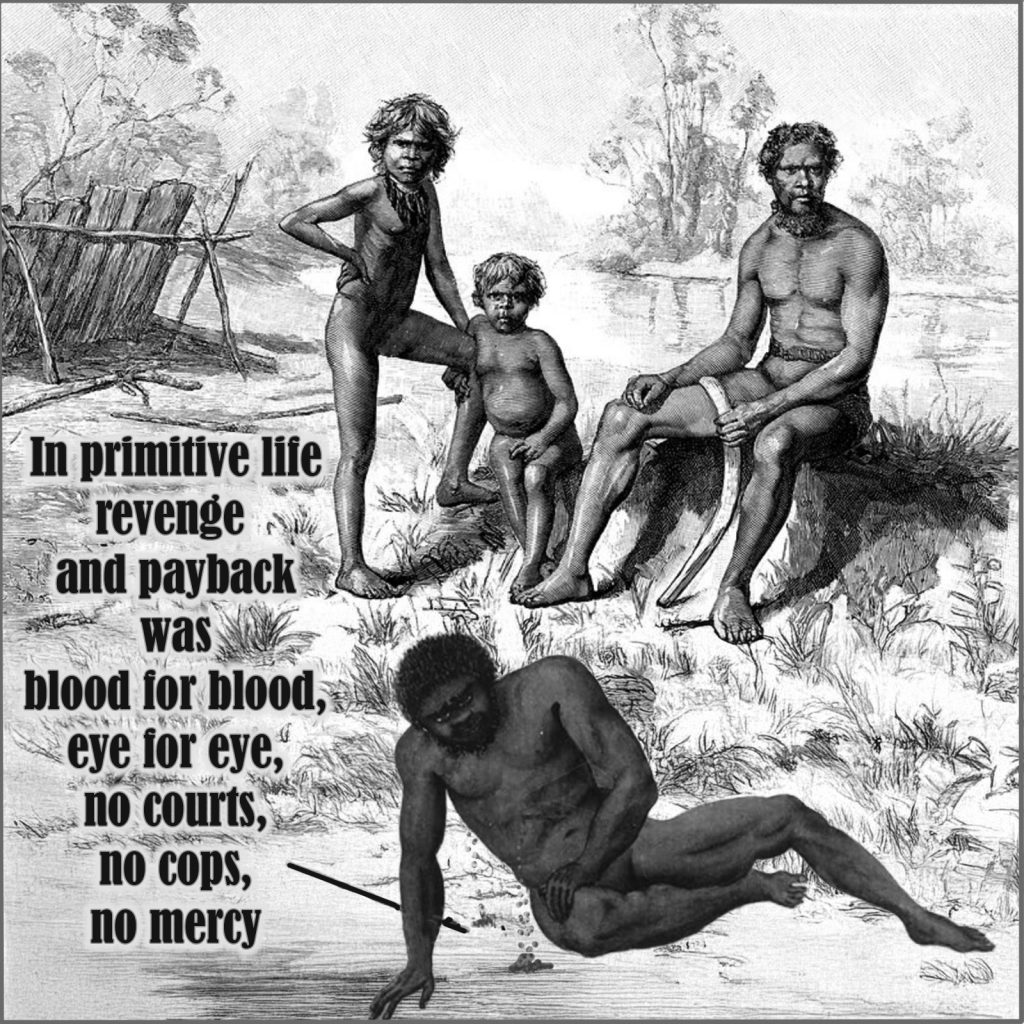
So what is the Catch 22?
The law requires a community to prove they have strictly maintained their traditional customs to claim Native Title. However, if those same customs involve traditional punishments, the state may criminalise the elders who carry them out or pass laws specifically to ignore them in court.
In current sentencing, customary punishments are treated as justifying factors rather than valid laws. While a judge may reduce a sentence to avoid “double punishment,” the state maintains its supremacy by declining to grant Aboriginal elders the legal immunity to carry out those punishments without themselves being charged with assault.
There is a legal identity crisis that has created a legal mess because of the Government’s “Pick and Choose” problem. The High Court of Australia is essentially talking out of both sides of its mouth.
The “Yes” side: To win a Native Title land claim, the government says: “You must prove you have strictly followed your traditional laws and customs without stopping since 1788.”
The “No” Side: But when those same traditional laws involve crime or punishment, the government says: “Wait, not those laws! Those don’t count. Only our Australian laws are real.”
The glitch is you can’t tell a group of people their culture is “legally valid” for owing a beach, but “legally invisible” when they try to run their own community. Self-determination. It makes the law look like it’s just using “culture” when it’s convenient for property deals.
Are the respected Elders in “remote” communities stuck between being a “bad” cultural leader or a “good” Australian criminal?
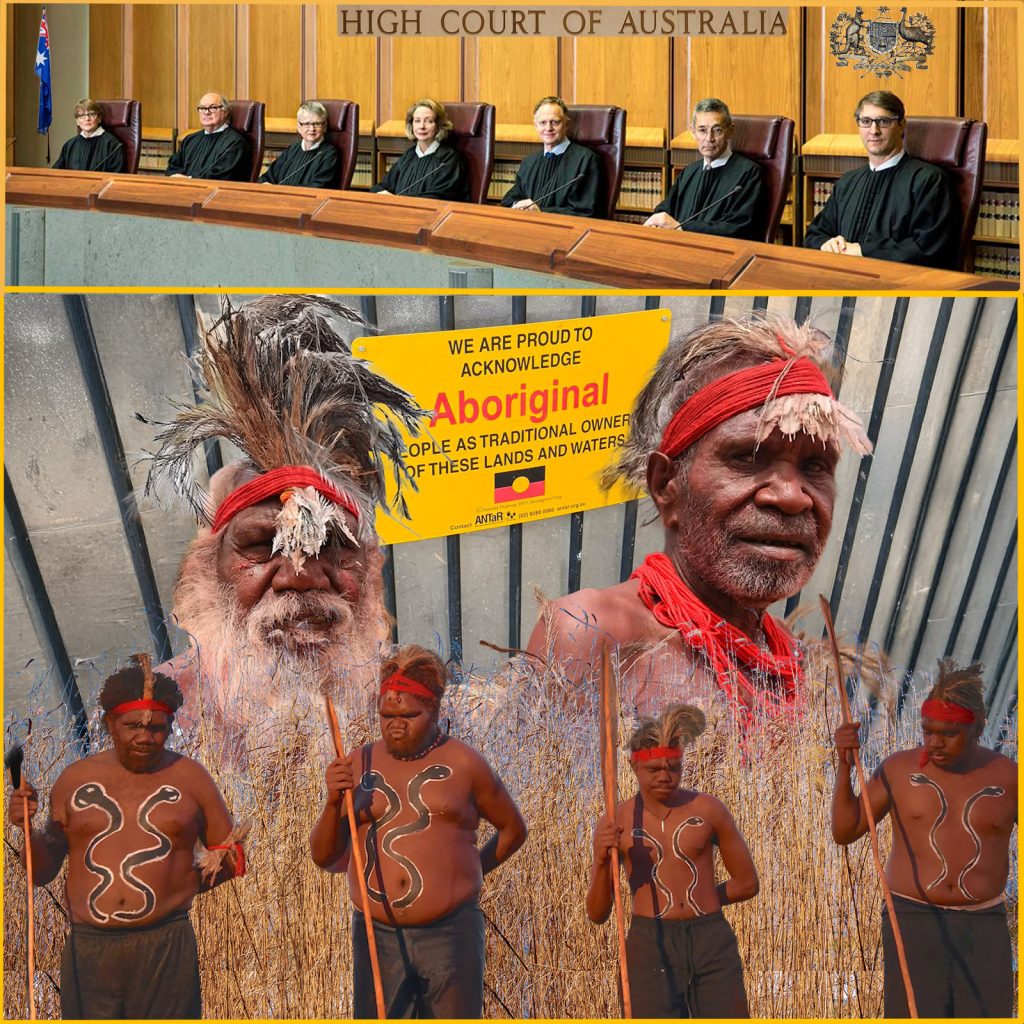
If they do nothing they break their own ancient laws. The community might lose its connection to is culture, which could eventually ruin their Native Title claim because they aren’t “practicing their customs” anymore.
If they carry out “Payback” they fulfill their cultural duty and keep the peace within the community, but the Australian police will show up and arrest you for assault. A no-Win situation.
The Australian legal system wants the benefits of recognising political Aboriginal culture (like settling land claims) without the responsibility of sharing power. By refusing to recognise customary law as “real” law, the state keeps political Aboriginal people in a permanent “grey area” – a place where their so called traditions are respected in a museum or a land council office, but ignored in a police station.
Ultimately, you cannot tell people to “keep your culture alive” to win land rights, then arrest them when they actually practice that culture’s leadership and discipline. This muddiness isn’t just an Aboriginal issue – it is an Australian Sovereignty issue.
We are being sold a ‘fair go” while the High Court builds a two-speed nation. You cannot have a stable country where the law is a solid rock for some and a shifting sand of ‘cultural exception’ for others.
By pretending that ancient tribal customs and modern Australian statutes can peacefully coexist in the same courtroom, the government isn’t ‘reconciling’ anything – they are eroding the very definition of Nationhood. If the Rule of Law isn’t absolute, it isn’t the law; it is a political negotiation.
Australia needs to decide: Are we a single, sovereign nation with one set of rules for every citizen, or are we a collection of fractured territories governed by whoever has the oldest story? The gaslighting has to stop. It is time to choose one law, or admit we are no longer have a country at all.
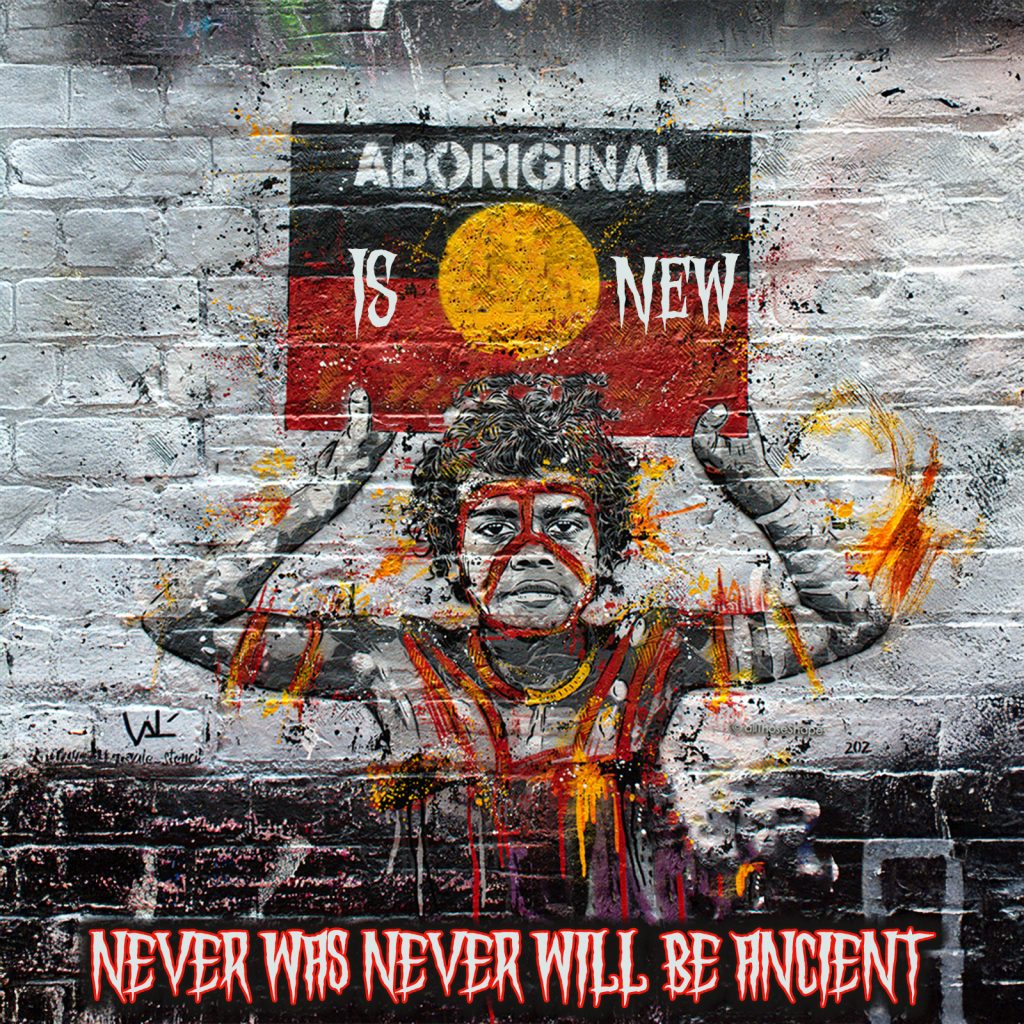
The very core of our Constitution – Section 51 – empowers the Parliament to make laws for the “peace, order, and good government” of the Commonwealth. This is not a suggestion; it is a mandate for a singular, unified legal fabric. When the state winks at “payback” or tribal violence as a “mitigating factor,” it is not practicing tolerance, it is committing constitutional treason. By allowing a shadow legal system to operate based on ancestry, the government has abandoned its primary duty to protect all citizens under one flag. You cannot have “order” when the police are told to stand down for “culture,” and you certainly do not have “good government” when the law of the land stops at the edge of a tribal boundary.
The gaslighting deepens when you ask the forbidden question: Who actually is an “Aboriginal Elder”? Strip away the High Court’s convoluted three-part word salad, and you are left with a title that is self-appointed and legal unaccountable. In a modern democracy, power is earned through the ballot box or via a transparent judicial appointment; in this “muddied” system, power is claimed through an opaque appeal to “tradition” that no outsider is allowed to question. It is the height of hypocrisy to claim we are “one people” while simultaneously maintaining a separate class of “Elders” who wield cultural authority that overrides the Australian Crimes Act. You are either a citizen of the Australian nation, subject to its Parliament, or you are a subject of a tribal faction. You cannot be both, and pretending otherwise is the lie that is currently tearing the foundation of our nationhood apart.
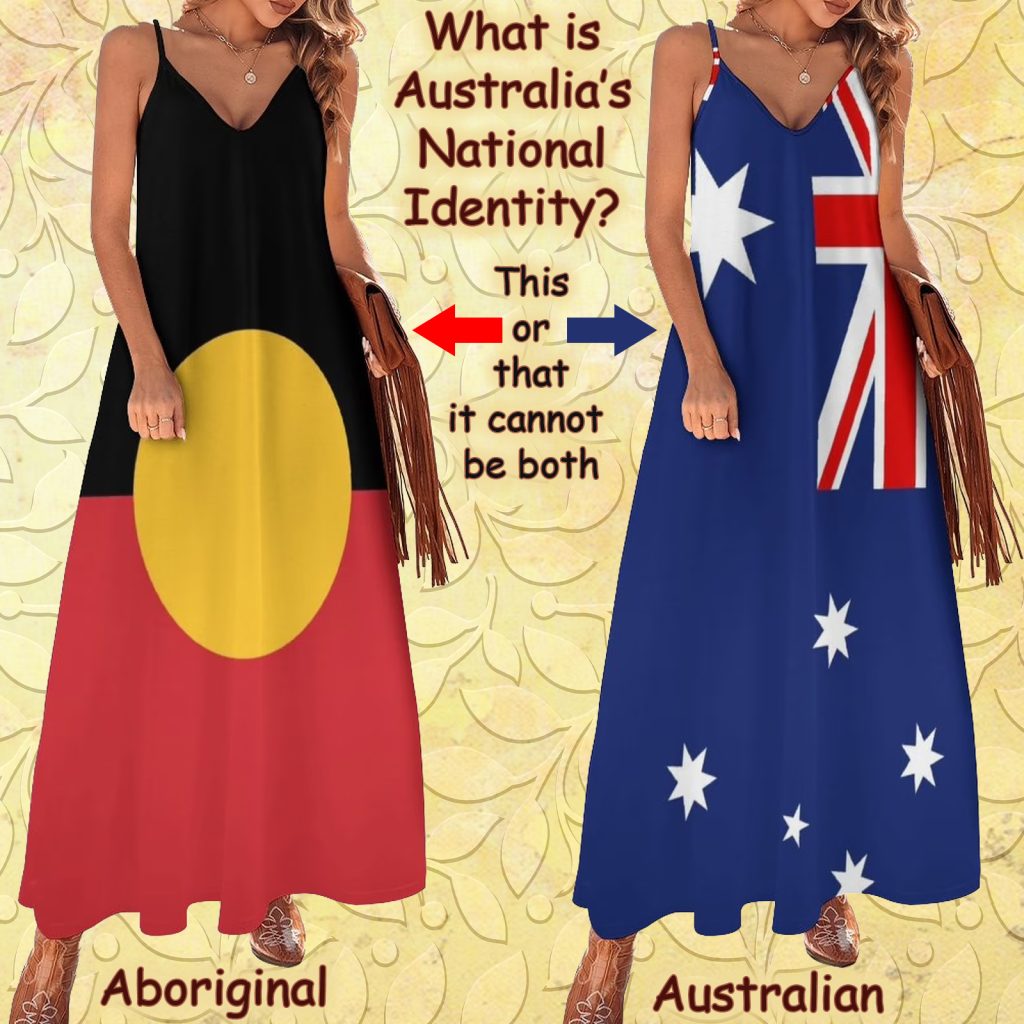
This leads to the ultimate “fork in the road” for the Australian public.
We are currently standing on a constitutional fault line. You cannot build a stable house on a foundation that is half-concrete and shifting sand. If Section 51 is meant to ensure ‘peace, order, and good government’ for all Australians, then the law must be a blind, singular force – not a pick and choose menu based on who your ancestors were.
The hypocrisy of the current ‘muddied’ system is that it asks the Australian taxpayer to fund a legal system that simultaneously undermines itself. We are paying for a police force to arrest criminals, while our courts are told to ‘understand’ the cultural traditions that drove the crime. We are told to celebrate a unified Nationhood while the government quietly subsidises a separate tribal sovereignty that answers to no one but ‘Elders” we aren’t allowed to question.
It is time to stop the double talk. You are either a sovereign citizen of a single Australian nation, or you are a subject of a fractured tribal system. You cannot be both. Until we demand a return to One Law for All, we don’t have a country – we have a land claim with a flag on top.

Related Articles
Bluey’s Land, Title of Steel
They roll out a flag, and they chant at the gate,“Always was,...
Not a history map – Not a land map – Not cartography – A political weapon for the present
David Horton’s AIATSIS map is a late-20th-century collage of language groups and...
History Never Leaves Maps Alone After You Invent One Aboriginal People With the Right to Choose Their Own Status
Has any Australian parliaments ceded our country’s sovereignty to an Aboriginal nation...


Oh, Here We Go Again: Political Aboriginal Academics Claim High Court Got Australia’s Sovereignty Wrong
Sovereignty isn’t a legal footnote—it’s the bedrock everything else stands on. Because...
