

David Gulpilil shivering like a fish in the billabong before going back to his waterhole to be a little fish again Part 2 of 3
 Maria Rigoni03/11/202510 Mins read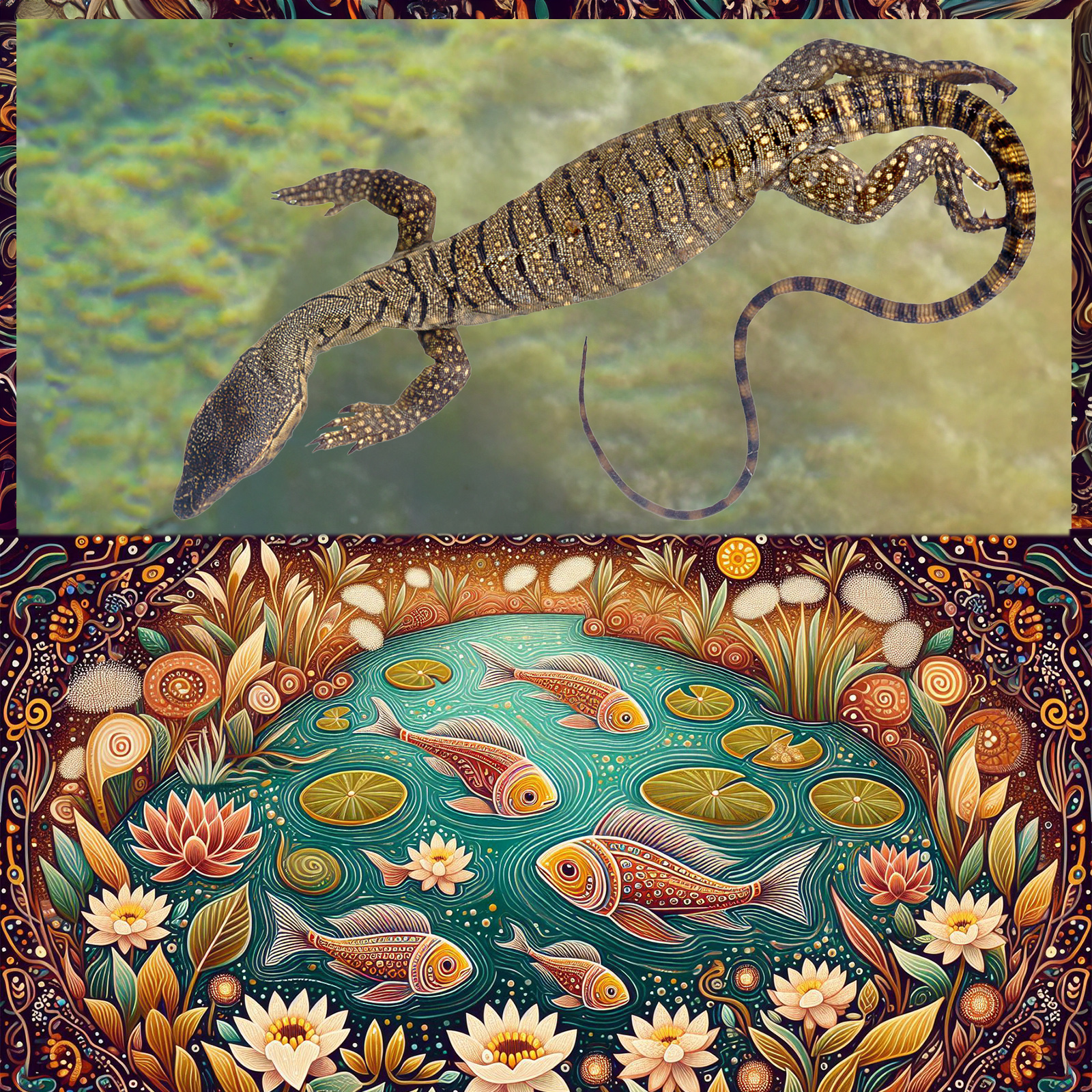
David Gulpilil is one of the last first-contact natives. He was about eight years old when he first saw a whitefella land in a plane and thought the being must be a ghost all painted up in white paint and he ran away in fright. He watched his first movie when he was 11. By his early teens David was an accomplished hunter, tracker and ceremonial dancer. When his parents died he considered himself a lost child then he walked up on his own to a welfare settlement where they called him Joe. He later attended the tiny welfare school at Maningrida where they gave him a guesswork birthdate of 1 July 1953 and lavished him the English Christian name of David. A name he said he liked from the start.
In 1969, while attending the tiny Maningrida government school the English filmmaker Nicholas Roeg visited scouting for a local native boy to play the principal role in his planned film Walkabout. Pushed forward by the elders David’s skill as a ceremonial dancer, his ability to throw a spear, track and hunt, along with his personal presence made the filmmaker take notice of him and Nicholas cast David in the role.
A few months later, without being proficient in speaking the English language, David was in the Simpson Dessert, Alice Springs and the MacDonald ranges in Central Australia being filmed in front of the cameras. The film Walkabout was released in 1971 and made David a global movie star. The film was hailed by critics as a masterpiece, an international success yet it initially flopped at the box office in Australia before it steadily grew in status and acclaim.
David’s pay for his role in Walkabout he stated in an interview was English Pounds £10,000- in wages. He was clothed, accommodated and flown within Australia and across the globe. On the way to London, they stopped in Hong Kong to have a business suit made in 24 hours. After London, came Cannes, Los Angeles and New York as part of a world-wide publicity tour. When he returned home to Arnhem Land he abandoned his Hong Kong business suit and purchased a fibreglass boat with his pay and in doing so he ditched the traditional native culture bark canoe transport vehicle.
English was a foreign language to David until after he became a global movie star. David has spoken about learning to speak English by listening to Rolf Harris, engaging with journalists and being taught a little by John Lennon. Film critics and journalists hailed him as an actor with naturalistic presence.
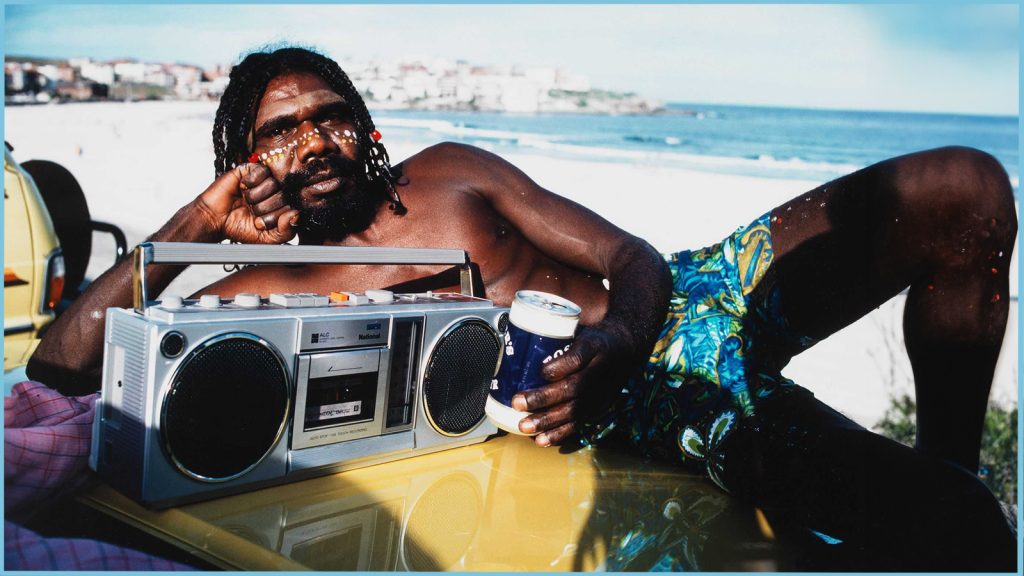
Hurled into high society as a celebrity within a few years David Gulpilil travelled internationally meeting prominent people and was presented to heads of state including Queen Elizabeth II who found David quite charming and humorous. The Queen introduced the young David to John Lennon with whom he stayed with, partied with and played the guitar with. He hung out with Jimi Hendrix in Central Park and Bob Marley who while in Hawaii introduced David to marijuana (ganja). He met Marlon Brando in Germany, Anthony Quinn in Iran, Clint Eastwood, Muhammad Ali, and other famous stars in Hollywood.
There are quite a few films and documentaries that David Gulpilil has been a script writer and actor in. In Arnhem Land amid the palms and paperbark trees the ‘homeland’ Aboriginal community Ramingining features in most. Ramingining was founded in the early 1970s by mission staff during, the overseas introduced, homeland policy push by the Australian government. It is situated on land that was previously cattle stations that failed. In 1976 Ramingining was recognised as “Aboriginal Land” through the Aboriginal Land Rights Act.
In the artificial town 580 km east of Darwin community tense hostilities rooted in old disputes about skin and country between the mobs was felt and played out. There are 15 languages spoken across 14 mobs including English. David had conflicted feelings about the mobs all being forced to live together in the one place, no work, nothing much to do, one store, government hand out of the thing called money, many different languages and different cultural practices which caused a lot of transferal of money, fighting, revenge and payback business. Personal ownership was a foreign concept not practically practiced. Everyone owned what everyone had. Government funding expectation was high. Humbug the taxpayer.
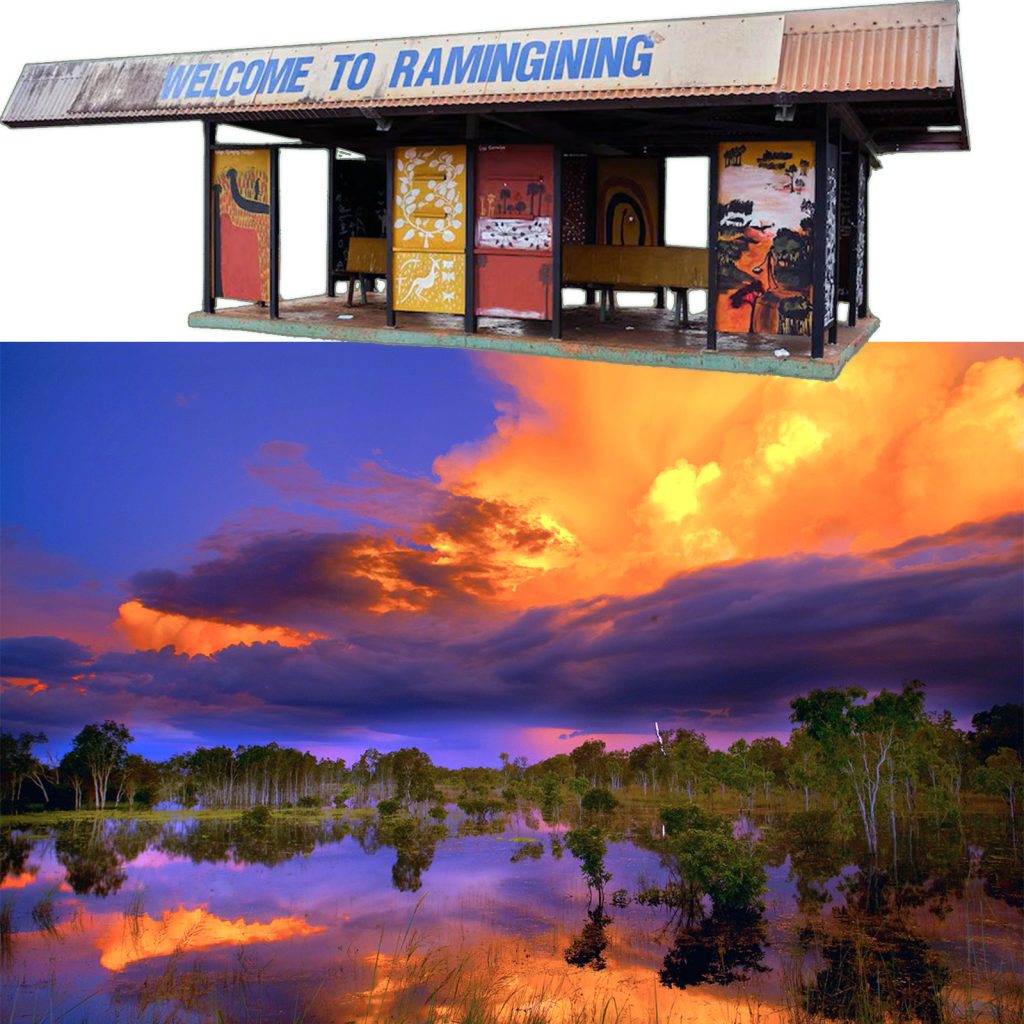
Staying in one place like this artificial ‘Homeland’ town goes against the grain of traditional forager hunter-gathers heritage and culture. Who can believe that in 2002 there was a Supreme Court battle over the burial place of a local clan member who died in Ramingining. It was usual for the men to live in the same house with more than one wife at the same time.
David revealed to a visiting journalist to Ramingining in 2002 “I eat with my hands when I’m here; I eat with a knife and fork and from a plate when I’m in the city.” “These people, they like the house, but they have no knife or fork. No chair: there are a few things missing. They’ve got a few things to learn about the white man’s world.”
Current Commonwealth and Northern Territory laws necessitate a written permit for entry onto “Aboriginal Land”. The township of Ramingining has an airstrip, a general store, a police station, a school and a medical clinic. One road in and one road out.
Alcohol and marijuana in Ramingining are prohibited. Kava, a drug with psychoactive properties, produced from a plant was introduced by missionaries and leaders from Fiji and Tonga in the 1980s as a substitute for alcohol in aboriginal communities. Kava was banned by the Federal government in 2007 but is now again a legal substance. Kava has a long history of being used in religious ceremonies in the Pacific Islands.
In 2002 the Ramingining community David called home was described by a visiting journalist Richard Guilliatt as a cluster of humpies, tents and prefab houses. On 6 November 2002 at the IF awards for Australian cinema David was voted best actor, for his role in The Tracker, a Rolf de Heer’s film. He also obtained a Living Legend award in honour of his three decades of acting in films like Storm Boy, Dead Heart, The Last Wave and of course Walkabout.
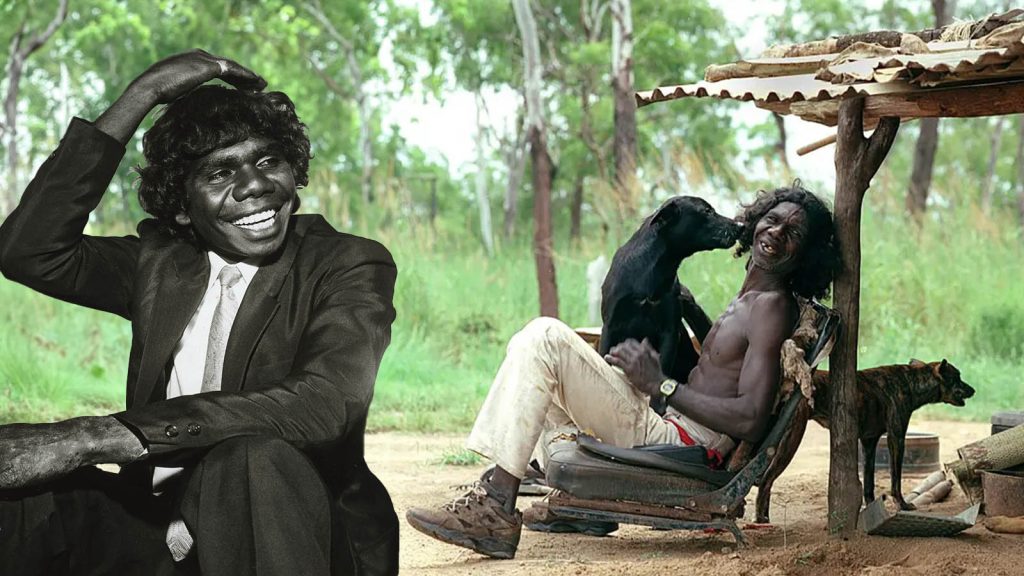
At that point David Gulpilil did not own a TV or VCR or a house in which to sit and watch video tapes. His current home with his traditional wife was a low-slung humpy made from sheets of corrugated iron banded together with plastic sheeting in a wavering fashion. His humpy had no power, no running water, and a dirt floor. They cooked bush tucker over an open fire beneath a scrap of iron roof.
David’s humpy was located in Tank Camp about one kilometre from the town centre. To get electricity David ran a 100-metre extension cord to a nearby house. He was very angry that he a Living Legend owned no home and had no money. He wanted the government to give him a house in Ramingining to live in by himself.
For years David owned a car a Toyota Land Cruiser with two plastic seats and that’s about all. A chassis with wheels he called ‘never ending story’ because it just kept going. Around 2002 his car was a 1970s Holden Kingswood Ute, a cheap unregistered multi coloured, multi car part bolted together wreck. But he drove it regularly around the rutted tracks to go places. Lying in the bush behind his humpy was his car graveyard with three dismembered undrivable four-wheel drives and an early model sedan.
On the tribal lands at Gulpulul the Ramingining Community Council did build a house for David that he did live in, on and off, for several years. Situated about 20 kilometres away, east on the Glyde River his home was surrounded by vast swamplands, a flood swollen crocodile infested river which were impassable in the wet and hellishly arduous to traverse in the dry. So, overall, the house was not used much and had since been abandoned. David was fearful of staying alone there at night because of his native belief in the supernatural forces at large in the landscape.
David argued that there were no services at his Gupulul out station. Practically his house was cut off during the wet for months at a stretch, the house was equipped with a bore pump and a satellite telephone that both broke down regularly so living there permanently was a romantic dream and logistically nightmare.
Airlie Thomas one of David Gulpilil’s de facto wives (1990-1993) stated that David could not manage money. “He lives in a culture where everything belongs to everybody. He could have unlimited money, and he would still not have enough.” In 2004 David’s expressed that “I cry for my people, I want change, make it equal between balanda (whitefella) and Yolngu people. Just like this bitumen, you know one lane one way. Black and white, one red blood. I want same like that, because I am your first-class man from country of Australia called Aboriginal.”
Richard Guilliatt described his time with David Gulpilil in 2002. “Spending time with Gulpilil is a process of hanging on for dear life as you shoot the rapids of his volatile emotional states. He’ll deride you when he’s angry, weep on your shoulder when he’s upset, mutter darkly about his enemies when he’s suspicious and babble in hilarious hooray-Henry accents when he’s feeling playful. He may even drag you out on a darkened swamp at midnight to help him hunt crocodile with a wooden harpoon while he talks to the spirits of his ancestors. And even after you’ve been through all of that and more, you might still not be able to fathom the strangely divided world of David Gulpilil.”
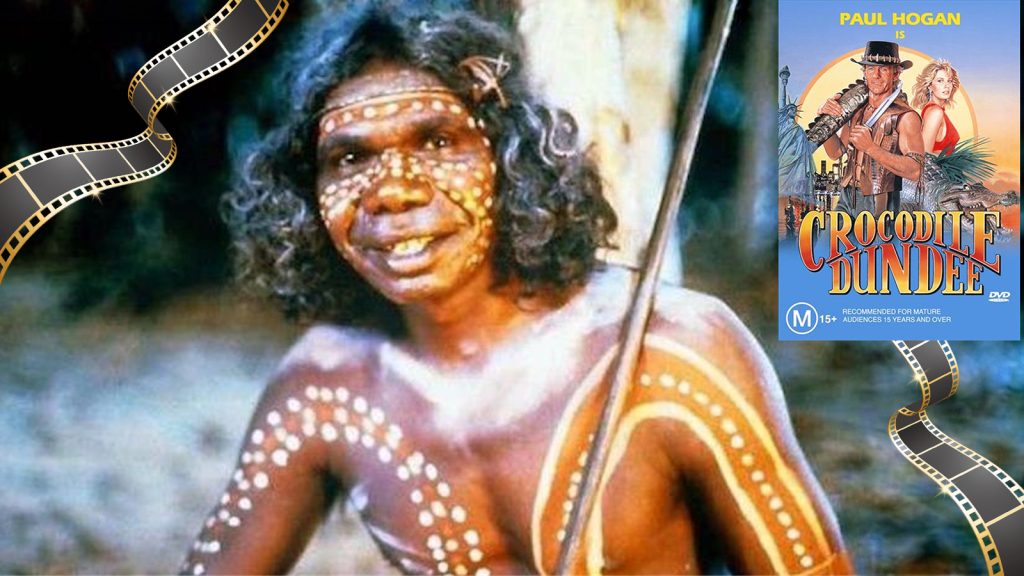
In the 1980s David appeared in the key role in Bennelong in the mini series version of Eleanor Dark’s The Timeless Land and in the extremely successful movie Crocodile Dundee.
David Gulpilil had some tough years from the mid 1980’s due to drinking alcohol, kava, and smoking marijuana too much and sharing any money he earned with his kinfolk as tribal law dictated he must. He was first jailed in 1987 for drink driving and for about 15 years he seemed like a lost soul. When his career was rejuvenated with performances in Rabbit Proof Fence and The Tracker he was seen publicly as a celebrity and a cultural hero. Yet the truth was once he put his tuxedo away Australia’s most iconic Aboriginal film star hopped onto a plane to take him back home to his life of Third World destitution.
David’s celebrity status in his own community on the face of it was almost non-existent Ramingining was for a long time an insular location where the outside world was very distant. English was the fourth or fifth language spoken and most of the local natives there at that time either didn’t believe David was a Movie Star or had no interest as movies were whitefella business of no connection to them. It was thought that David had spent so much time away from their community that he had really lost contact. While he may have been a big star somewhere he was not recognised as such in Ramingining.
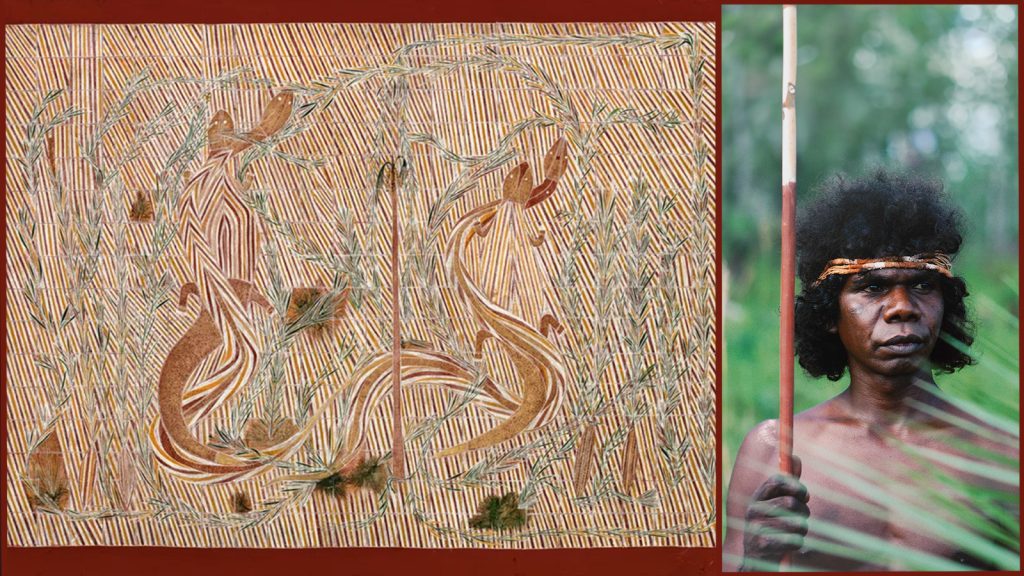
A skilled performer in dance, music, film, television David Gulpilil was also a painter and storyteller in children’s literature. As a result, David was the recipient of many awards and honours including being appointed a Member of the Order of Australia in 1987. A portrait of David by Craig Ruddy won the 2004 Archibald Prize and in 2005 he was named Northern Territory Australian of the year. In 2013 he won the Australia Council’s Red Ochre Award for his contribution to Aboriginal arts. One of David’s own paintings King brown snake with blue tongue lizard at Gulparil waterhole painted in 2013 is held by the Art Gallery of South Australia.
David Gulpilil is survived by seven named children. Although in the biography written by Derek Rielly and released in 2019 it states that David had four kids. Two boys and two girls, Jida, Makia, Jamie and Phoebe – to four different mothers. His children with his traditional wife are not mentioned in the published book. While I respect the children’s personal privacy my opinion is that their father David Gulpilil lived in a very public world and their shared history with him should be nothing to hide or be kept silent.
Six of David’s named children lived for a time in the city “getting an education”. Jida and James followed David into the film industry an work in the tourist industry. His daughter Makia McLaughlin grew up in foster care and only found out David Gulpilil was her father when she was 16 years old. Phoebe has Scottish ancestry via her mother’s lineage.
David Gulpilil had a number of life partners. For a time in the early 1970s he lived in Sydney with Diana Murray, a self-identified Yorta Yorta woman and the mother of his first child, a son. Jida Gulpilil was born at Paddington NSW in 1974. David had broken tribal law by moving to the city and living with a black girl who was not tribal. While he lived in Sydney he performed in black theatre, attended film school and appeared in television shows like Boney and Matlock Police. The relationship with Diana broke down in the late 1970s because of David’s excessive alcohol intake and the behaviour that resulted. Diana Murray stated that David had spent a lot of money in the pubs and shouting people.
Jida Murray-Gulpilil is known as a modern Aboriginal Community leader, an actor, composer and music producer. He is a natural and cultural resources manager in Western Arnhem Land and has trained as an Aboriginal Paramedic Cadet with Ambulance Victoria. In the early 2000s Jida worked as an artist using the mediums of painting, carving and etching onto bark. In 2017, while in his mother’s “Aboriginal Dja Dja Warrung country” in the town of Boort, near Kerang, in Victoria as an Aboriginal expert he made the following statement. “Come, get in the smoke. Cleanse our spirits, let the ancestors know we are here. Maybe they will guide us and show us things we have never seen before. I am going to take you into the Aboriginal world, and this is where we start.”
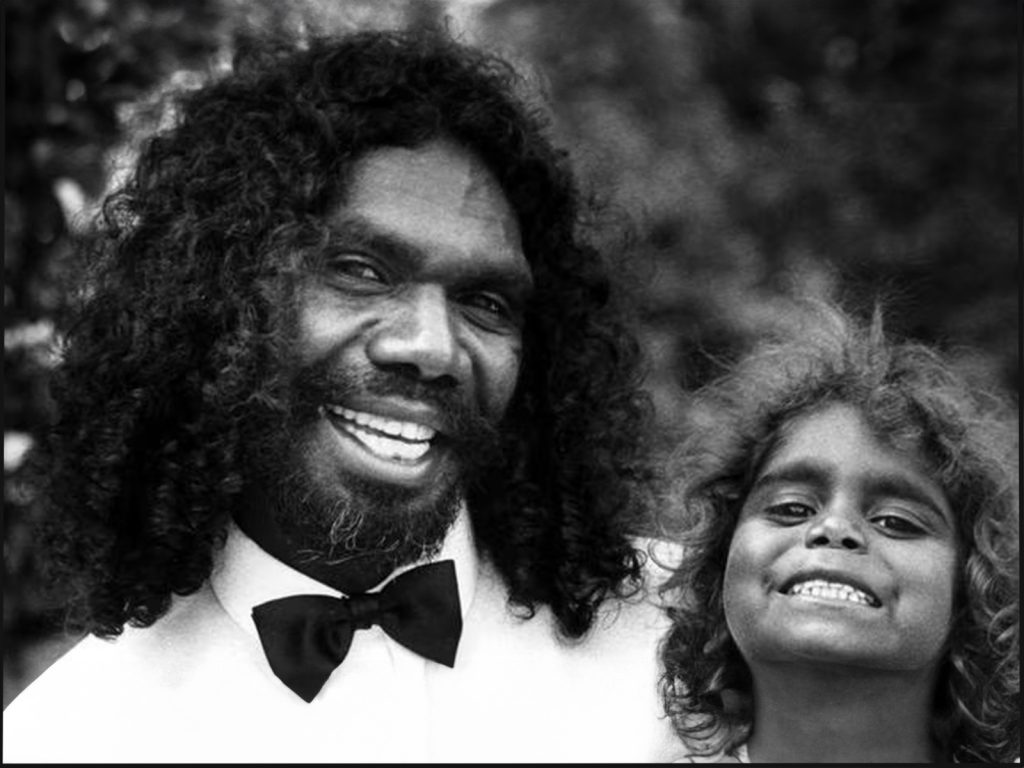
Jida Gulpilil appears to be heavily involved in the modern “Aboriginal” social construct movement and its money generating promotion. Jida Gulpilil has also been the Operations Manager at Gulpilil’s Australia. Jida sees himself as “a mentor and role model who is passionate about sharing his knowledge with Aboriginal and Torres Strait Islander youth, men and family groups and gladly extends this learning to the general community.”
The Gulpilil’s Australia website boasts; We are “An Aboriginal Landowner of the activity area and current member of Gupulul Marayuwu Aboriginal Corporation. Jida specializes in tracking, bush foods and interpretation of languages, transporting clients across the Arafura Wetlands in commercial passenger vehicles, commercial passenger vessel, and accompanying clients while transiting in R44 helicopter and light aircrafts.” As does his half-brother Jamie Gulpilil.
David Gulpilil had a relationship with Jill Ganindjar the mother of David’s son Jamie, after they split up the next was Amie McElvoy who was David’s defacto wife in the mid-80s. Both Jill and Amie were mother figures to Jamie for several years. Amie stated that “Jamie had two mothers and was looked after by both of us. There was no competition.”
At the time David’s home was at his father’s traditional land at Gulpulul, a wooden house with a tin roof, a sink but no running water. They fetched water from the river ate traditional food of emu and goanna and lived with the bare minimal. At five Jamie lived with Amie in Sydney’s Waterloo and attended Redfern Public School. When six he returned to Ramingining which limited his exposure to the outside world. His primary school years have been reported as hotchpotch going first to an out-station school before attending school at Ramingining. After leaving school he trained as a stockman and has appeared in films.
The story continues in Part 3 of 3


Related Articles

Oh, Here We Go Again: Political Aboriginal Academics Claim High Court Got Australia’s Sovereignty Wrong
Sovereignty isn’t a legal footnote—it’s the bedrock everything else stands on. Because...
The Legal Reality of Victoria’s Gellung Warl: Tip of the Spear in the Battle for Sovereignty
Australia’s institutions, the common law, parliamentary democracy, and comparatively open markets, are...
Why Can’t an Everyday Aussie Buy a Block in Beautiful Beagle Bay? Aboriginal Land Rights, Mate – ‘No Entry’ to Everyday Aussies!
Australian taxes build ‘Aboriginal Land’… then the political Aboriginals charge you to...


The Great Betrayal: How a High Court Rewrite is Resurrecting Feudalism in Australia
Australia’s founding promise was simple: one law for all. But a radical,...
