

‘Full Red Blood’ Australian David Gulpilil the boy then the man the camera found irresistible and mesmerising Part 1 of 3
 Maria Rigoni03/11/202511 Mins read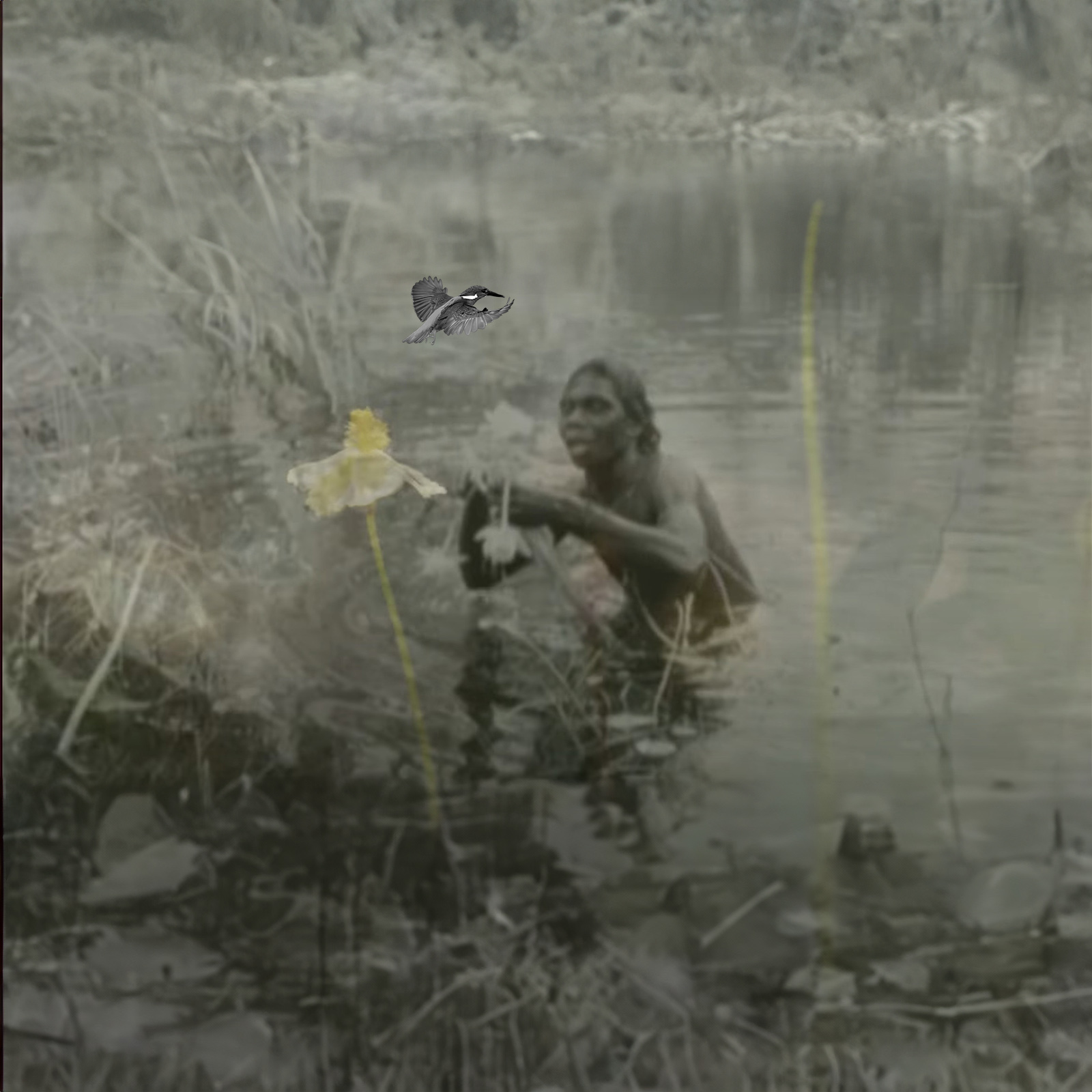
David Gulpilil was born an Australian citizen with full citizenship rights. The Aboriginal flag and the red, black and yellow associated political and land rights activist movement that wants to destroy Australia did not exist until after David was a worldwide famous movie star.
David Gulpilil was the creator of his life, he made daily choices that had real life consequences in the country he loved. Australia.
Having the label of an “Aboriginal” made David’s adult life tough because it made him feel trapped and boxed in a made up modern cultural situation without seeing a clear way out. The holding on to tribal hangovers from the old primitive way of life, such as humbugging, blocked his ability to trust himself and embrace his intuition and use his success to create wealth for himself. Sometimes he was lost in mental chaos. Even though his boyhood eye colour of brown changed in late life to blue the colour of his blood remained red.
The Australian man born with a dark skin tone who was known as David Gulpilil had a healthy ego and loved to be on the red carpet as it made him feel like a king. He loved to make movies as it allowed him to push his spirit out of the camera into a reflective magical frame. In my opinion David Gulpilil did not live a perfect life in a perfect world at a perfect time and he has left a loud and clear message for those left behind to honour and gain insight from.
Identified as a Yolngu man of the Mandhalpuyngu clan in Arnhem Land, David Gulpilil, was a great Australian actor with an infectious smile. There was a difference between the movie star and the man and the artist. He was called an Aborigine. He called himself an Aboriginal but these legal and political terms are damaging and no longer real or honest in today’s world. There is no Aboriginal race or distinct single Aboriginal culture and David Gulpilil showed the world that, time and time again, in his films and documentaries and timeless interviews. He understood we are all part of the same human family with one red blood flowing through our veins pumped around our body by our heart.
Some David Gulpilil reflections:
“Well, it’s about me, it’s about me. I love my country of Australia. Whichever left or right, sometimes straight and bottom. I love my country. I love there and that is me and I make a movie, and I walk on the land of my ground and of my soil. You know I like the movie I make, Walkabout. I walk in the soil. I walk in that one, yeah, that’s a good movie Walkabout.”
“I like to make a film, it’s a history. I like it because it won’t rub out.”
“My name is Gulpilil. This is about me… and no one else can do the life story of me… I live in my land and my land lives in me. We live together. There is nowhere else I can go. This is my home.”
“If you are working with people like Dennis Hopper and John Meillon, well you gotta learn all about drinking and drugs.” “When I was 20, stoned everyday smoking marijuana. Dennis Hopper learn about drinking and smoking whitefella corrobboree I got to join in.”
“Left side, my country. Right side, white man’s world. This one tiptoe in caviar an champagne, this one in the dirt of my Dreamtime.” “It’s not difference for me. Just like drinking coffee, milk, two sugar. I don’t know. I’m a bush man. I’m a city man. I’m a bit of everything, you know.”
“I was brought up in a tin shed. I wandered all over the world – Paris, New York – now I’m back in a tin shed. How come I don’t have a house? I’d like to know. I travel the world. I come home; there’s no home. All the world thinks I’m living in a luxury house right now. This community forgot me.” “People say to me: You’re a big name. You have money. Why don’t you buy yourself a house; get out of Ramingining? This is my country. I belong here, and I’m broke.”
“Thank you very much for watching me. Never forget me. While I am here I will never forget you. I will still remember you, even though I am gone forever.”
I write this piece with a deep respect for David Gulpilil’s life story and the wisdom he left behind. My opinions and discussion are an effort to disseminate the message his time on Earth was meant to show the world. This is my creation of who David Gulpilil was in this world, as evidenced through a mountain of film, voice and written material.
David Gulpilil was a gift sent from God to the human world to learn from. I trust why his spirit matters, and why his physical story matters in the everywhen and will be more understood over time.
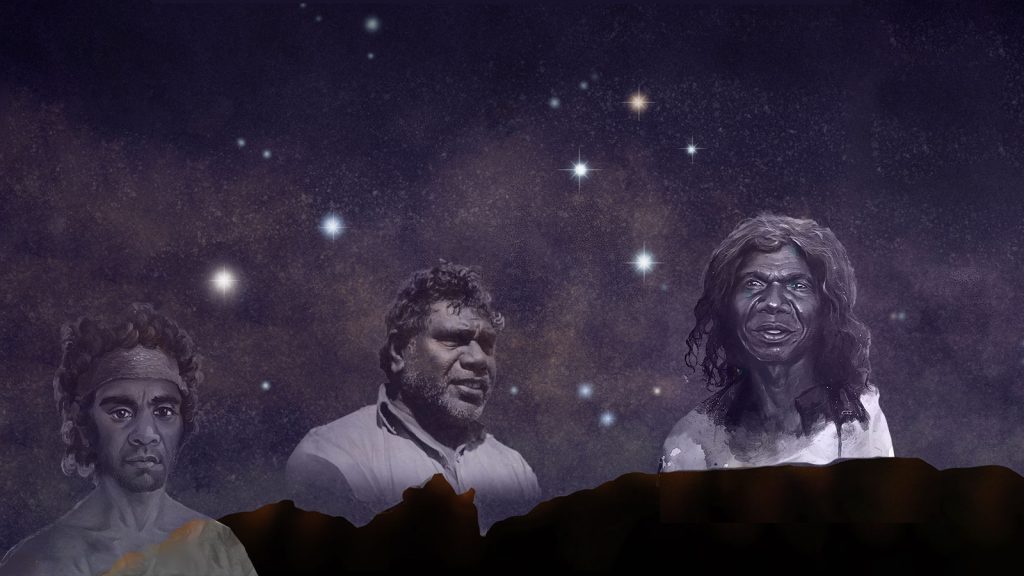
Behind the veil David Gulpilil is a spiritual elder and he stands and floats around with Albert Namatjira and Bennelong. All three men I believe are our spiritual ancestors who willing communicate to show their spirits live on an interconnected and perpetually present and will continue to influence the present and future.
The town of Maningrida is situated on the North Central Arnhem Land coast of the Arafura Sea, on the estuary of the Liverpool River. A spot that has good accessibility to deep water where one can bring needed supplies. In the late 1940s after World War II this town was established as the first government-sponsored trading and rations post with the aim to create a self-sufficient and independent of welfare support for its local native community. The settlement was designed to slow the tide of migration of local natives to Darwin some 500 kilometres away. In 1950 with a change in Darwin government administration the trading post was closed.
At Maningrida a missionary presence started in the 1930a and established in the 1950s and in 1957 two ex-missionaries, David and Ingrid Drysdale inaugurated a new government-sponsored not missionary-sponsored settlement. An airstrip was cleared, a school was built and in 1962 a hospital was opened. Local natives previously isolated living forager, hunter-gatherer lifestyles quickly learned of the attractions of the whitefella’s sugar, flour, shop goods, tools, hunting equipment, transport, tobacco, alcohol. The blackfella wanted what the whitefella had. Tribal aborigines seeking whitefella novelties’ from around 14 mobs migrated into the settlement. The closeness of the former missionaries in leadership roles meant that Protestant Christian influences continued in the settlement. English was not the dominant language usually being the fourth or fifth language learned or spoken.
The migration from a broad catchment area was not all sweets and lollies. Family groups left their local areas many miles away to travel into another clan’s local area and they were not welcome. For example there were fights over who was allowed to make hair string used for arm bands for rituals such as initiations and ceremonies, as some believed that only two clans were permitted no one else was allowed to make hair string armbands.
While its origin is lost in time gone by the practice of making hair string was common and varied considerably in native groups across the whole Australian continent. It was the precise mastery, the exact technique that was past down the generations of clansmen. David’s kin father taught him the tradition so he could use the sacred element to connect to his ancestors and the spirit world.
In 1969, a young blue-black skinned teenager, a Darwin Eisteddfod winning ceremonial dancer, with a bright-eyed sparkle was discovered in Maningrida, the tiny government welfare settlement on the north-east coast of Arnhem Land. The boy’s elders called him forward to meet an imposing balanda (whitefella), an English film director looking for the community’s most gifted dancer. A movie career for that selected full blood native boy exploded into international stardom. That boy’s name was David Gulpilil.
David Gulpilil was an Australian man who believed he took both his country and his culture into the outside world for all to see. He was a heartfelt yet somewhat troubled man who loved the tropical landscape of palms, paperbacks, eucalypts and spinifex rolling into a swamp which is a sparsely forested terrain of rivers, gullies and saltwater plains. This was his birthplace and surrounds. David was a man who loved his sentimental memory of his childhood with its mythical primitive native culture.
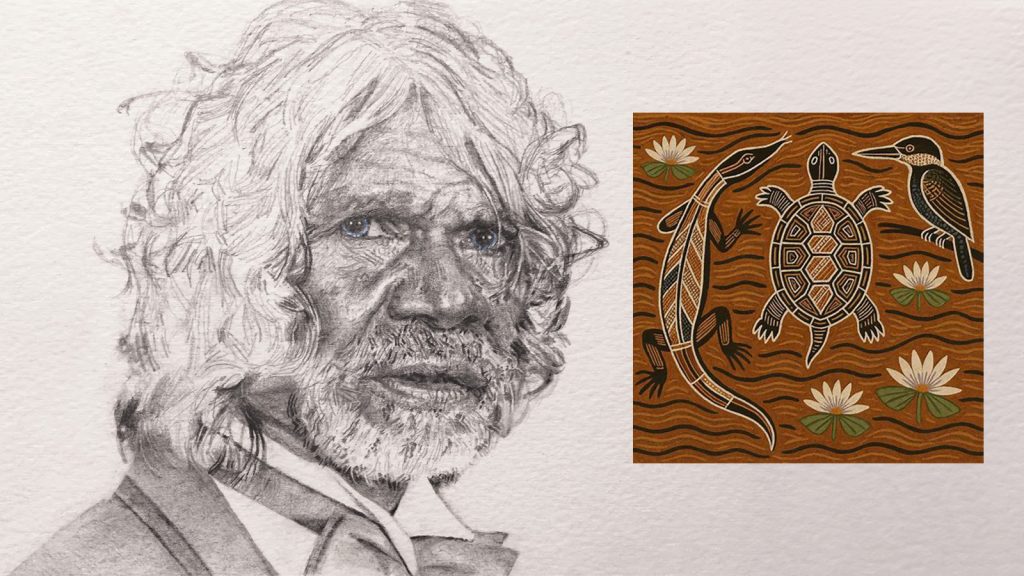
David Gulpilil held the whole of his country Australia in his heart. All Australia was embedded within his soul. Born emersed in the Australian bush and died emersed in Australian civilisation.
I am unable to personally ask David Gulpilil’s physical form these questions, but I would have liked to. While living did David understand what his true culture was? Did he understand where his true culture came from? David Gulpilil’s true culture certainly was not ancient it was a mix of primitive folklore and modern civilisation.
In an interview in 1978 David Gulpilil said “You got your culture, I got my culture. Anyone got culture. I keep my own culture.” However, it was not possible to return to the way things were when he was a young boy or to show that existence to the world as that vulnerable childhood experience had long disappeared into a Dreamtime of muddled up memory and a confused introduction to a continually changing civilised way of life.
Later in life David mused “My culture was interrupted by your culture”. “We had promises from the mission people that they would help the Aboriginal people, but the missionaries thought our culture was a sin. They wanted to destroy our culture. We had to go away and in secret do our own ceremony. I went to Sunday school every Sunday, you couldn’t miss that they’d say, ‘Where you been – the devil took you away?'”. He mocked the Christian mythology, with its bearded Jesus in a celestial heaven. “Brudda, they been up there and they found Jupiter, and Saturn and Mars, but I don’t think they’ve found Heaven yet.”
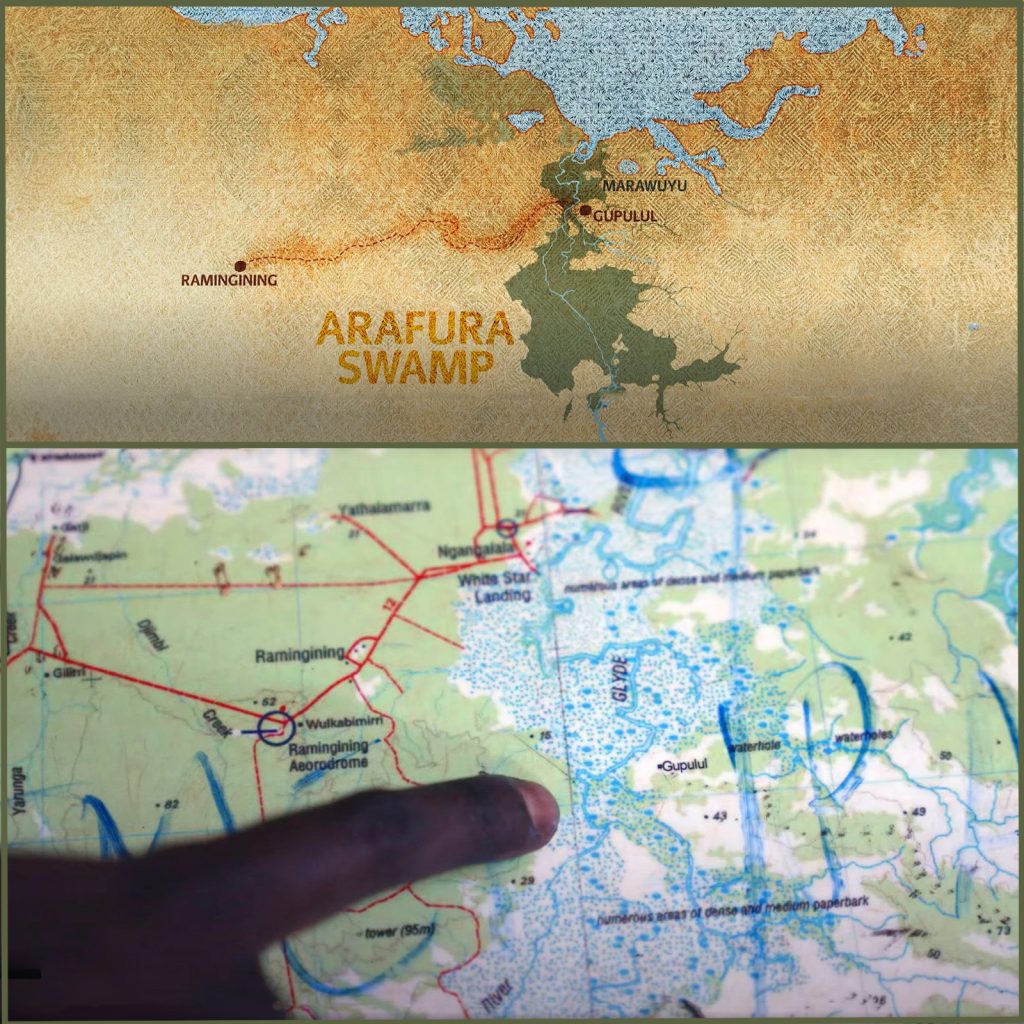
David Gulpilil who had a handsome, sexy, charismatic, mesmerising, loose-limbed presence was born in Australia on an unknown date somewhere around 1953. His birthplace was in a remote part of Australia in the Northern Territory in a land area known as Maningrida. It was a spot near the current Ramingining and Gupulul on the edge of the Arafura swamp in northeastern Arnhem Land.
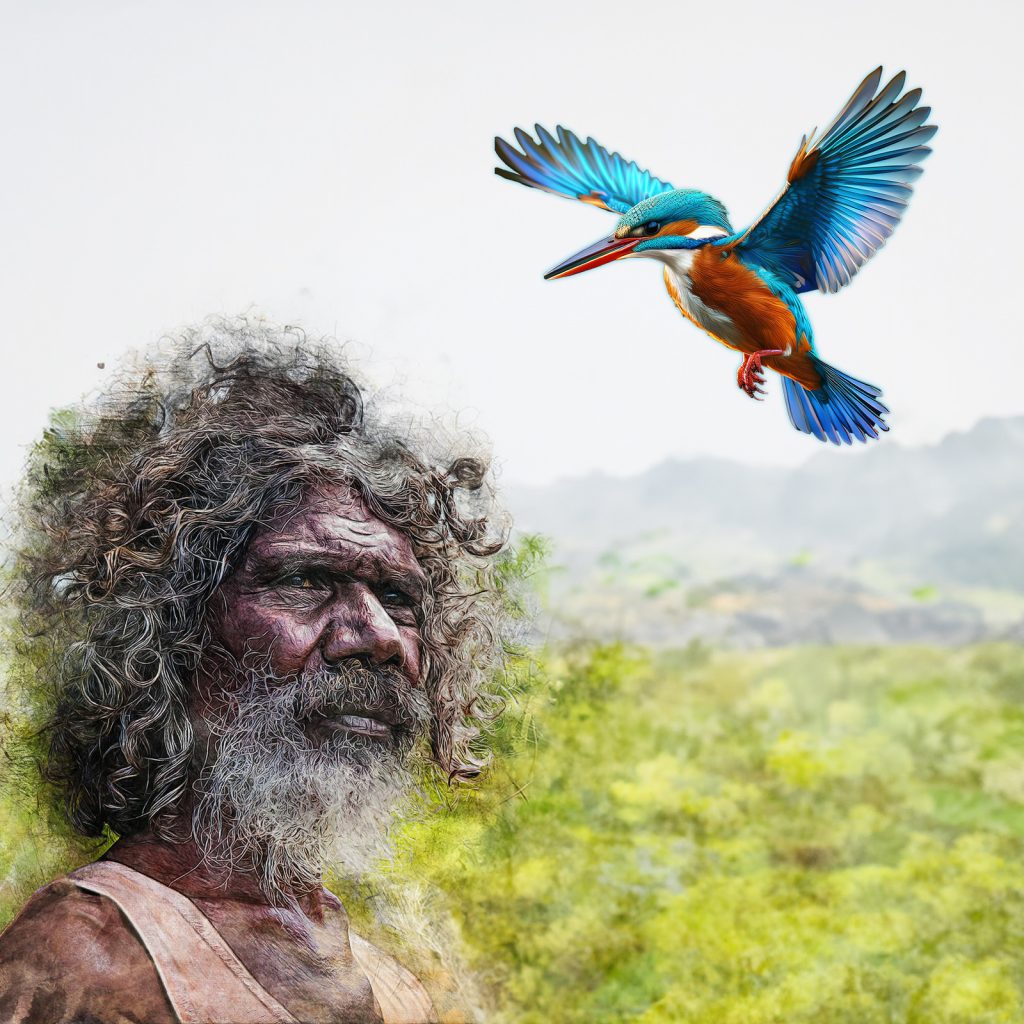
A remote destination with not many people, no running water, no power and with rivers infested with many saltwater and freshwater crocodiles. He was know as a Mandipingu (Yolngu) tribesman and when he came of age was initiated into the Mandhalpuyngu language group. His home turf deep in the picturesque wetlands in northeast Arnhem land was called Marwuyu. His totem was the Kingfisher. He sang the Kingfisher song.
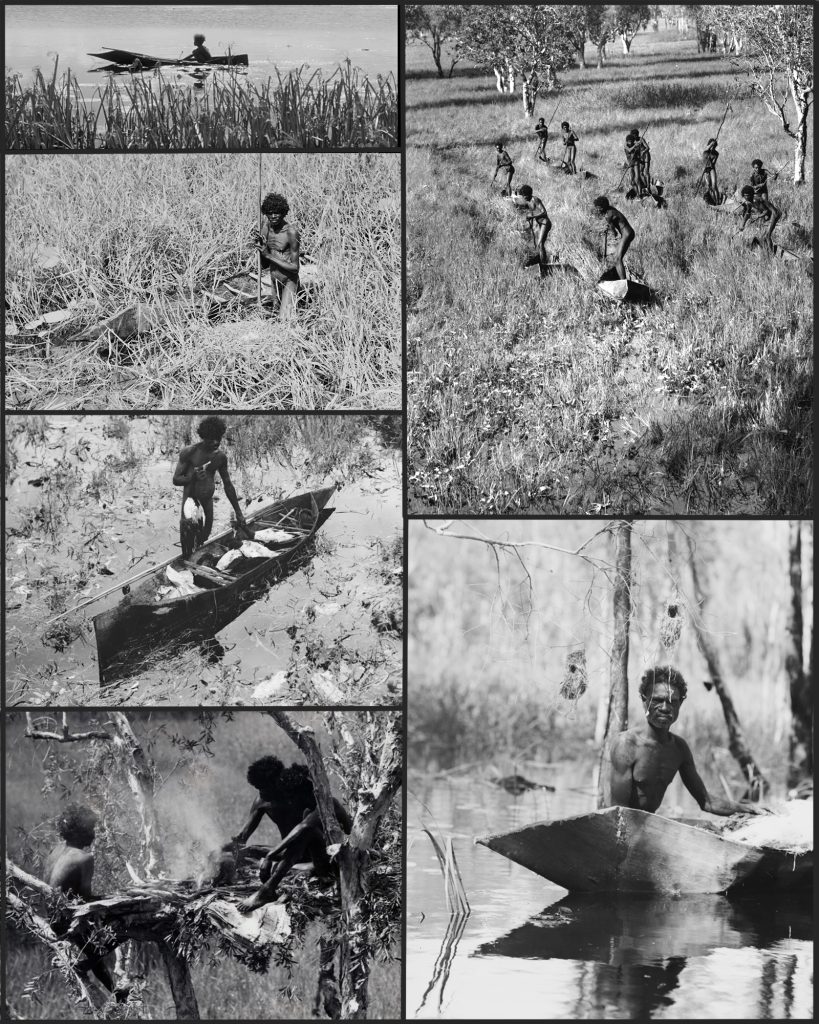
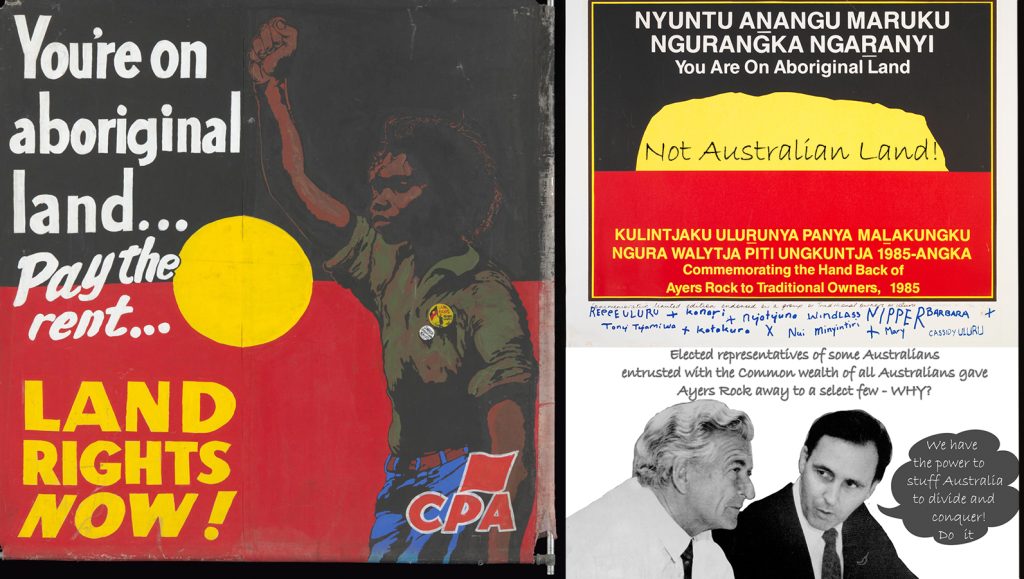
Arnhem Land under the Aboriginal Land Rights Act is “Aboriginal-owned” land. The vast diverse wetland area of Australia supports habitat for over a thousand native and introduced species of plants with hundreds of species of fish, birds, mammals and reptiles. The ‘aboriginal’ landowners are not individuals but unelected quasi government corporations who have strong control of what can happen there, who can visit and what the visitors can do. This must change!
Australian land belongs to all Australians and “Traditional” Aboriginal Corporation owners is a modern legal and social concept with terminology that is used to change laws and to claim country that belongs to and should be accessible without entry permits to all Australians.
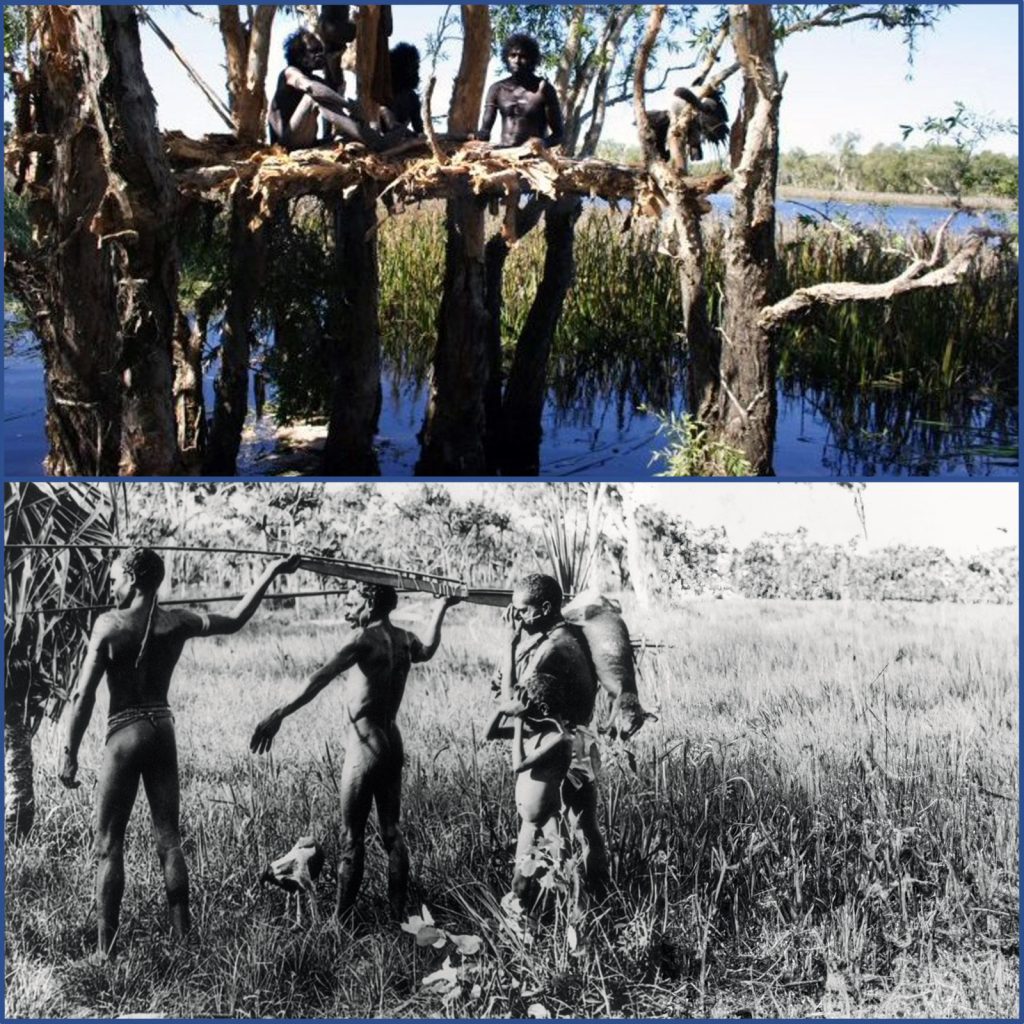
When David was born his parents lived a true primitive nomadic native existence. Moving from place to place sheltering in caves and building temporary bark shelters and wooden platforms to sleep on with a lit fire creating smoke to keep the mosquitos at bay. They were traditional foragers, hunters-gathers with their day being taken up mostly looking for, preparing and eating food. They moved around the swamp and on the river in homemade bark canoes. As a local native child David was raised in the bush and in his early years he was introduced to some of the tribal customs of his parents.
As an adult David recalled “I travelled with my mother and father and family when I was a young child. It was different then this land was empty, beautiful. My family never smoked cigarettes, never smoked Ganja, drank no alcohol. Just fresh water that’s it. Walk and live in this land.”
Births, deaths and marriages were not recorded for these primitive Australians until the missionaries arrived. Like most around the country these nomadic Australians wore no clothes, had no electricity or land transport vehicles of any description. These people had no problem with being naked it was their natural way of life. In their primitive lifestyle these families of natives had no firearms for hunting or fishing rods with hooks. Saucepans, frying pans, baking trays, knives, forks, plates and cups did not exist in their natural world.
I could find no information publicly available on when, how, or where David’s parents were born or died. Who their parents were or where they came from. It is well known that all ancestry details back then was an oral history. In their primitive way of life the deceased were rarely spoken about for fear their spirit might bring trouble to the mob.
A journalist’s article published on ANZAC day 2004 stated that David’s mother was described by a family friend as a wonderful woman, soft and gentle who suffered with leprosy and would get around the bush with a wooden leg. His father, a ceremonial dancer, died from gangrene after his foot had been amputated. David has indicated both his parents died when he was a young lad. Both his parents had medical conditions that modern whitefella medicine may have cured.
Then we have the story whitefella Richard Trudgen tells, which I doubt there is any truth attached to. His claim is he knew both David’s mother and father. If that were true David was not an orphan but an abandoned child.
Richard Trudgen was a fitter and turner by trade who moved from New South Wales to Elcho Island in northeast Arnhem Land in 1973 and became a self-taught expert in Yolngu language and history and made money selling language cassettes etc. He is the author of the book Why Warriors Lie Down and Die. Many other whitefellas and mission educated Yolngu thought he was mad and he left Arnhem Land close to death in 1983 after contracting a golden staph infection. He returned in 1992 “at the insistence of Aboriginal Resources and Development Services” and worked as an Aboriginal development consultant. He was very critical of the whitefella way and insisted that the local primitive natives used to live until 80 or 90 years of age but because of the whitefella influence were now dying prematurely at a ‘horrific rate’ of affluent diseases like heart attacks, cancer, stroke and diabetes.
Richard Trudgen has claimed that he saw David Gulpilil in Darwin around 1978. His told story is that David peeled off $32,000- cash from a wad of notes held in his hands and told Richard to give the cash to his mother who he claimed he had worked with to get an airport built in her paternal grandmother’s country. According to Richard, David’s mother died somewhere between 1983 and 1992. And David’s father died in 1977 or 1978. That would mean that David was 25 years old when his father died and between 30 and 40 when his mother died. Another claim of Richard’s is that David was a great disappointment to his parents.
The local native women from David’s mob used plant material and natural dyes to create strong resilient fibres that were weaved into utilitarian, ceremonial, and decorative pieces. Practical items included dilly bags, bush string bags and fish traps. In the 1930’s through the missionaries influence the Arnhem Land native women started to weave functional and decorative baskets using a coiling technique commonly used by natives in south-east Australia.
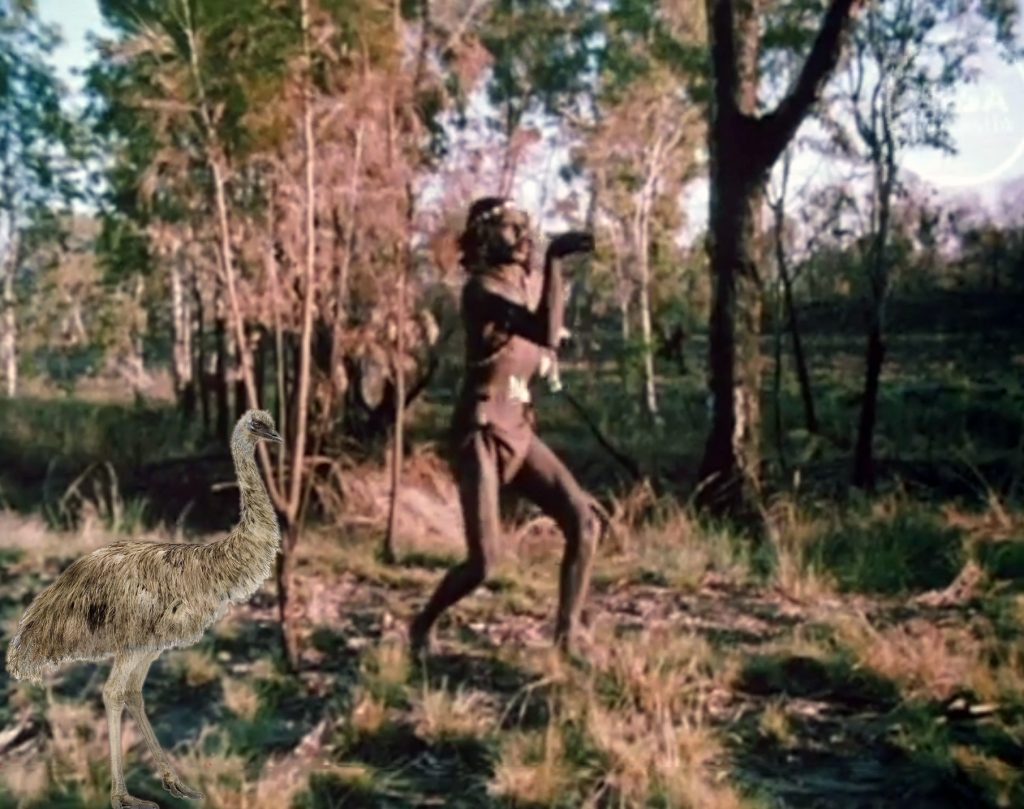
David’s early childhood traditional life included song, dance, storytelling, body /bark /rock painting, ceremonies, hunting, tracking and playing the didgeridoo. He had a twin sister Mary Dhapalany who began making fibre objects for practical and ritual use in her early teenage years. Her grandmother was her teacher. Today, Mary is known as a very skilled weaver of articles including mats and fashion wraps. His other siblings are Peter Munuyngu, Belinda Gunydjulma and Evonne Munuyngu.
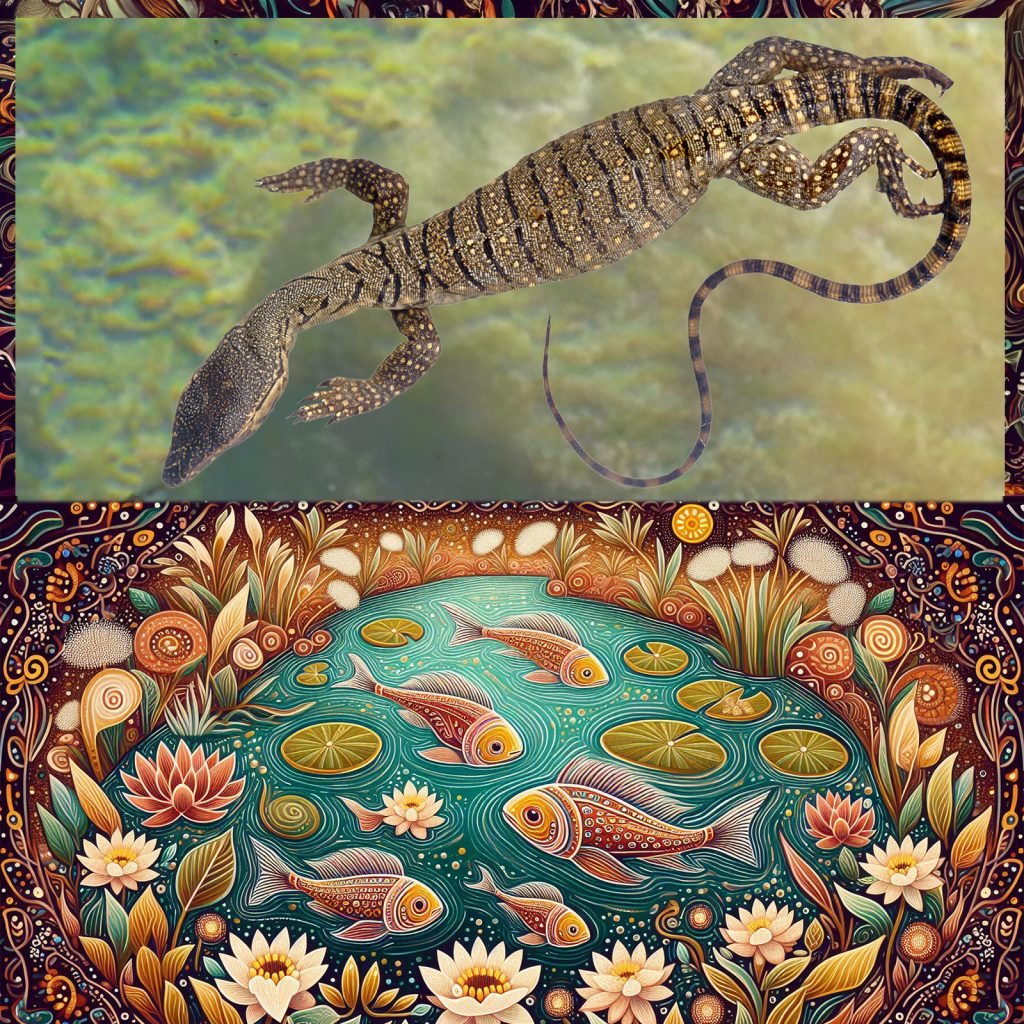
“Water goanna is sleeping. Water goanna tracks… he is sleeping nearby. On waking he’ll travel to Milpurra after that Bungullea and then Marwuyu where my father came from… The elders will do their part but the older boys nothing. We need to return to our birthplace. Back to our country and waterhole to become little fish again…”
The story continues in Part 2 of 3.

Related Articles
Bluey’s Land, Title of Steel
They roll out a flag, and they chant at the gate,“Always was,...
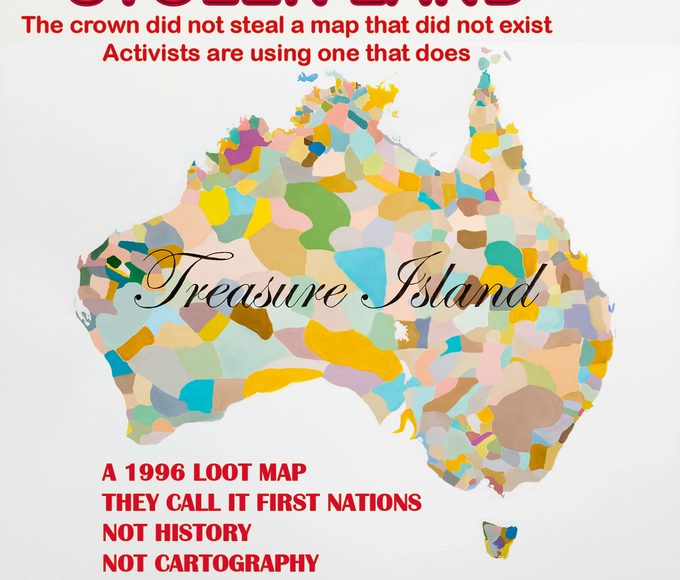
Not a history map – Not a land map – Not cartography – A political weapon for the present
David Horton’s AIATSIS map is a late-20th-century collage of language groups and...
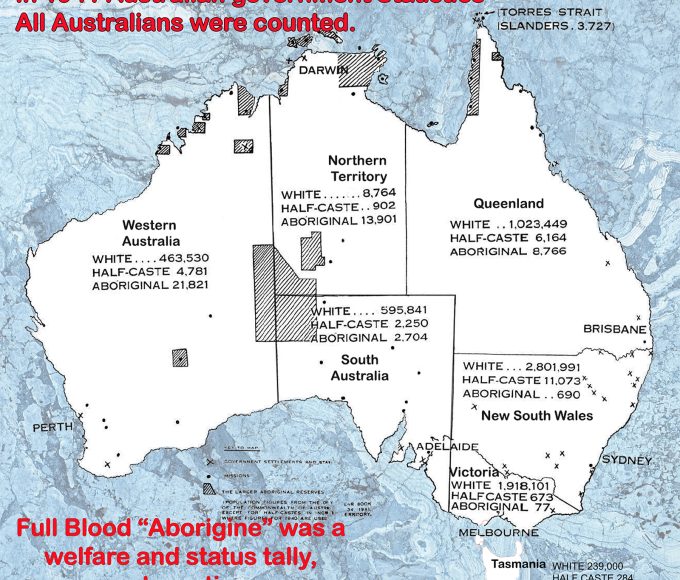
History Never Leaves Maps Alone After You Invent One Aboriginal People With the Right to Choose Their Own Status
Has any Australian parliaments ceded our country’s sovereignty to an Aboriginal nation...


Oh, Here We Go Again: Political Aboriginal Academics Claim High Court Got Australia’s Sovereignty Wrong
Sovereignty isn’t a legal footnote—it’s the bedrock everything else stands on. Because...
