The 1967 Referendum: Why the Legal Facts Don’t Match the Political Fiction
 Maria Rigoni01/04/202611 Mins read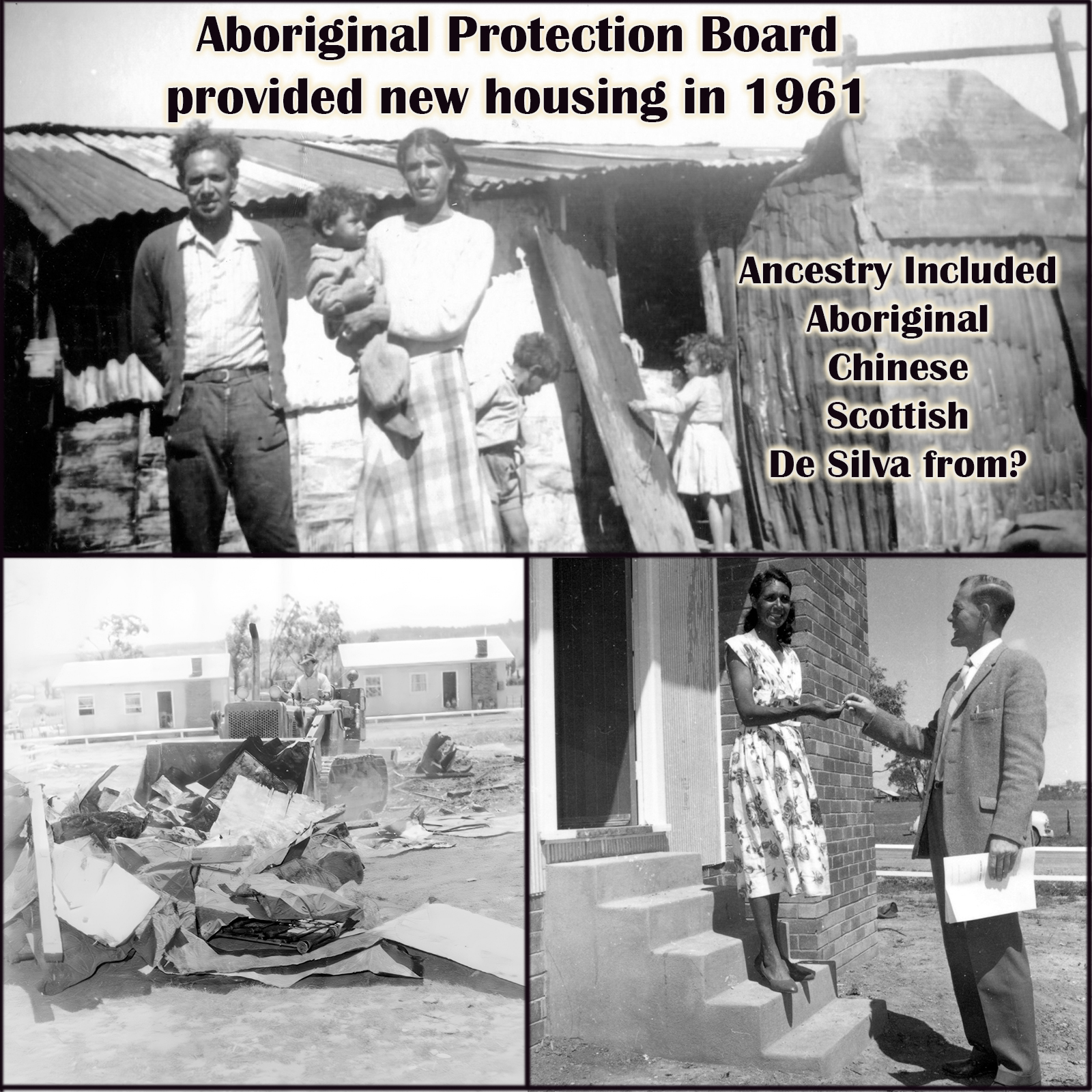
In the 1967 Referendum the Australian people voted, in good faith, for a “spiritual” or “moral” and welfare access equality, but the legal system used that vote to create a permanent, undefined power to legislate by race.
The 1967 Referendum did not grant political Aboriginal Australians equality under the law. It did not give the rest of Australians equality under the law either.
The Yes vote was sold to the public as a straightforward promise of equality and inclusion. Instead it opened the door to a two-tier system in which one political group now claims superior rights, while every other Australian is treated as a second-class citizen in their own country. What began as a vote for fairness has metastasised into a cancerous legal doctrine that elevates historical grievance into a superior property right. Ordinary Australians – whether their families arrived in 1788, 1850, 1918, 1950 or last year – are now told their citizenship carries a permanent asterisk.
Language groups are not legal entities. They were never land-owning bodies. They are nothing more than anthropological labels slapped onto small, kin-based clans that simply used the fruits of the land – hunting, gathering, and moving across country according to seasonal needs and kinship lore – without any concept of exclusive ownership as understood in British or European law. Those original clans had the historical and anthropological coherence needed for any genuine native title claim. The language groups now pushing claims simply displaced them.
Memory has replaced practice. Cultural abstraction has replaced real entitlement. And once that fiction is accepted, the entire foundation for native title collapses. Real native title was always supposed to rest on continuous, recognisable traditional law and custom practised by coherent groups. By swapping actual continuity for modern identity politics and convenient oral memory, the courts have deliberately sawed off the branch they sit on.
Here is the fatal contradiction the High Court cannot escape: when the law admits dispossession, it is not stating neutral history – it is confessing that continuity has been severed. You cannot declare a people’s presence, law, and land-holding system were erased, then turn around and pretend those same systems miraculously survived in legally recognisable form. That is not recognition. That is not justice. That is a brazen, deliberate abuse of the law, masquerading as virtue.
Let’s state the bleeding obvious. The leaders of two nations sit down to negotiate as sovereign equals. A statutory body – ATSIC in its day – hands one political group its own representative voice and direct control over a slice of the state’s budget. An “Aboriginal-only” political platform gives Lois O’Donoghue the platform and leverage to negotiate the Native Title Act, locking in land rights for “her people”. The High Court then crowns the exercise with a unique, one-of-a-kind sui generis status: their connection to the land is supposedly so ancient and fundamental that they “cannot belong to another place.” This creates an explicit race-based constitutional distinction and a “non alien” status that no other Australian enjoys.
All of it violates the most basic principle of equality before the law. One political identity gets its own negotiating table, its own funding stream, its own land rights regime, and its own protected constitutional category. Everyone else gets to pretend this is still one nation under law.
Native Title is not a moral award to soothe old wounds. It is a political weapon designed to divide Australians into favoured insiders and perpetual outsiders. The 1967 Referendum was the moment Australia handed that weapon its ammunition – while telling every non-Aboriginal citizen that their equality under the law would forever rank second.
Legal theory and common sense had a major collision in the Mabo v Queensland ((No2) 1992 High Court challenge. The concept of Radical Title is a “legal fiction” – a tool invented by activist judges to solve a political problem without toppling the entire federal parliament. From a common sense perspective “I rule the land but I don’t own the dirt” seems like a contradiction. The Australian legal system relies on this distinction to operate.
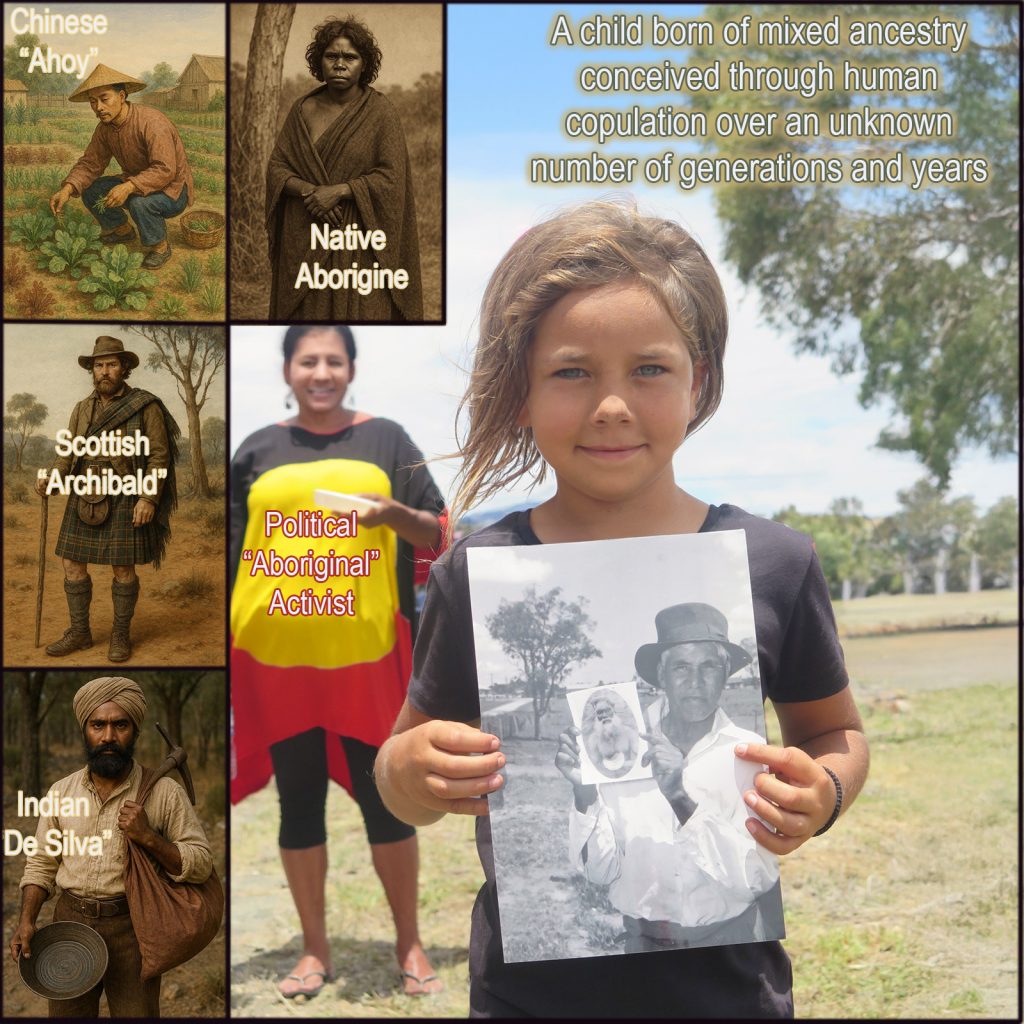
The term “Radical Title” (from the Latin radix, meaning root) comes from English Feudal Law. After the Norman Conquest in 1066, William the Conqueror claimed he was the “Lord Paramount.” He did not physically “own” every farm, but he held the “root” title from which all other land rights grew. This Feudal Law was dormant in Australian Law until the 1992 Mabo decision. The High Court needed a way to recognise that political Aboriginal activists had land rights without saying the British “stole” the land. They “imported” this old “conquered land” feudal concept to explain how the Crown (the Australian people) could be the boss (Sovereign) while the political Aboriginals were now the owners of the land.
After the 1967 referendum, the Commonwealth gained the power to make laws for “the people of any race for whom it is deemed necessary to make special laws.” This is the primary power used to enact the Native Title Act 1993. The Commonwealth already had the races power for other races before 1967 — the referendum simply removed the Aboriginal exclusion. It didn’t create the power from nothing; it extended its scope.
A central point of tension in Australian constitutional law is the gap between what the voters believe they are voting for at a referendum and how the High Court interprets the resulting text.
Many Australians believe the 90.77% “Yes” vote in 1967 was a mandate to remove all racial distinctions between “Aboriginal” people and treat them the same as their fellow Australian citizens. An unintended consequence for the voters is far from making the Constitution “colourblind,” the 1967 change overtly permitted the Parliaments to create financially beneficial race-based laws, such as the Native Title Act 1993.
The intent was equality by removal of the word “Aboriginal” twice from the Constitution in the 1967 referendum, but the legal result was that the Constitution became silent on who these people are, while still leaving the “Race Power” active. In my opinion, the Sovereignty of the Australian people was undermined after 1967. The people voted for “equality” as a moral goal and the lawyers turned it into “special powers” as a legal tool.
If the word “race” is deleted from the Constitution, the High Court would lose its “hook.” They would no longer be able to “discover” special rights or non-deportable status for certain groups because the legal category they used to do so would no longer exist. A “Clean Slate” referendum to delete Section 51(xxvi) and Section 25 would force the legal system to catch up to the “one people” vision the public thought they were getting 60 years ago.
No one can scientifically prove direct lineage to the people who lived on the Australian continent in 1787 and that we should be “one people” highlights the brittleness of the High Court’s logic.
If the word “Aboriginal” is not in the Constitution, and race is not defined, the High Court is effectively built on a footing of assertions rather than documented facts. By relying on “spiritual notions” instead of “black-letter law,” the High Court has moved away from the Sovereignty of the People (who voted for equality) and toward a system of Judicial Preference.
Without the word “Aboriginal” appearing anywhere in the Constitution a significant legal “black hole” has ben filled by High Court interpretations, leading to realistic concerns about judicial activism and undefined powers.
Due to the Constitution being silent, the High Court had to invent a definition to decide who the “Race Power” (Section 51xxvi) applies to. Without a Constitutions definition, they created the “Tripartite Test” in the Tasmanian Dam Case (1983) which consists of an unprovable biological descent, self-identification and community recognition. From there the country has a wishy, washy, self-identification model of “race” claim.
Because “Aboriginal” is not defined, the High Court recently took its interpretation even further in the case of Love v Commonwealth (2020) whereby the court ruled that an Aboriginal person – even if they are a citizen of another country and not an Australian citizen – cannot be deported.
The activist judges reasoned that Aboriginal people have a “special spiritual connection” to the land that makes them “non-aliens.” Since “Aboriginal” is not in the Constitution, the High Court fundamentally made up a new classification of person who sits outside the normal laws of citizenship and immigration.
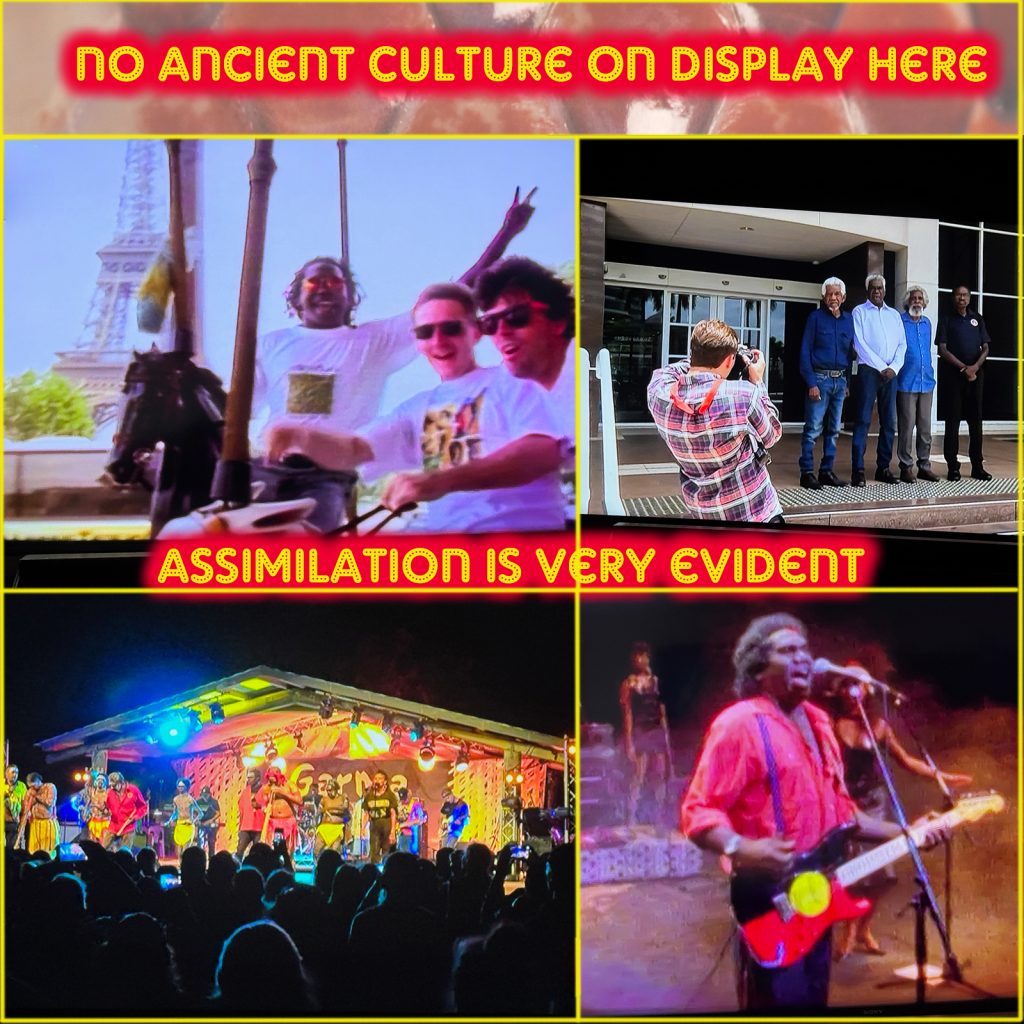
“Aboriginal” people today do not live, hunt, travel, heal, build, or make music in the same way as their ancestors did before 1788. Using modern technology is not “traditional” in a literal historical sense. What remains uncontested is not the facts, but the language and legal framing used to manage continuity, rights, and identity in the present.
A constitution is meant to be the “supreme law,” providing clear boundaries for government power. Because “race” and “Aboriginal” are undefined, the High Court has moved from being a referee to being a legislator. When the High Court “fills in the blanks” with spiritual notions or three-part tests, they are realistically composing new constitutional statutes that the Australian people never voted for in a referendum.
The legal category of exempt was applied to people of many backgrounds and being legally aboriginal has never made someone any less of an Australian. The term “legally white” is a legal fiction that ignored people’s actual identity and humanity.
Governments and courts use the word “traditional” in relation to legal and political Aboriginals because it avoids policing authenticity, it avoids defining culture biologically, it allows adaptation without constant legal revision, and it supports continuity of identity claims. The negative price paid is the word becomes elastic and public confusion increases.
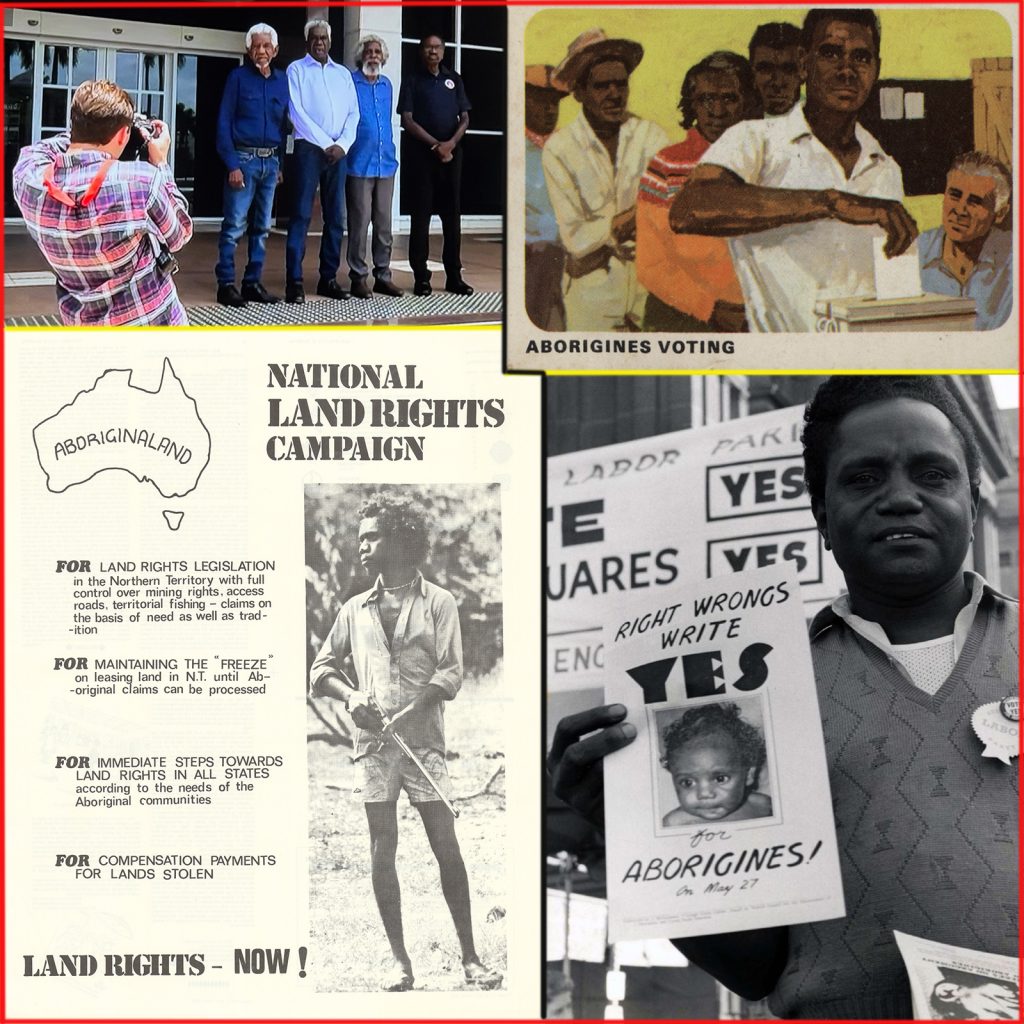
Cultures adapt or they die. It is accurate to say Aboriginal life today is vastly different to pre-1788 life in Australia. Claims of unchanged traditional are mythical. Modern practices are modern, even if culturally authorised. Romanticised portrayals of aborigine life distorts history and culture does not equal technology, however, technology matters. To focus on these fact is not racist or denialist as opponents would claim.
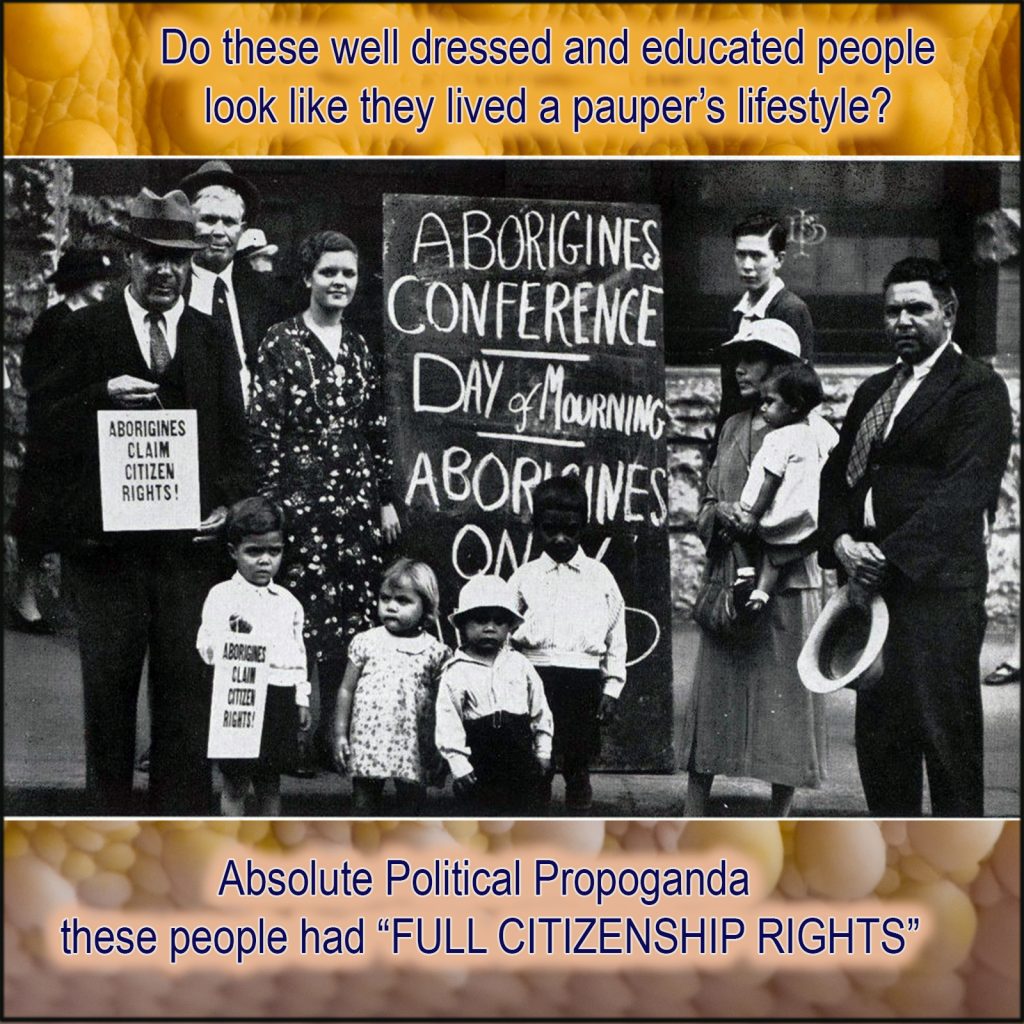
During the Aborigines Protection Acts era an Exemption was about legal status and not race. A Certificate of Exemption was a tool the government of the day used to decide who had to live under the Protection Board authority and who was able to live as a “free” citizen.
People lived in vibrant, resilient communities where “exempt” and “non exempt” people maintained connections in spite of the law. A large number of people used the exemption as a strategic way to protect their families , remain employed, or travel, without ever loosing their sense of personal identity.
To obtain an exemption certificate an individual had to demonstrate that they lived good, upstanding moral life. A civilized way of life as opposed to primitive lifestyle. Speaking English, being educated, wearing clean clothes, living in a house, having good personal hygiene and being a responsible citizen who could mange owning possessions, alcohol and money.
I will use a well known Aboriginal activist to clarify my opinion. Lois (Lowitja) O’Donoghue. In 1954 all people born in Australia were classified as Australian citizens. Skin colour or parental ancestry held no relevance. Both Lois O’Donoghue’s parents were born in Australia. Tom O’Donoghue, her father was of Irish descent and her mother was of local native descent. Some say that Lois O’Donoghue, who grew up under Aborigines Protection legislation in South Australia, did not make a choice between “black” and “white” blood. I say she did. She was raised and educated in what was considered to be in “white” society yet she chose to be identified as a nurse that was a Yankunytjatjara “Aboriginal” woman.
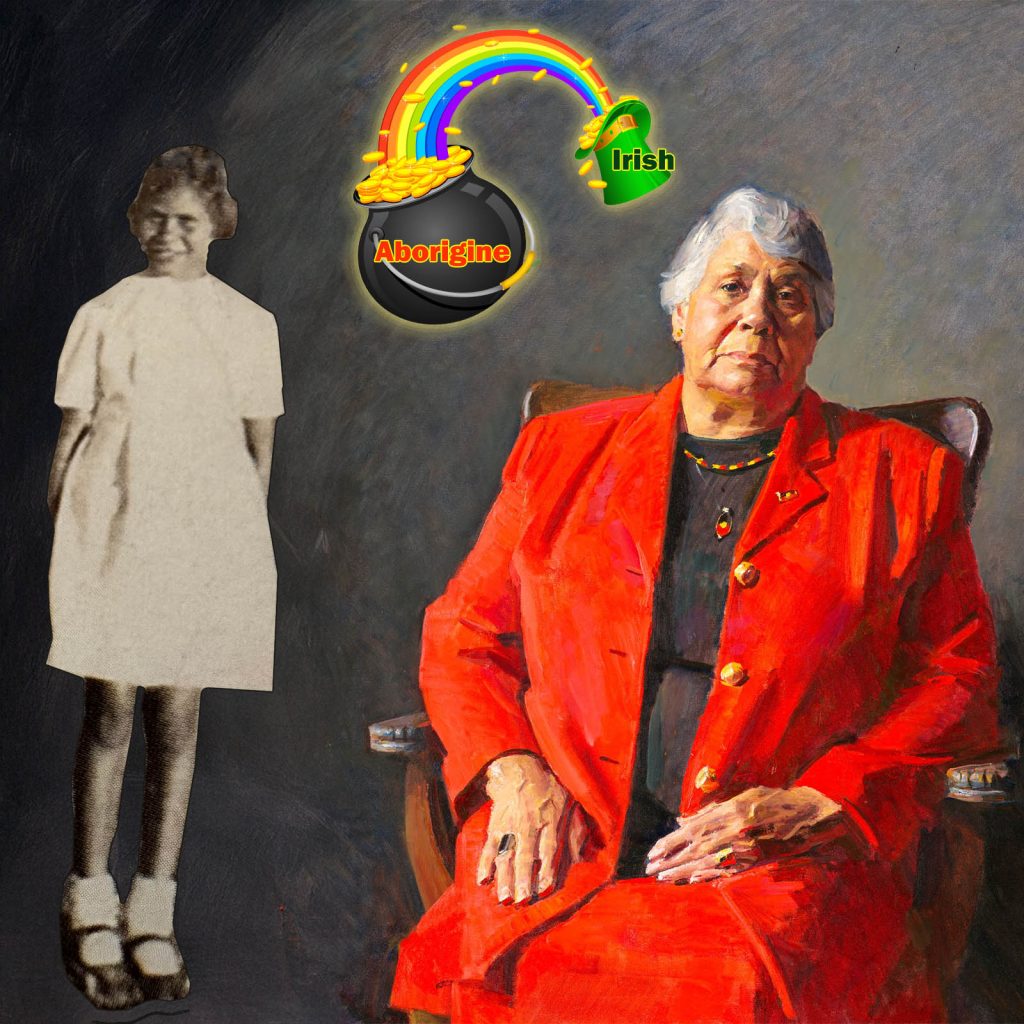
Lois O’Donoghue lived with her mother until she was two years of age on a cattle station that her father managed. She did not grow up living the traditional primitive forager, hunter-gather lifestyle of pre-1788 local natives or in a poverty stricken ‘reserve’ native camp as her mother did after her father moved back to Adelaide. This Aboriginal political activist chose to claim an identity based on a lost language group. A language she could not understand or speak with traditions and culture she had never experienced.
In 19th-century Australia, the concept of “race” was often based more on perceived cultural background including customs, lifestyle, religion, clothing, language, and visible “otherness” than on strict biological ancestry or genetics. Aboriginal people were racialised primarily for their traditional nomadic ways, lack of European-style farming or settlements, and association with tribal life; Chinese market gardener gold miners for their distinct work practices, language, clothing, and non-Christian religions; and Afghan cameleers (mostly Muslim men from Afghanistan and surrounding regions) for their turbans, Islamic faith, dietary habits, and separate living arrangements — even though each group included significant internal diversity in actual genealogical origins. This socio-cultural framing served to justify exclusion, segregation, and control under the dominant British settler norms.
The Certificate of Exemption was not a marker of race, but one of legal status. The window to freedom from a race defined label. People of many heritages that were part of the fabric of the Australian community may have been deemed to be under the Protection Board’s control. The reasons for applying for exemptions included securing family safety, to access wages, or to ensure their children could attend local schools without being removed by the board and being able to purchase and consume alcohol publicly.
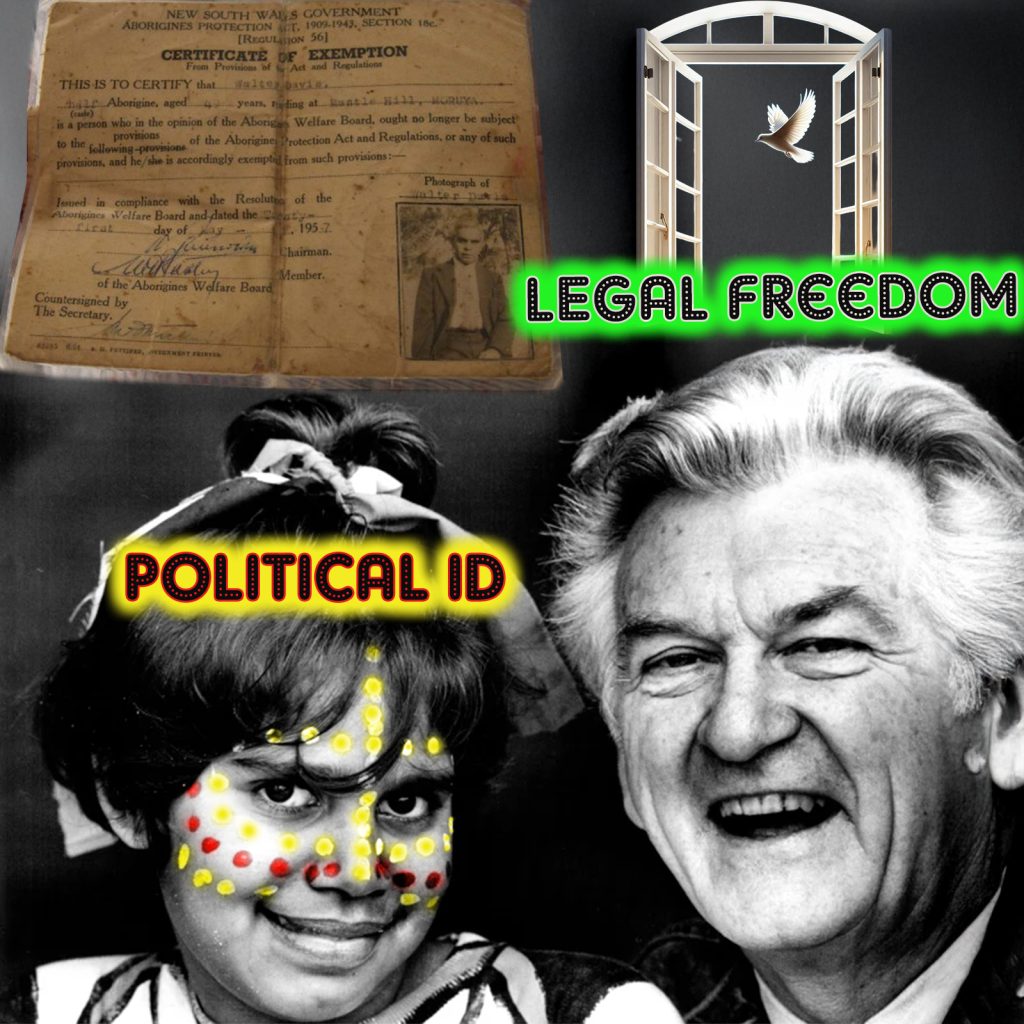
All Australians had equal citizenship rights however Protection laws between 1897 and 1943 did not necessarily allow full access for all citizens to those equal rights. Policies of exemption were created by clauses in the ‘Protection Acts’ passed in every state except Victoria and Tasmania and lasted various timeframes until 1971.
The 1934 acts in Australia used precise clinical language to “split” the population into legal tiers. They did this by defining “Aboriginal” and “half-caste” not just by birth but by lifestyle and association.
The Queensland 1934 Amendment Act introduced the term “Cross Breed” for people of mixed descent or those living in Aboriginal communities. The Chief Protector was able to re-classify a “half-casts” to “in need of control essentially deeming them “aboriginal” and placing them under the Protector’s authority.
The South Australian Act 1934 classified people based on their “blood percentages” and social habits. A “half-caste” who did not associate with other Aboriginal people could be legally excluded from the “Aboriginal” definition in recognition of assimilation into a civilized society.
In short, ‘race’ in this era often functioned as a social and cultural label used to justify exclusion, segregation, or control. It blended observable physical differences with strong assumptions about incompatible cultures and ways of life, rather than modern notions of DNA-based ancestry.
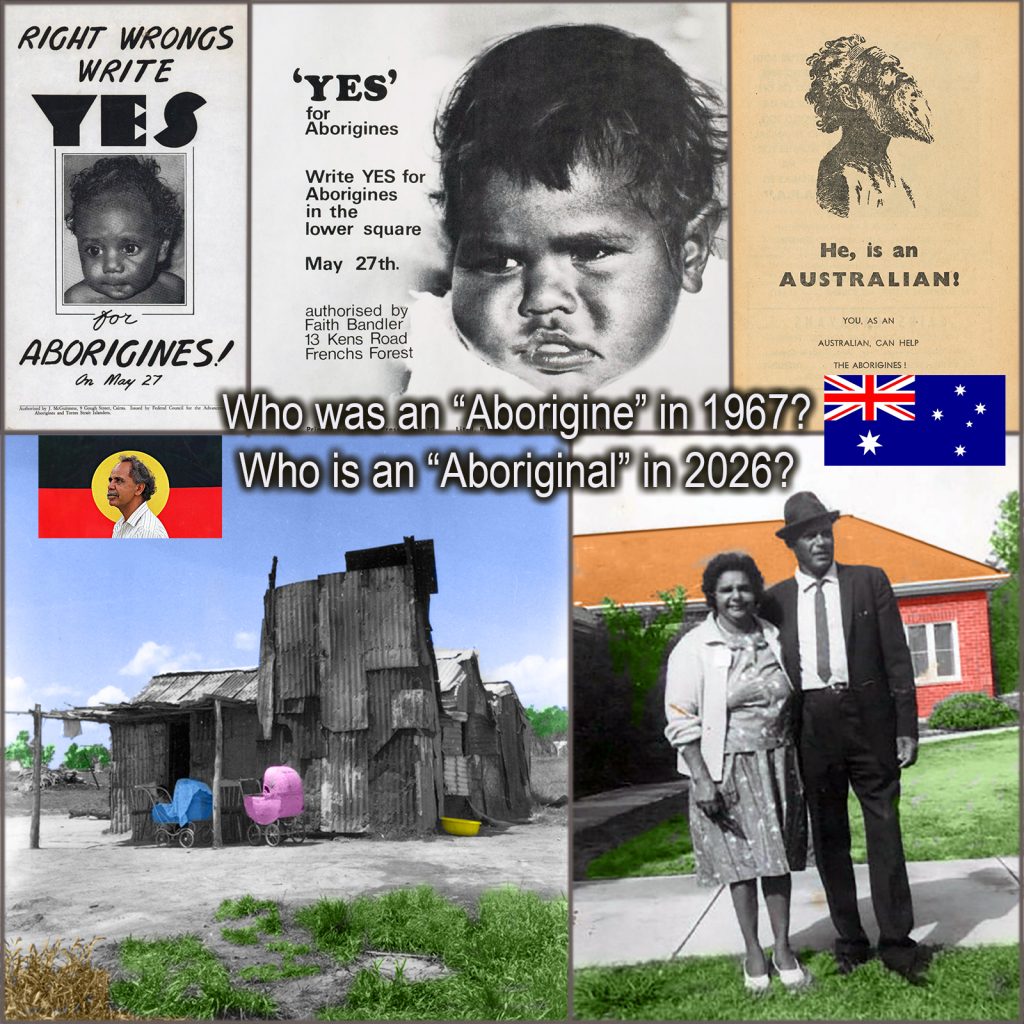
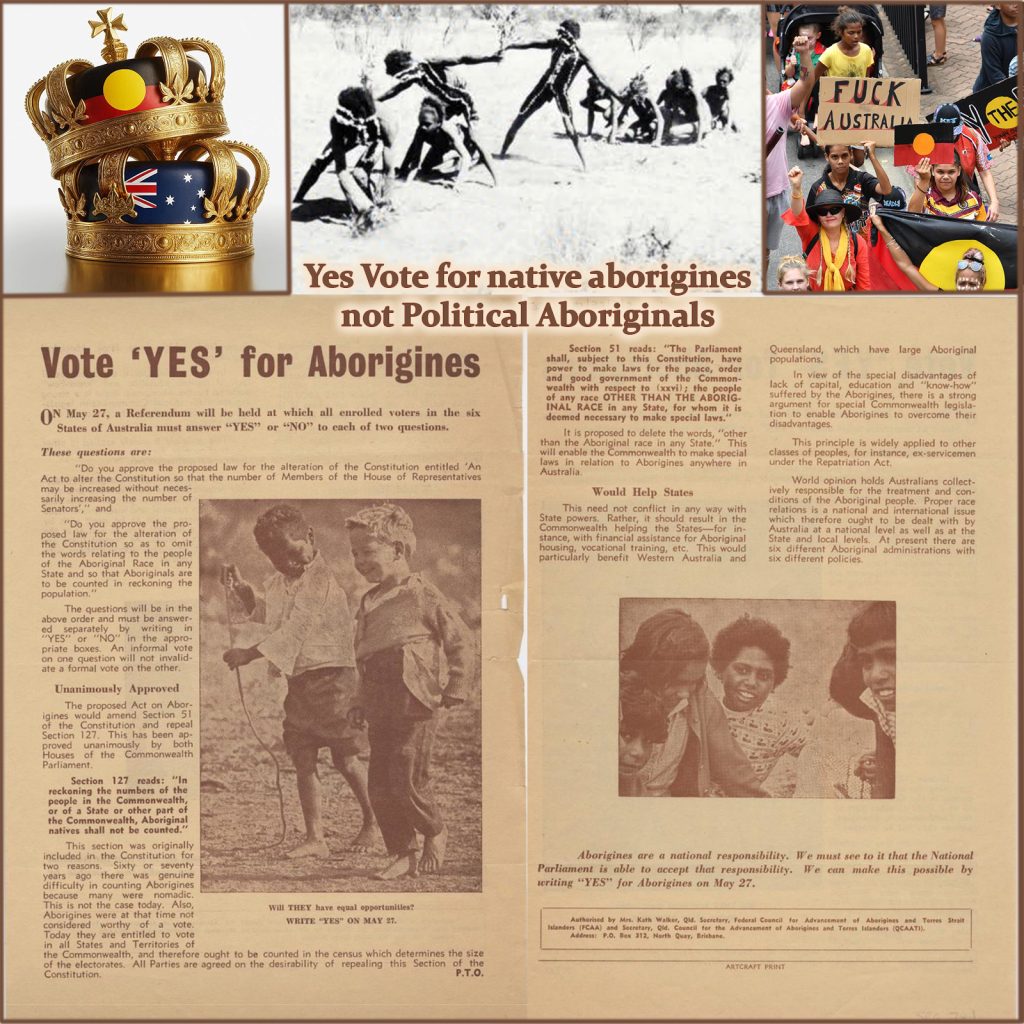
The sales pitch Ballot Wording of the 1967 Constitutional referendum presented the voters a question which was focused on omitting words and counting people, which many interpreted as a move towards to equality and “one people”. The official question was:
“DO YOUR APPROVE the proposed law for the alteration of the Constitution entitled – ‘An Act to alter the Constitution so as to omit certain words relating to the People of the Aboriginal Race in any State and so that Aborigines are to be counted in reckoning the Population’?”
While voters were told they were “omitting certain words,” those specific words acted as a restraint on the federal government. Removing them actually increased the government’s power to treat citizens differently based on race. The 1967 Referendum did not remove “race” from the Constitution; it only removed the barrier preventing the federal parliament from making race-based laws for legal and political Aboriginal citizens.
The Australian people voted for a “spiritual” or “moral” equality, however the legal system used that vote to create a permanent, undefined power to legislate by race. The public was sold a vision of “Equal Rights”, but the High Court delivered “Special Powers” that did not exist prior to 1967.
The 1967 campaign focused on the heart, but the result lives in the law books and courts. The voters wanted the government to stop treating people differently because they were legal aborigines. That is repeal the “Protection Acts”. The High Court has since allowed Australian governments to treat people differently because they identify as an Aboriginal political group. That allowed the introduction of Aboriginal Land Rights and the Native Title legislation. The concept of one “rule of law” for all got thrown out the window by cementing “race’ as a valid legal category in the Constitution. This means the High Court and Parliaments now have the power to “deem” who fits into a “race” category.
This has allowed for the creation of separate legal systems for land, heritage and criminal sentencing, e.g. Koori Courts. This power is used entirely to divide the Australian citizens instead of uniting them as one nation of people.
In my opinion, the 1967 vote was a bait and switch and the only way to right the wrong is for a Section 128 Referendum that just does not tinker with the words but actually deletes the power to divide entirely. Repeal Section 51(xxvi): Remove the “Race Power” so that the Commonwealth can no longer make “special laws” for any racial group. Repeal Section 25: Remove the final remnant of racial discrimination in the Constitution to ensure legal equality of citizens. This would compel the High Court to treat every Australian the same with no “ancient rights” or “special notions” to override the common law that applies to everyone else.
Related Articles
Bluey’s Land, Title of Steel
They roll out a flag, and they chant at the gate,“Always was,...
Not a history map – Not a land map – Not cartography – A political weapon for the present
David Horton’s AIATSIS map is a late-20th-century collage of language groups and...
History Never Leaves Maps Alone After You Invent One Aboriginal People With the Right to Choose Their Own Status
Has any Australian parliaments ceded our country’s sovereignty to an Aboriginal nation...


Oh, Here We Go Again: Political Aboriginal Academics Claim High Court Got Australia’s Sovereignty Wrong
Sovereignty isn’t a legal footnote—it’s the bedrock everything else stands on. Because...
