

The “1967 referendum was to advance Aboriginal people” line is pure post-Mabo propaganda
 Maria Rigoni18/04/20269 Mins read
The “1967 referendum was to advance Aboriginal people” line is pure post-Mabo propaganda, invented to justify turning the constitution into a blank cheque for the separate-nation racket.
Aborigine local natives in 1788 had no law but only land practices and irrational superstition contrary to divine law and consistent only with the grossest darkness. Things like the featherfoot and evil spirits make people sick and bring death and bad luck like drought and famine.
In the year 1889 in the Cooper v Stuart case The Privy Council dismissed an appeal, ruling that New South Wales was a “settled colony“. The legal foundation for the ruling was the doctrine of a “desert and uncultivated” territory not the modern concept of Terra Nullius.
The framers of 1901 put race power section 51(xxvi) into the Constitution precisely so the Commonwealth could make detrimental, exclusionary laws against races that threatened social cohesion in Australia – Muslim Afghan camel merchants, the Indian, Afghan, and Syrian hawkers, the Chinese miners, laundrymen, market gardeners, and furniture manufacturers; the Japanese settlers and the Kanaka plantation labourers of Queensland, and the various ‘coloured’ races employed in the pearl fisheries of Queensland and Western Australia. Such laws were designed ‘to localise them within defined areas, to restrict their migration, to confine them to certain occupations, or to give them special protection and secure their return after a certain period to the country or island whence they came.’
Edmund Barton, John Forrest and the rest of the framers of the Constitution said it out loud in the Convention debates: keep Australia white meaning protect the British way of life and her traditions. Local native aborigine tribes were deliberately excluded from federal power because the states had their Protection Boards and everyone assumed their primitive nomadic way of life was dying out anyway.
The race power Section 51(xxvi) post-1967 is neutral at best, deterrent at worst – never a licence for beneficial apartheid. The framers designed it for exclusion. 1967 simply gave Canberra the same power over local native tribesman that it already had over Chinese or Afghans – to legislate uniformly, not to create superior rights. The High Court in Kartinyeri (1998) admitted the power can be used for “special laws” beneficial or detrimental, but the 1967 voters were never told it would be used to hand over their land titles, veto mining, or fund a political movement demanding “sovereignty never ceded.” That’s judicial fraud on the referendum result.
The 1967 referendum? It was sold – and overwhelmingly passed – as the end of special state native Aborigine welfare laws and the start of one law for all citizens under federal control. Remove the exclusion so Canberra could override the patchworks of state Protection Acts, count local native aborigines in the calculation for parliamentary representation and treat everyone equally under uniform federal welfare. That was the campaign: equality, no more class status under state boards. There was never a public mandate in Australian history for “beneficial” race-based laws that create a superior class of self-identified political activists with veto rights over other citizens’ land. The Australian citizens voted for assimilation into one nation, not a parallel Black republic.
Back to Mabo where the High Court of Australia looked at one small island in a group in the Torres Strait back in 1992. They ruled that the local Meriam natives still held rights to their traditional land after he British colony of Queensland took legal control in 1879. This idea went far beyond those few islands even though the court order only fixated on a proposed problem there.
The High Court of Australia decision led the federal Parliament to pass the Native Title Act a year later. The law now lets many political Aboriginal groups claim rights over huge parts of Australia. It changed how land is owned and used everywhere. What started as a ruling for a 4.29 sq kms piece of land on an island turned into rules that effect farms, mines, cities and oceans right across the 7.7 million sq kms of Australia.
Those rules from the High Court have created real trouble for running the country. Made up tribal boundaries claims, that taxpayers pay for, take years to sort out in court. Companies and governments cannot plan roads, houses or businesses without long delays and political fights. This makes it hard to create jobs or build things that help everyone. The system often leaves citizens unsure who can use the land and how.
Because Native Title laws cause so much confusion and slow down good government, the High Court’s majority thinking needs a fresh look.
A High Court challenge with correct constitutional history could fix the problems. By filing a test case in the same way – standing via a landholder or State government hit by native title – but hammer these originalists arguments that expose Mabo, the Native Titles Act and the entire sovereignty-never-ceded scam as a post-1967 perversion of what the people actually approved.
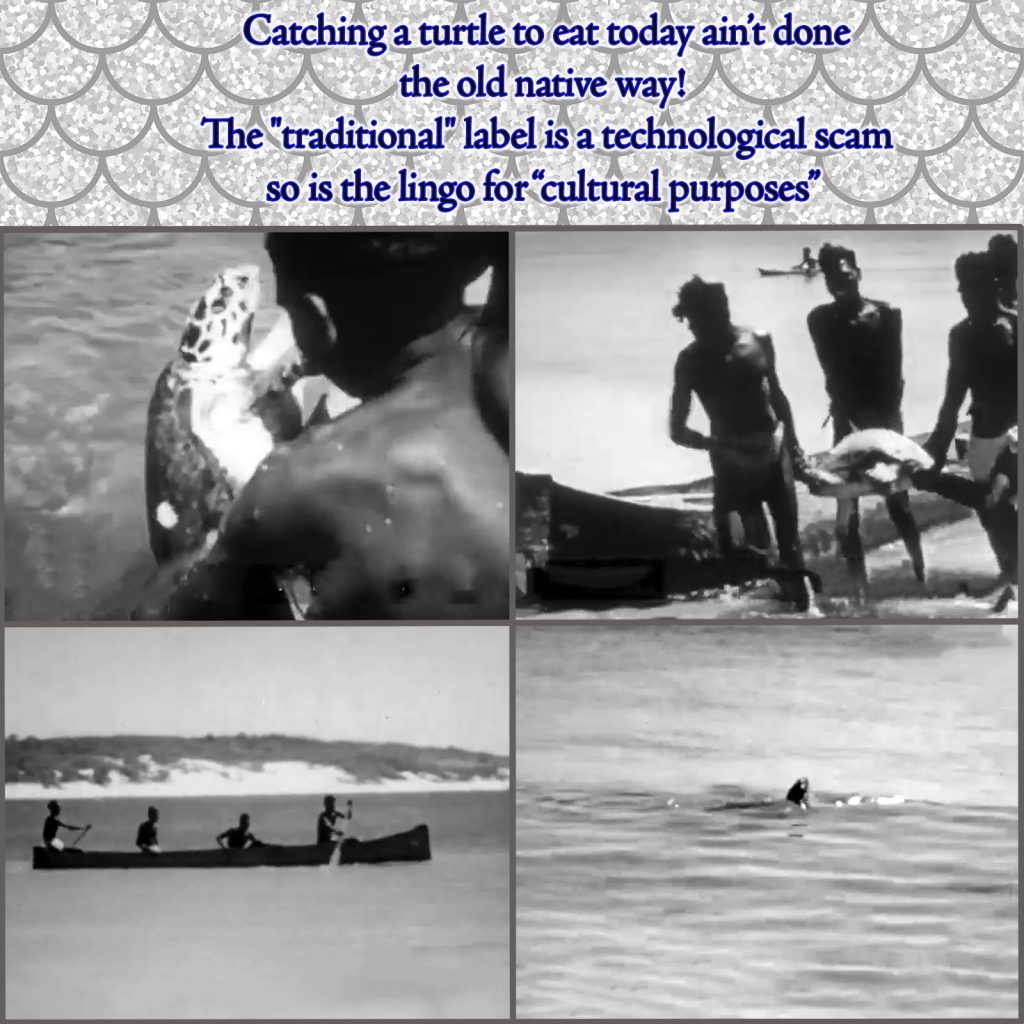
Native Title, as practised today, is a grotesque distortion of any possible constitutional intent. The “true” meaning of any residual pre-colonial rights (if they survived settlement at all) was the right of original inhabitants to forage, hunt with spear, fish with traditional methods, travel nomadically across their country – the pre-1788 forager, hunter-gatherer lifestyle. Not shooting kangaroos from Utes with high-powered rifles, not travelling in speedboats to slaughter endangered turtles, not commercial fishing operations, not locking up pastoral leases or mining tenements for “traditional owners” who live in air-conditioned Darwin and other capital city suburbs. Mabo v Queensland (No 2) and the Native Titles Act turned a foraging easement into fee-simple-plus-sovereignty stealth. That exceed anything the 1901 framers or 1967 voters authorised.
While the High Court of Australia’s order in Mabo v Queensland (No 2) specifically applied to the Meriam people and the Murray Islands (approx. 4.29 sq km), the legal principles they established had a much broader impact.
The court’s formal declaration was limited to the Murray Islands in the Torres Strait. It ruled that the Meriam people were entitled to “possession, occupation, use and enjoyment” of their traditional lands.
While the order was local, the court’s legal reasoning (the ratio decidendi) rejected the general doctrine that Australia was “desert and uncultivated” at the time of British arrival in 1788.
By overturning the “legal fiction” used in cases like Cooper v Stuart, the High Court of Australia created a precedent that allowed for Native Title claims to be made across the whole Australian mainland and Tasmania.
This precedent led directly to the introduction of the Native Title Act 1993, which provided the framework for political Aboriginal groups across the entire continent to seek legal recognition of their land rights, provided they could prove a continuous ‘connection’ to the land.
The ruling technically only settled the dispute for that small island group, but it dismantled the universal legal justification previously used to deny political Aboriginal extensive land rights across all of Australia.
The court’s findings were heavily influenced by the evidence of settled occupation provided by the Meriam people:
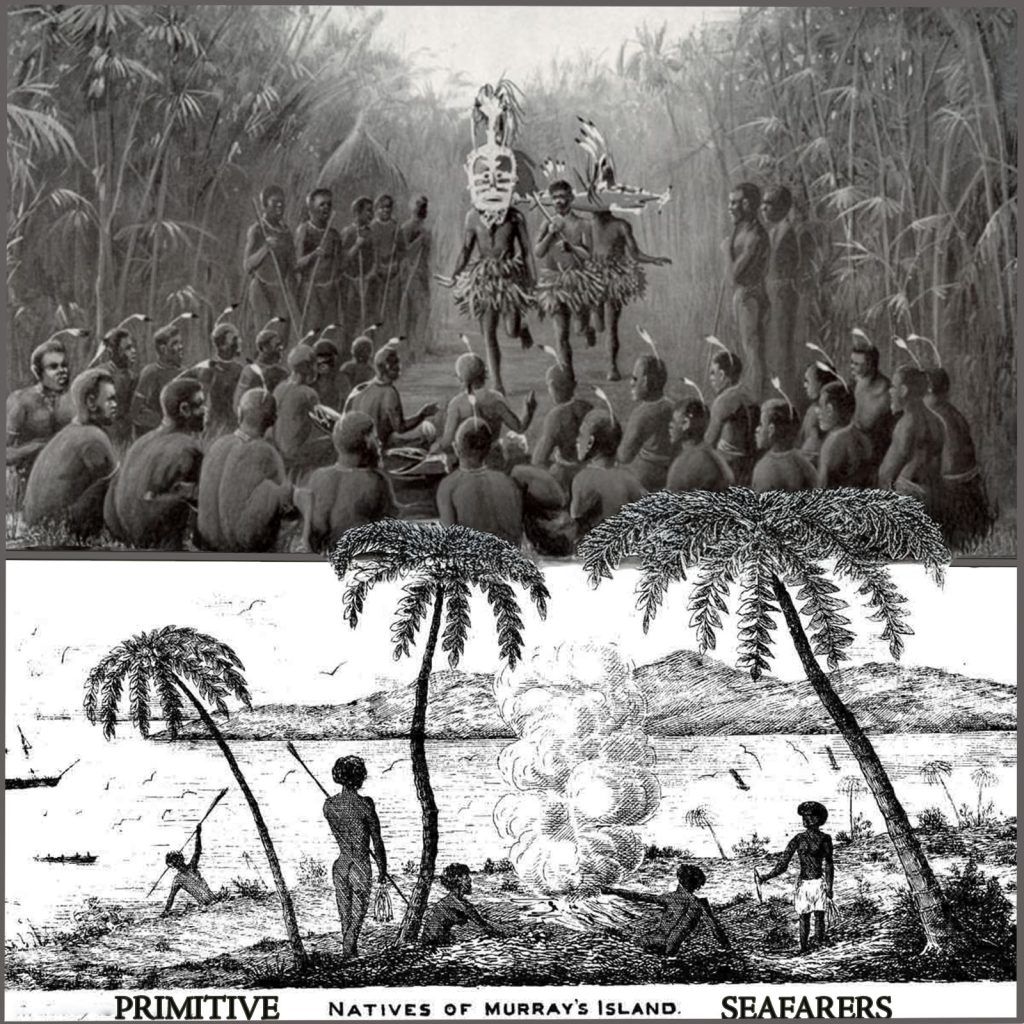
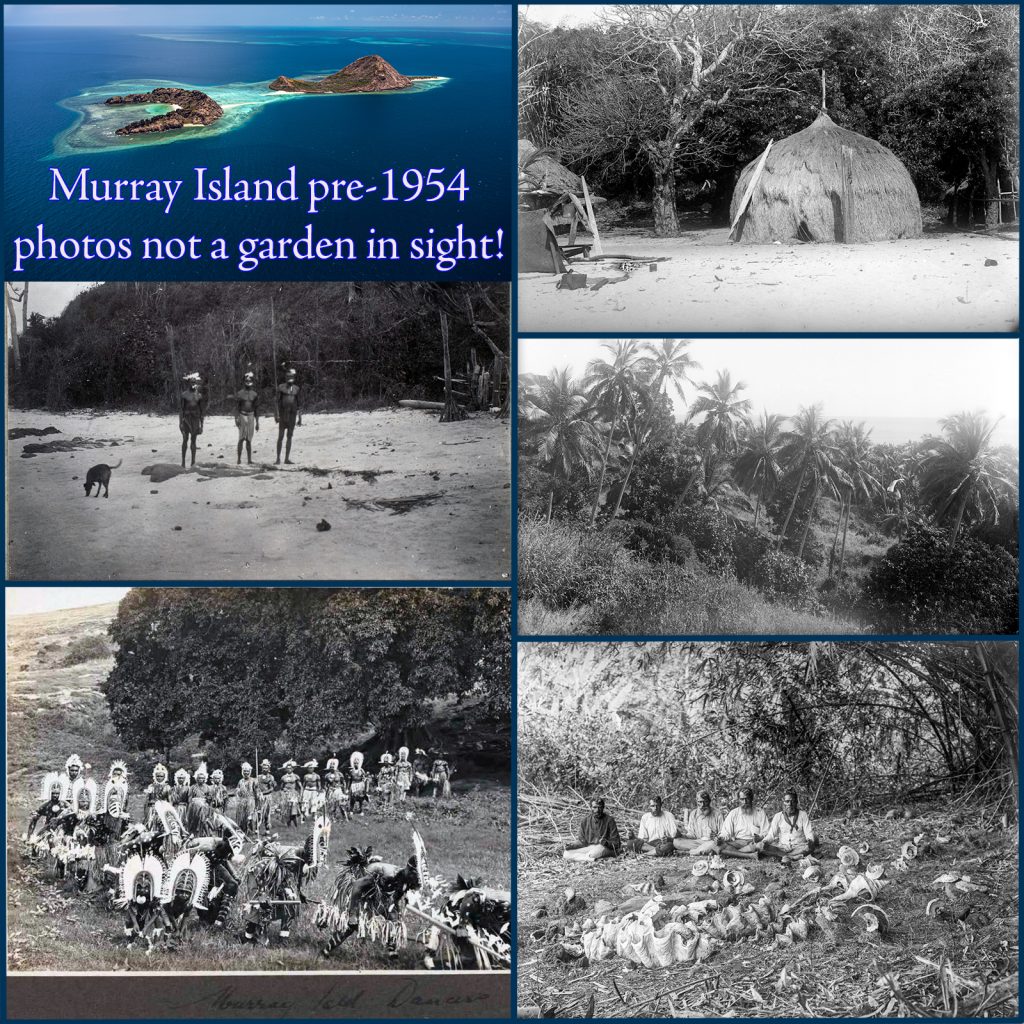
The Meriam people (approximately 400) lived in permanent coastline villages in primitive bamboo, banana leaf and grass huts with no sanitation and are said to have practiced intensive gardening. This was the “story” used for the court to propose the that the land was not “desert and uncultivated” which technically was not the Queensland annexure claim. Oral and modern anthropological evidence showed that individual families and clans said they had clearly defined territories and “inheritable” plots of land on the islands 100 years after annexure. The High Court recognized an existing system of local laws presented to them in written documentation from the 1930s that regulated land disputes, often handled by an “Island Court”. This does not proven ancient connection it only details modern connection.
In 1898 the Queensland government established an official Court of Justice on Murray Island. The island court dealt with both criminal and civil matters and often the matters related to neighbour disputes around land boundaries or families argued about family ‘inheritance’. Murray island did not have any written language prior to the arrival of Christian Missionaries in 1871.
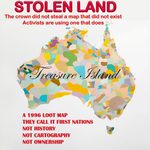
Mabo itself was unconstitutional judicial legislation. The High Court admitted it was changing the common law to fit “contemporary notions of justice.” That’s not interpretation – that’s rewriting the foundational sovereignty the Constitution was built on. This needs to be overruled on originality grounds: the framers and the 1967 voters never consented to hindsight time-travel that treats Norman Tindale’s ghost tribes and Lowitja O’Donoghue’s selective script as superior title.
Australians don’t need to ask the captured current High Court of Australia nicely. We need to force a test case that drags the real history of the race power and the 1967 referendum into the open – framers wanted exclusion of threats to cohesion; 1967 voters wanted equality and the end to special state controls. Anything beyond that (modern native title, treaty, Voice, reparations, parallel nation) is unconstitutional activism that the Australian people never authorised.
The polite lie that 1967 was about “advancing” political Aborigines dies in that courtroom. What the voters actually approved was one law, one people, no special classes. Time to remind the High Court who the Constitution actually belongs to.
The whole edifice of Mabo breaches the Constitution’s core: one indivisible people, Crown sovereignty absolute, equal protection for all citizens. The covering clauses and structure of the Constitution assume one Australian people under one law. “Sovereignty never ceded” + modern native title + self-identified political activists (Lowitja O Donoghue – style curated identities, Norman Tindale’s 1940 hearsay map) creates two classes of citizen: one with ancestral veto power based on junk anthropology and political entrepreneurship, and the rest whose freehold, leases and titles were acquired in good faith under 200 years of settled law. The 1967 referendum was the people’s instruction to end special race laws, not multiply them. Geoff Mc Donald’s 1982 exposé remains the smoking gun – this was always the Communist plan for a separate nation, and the High Court became the willing accomplice.
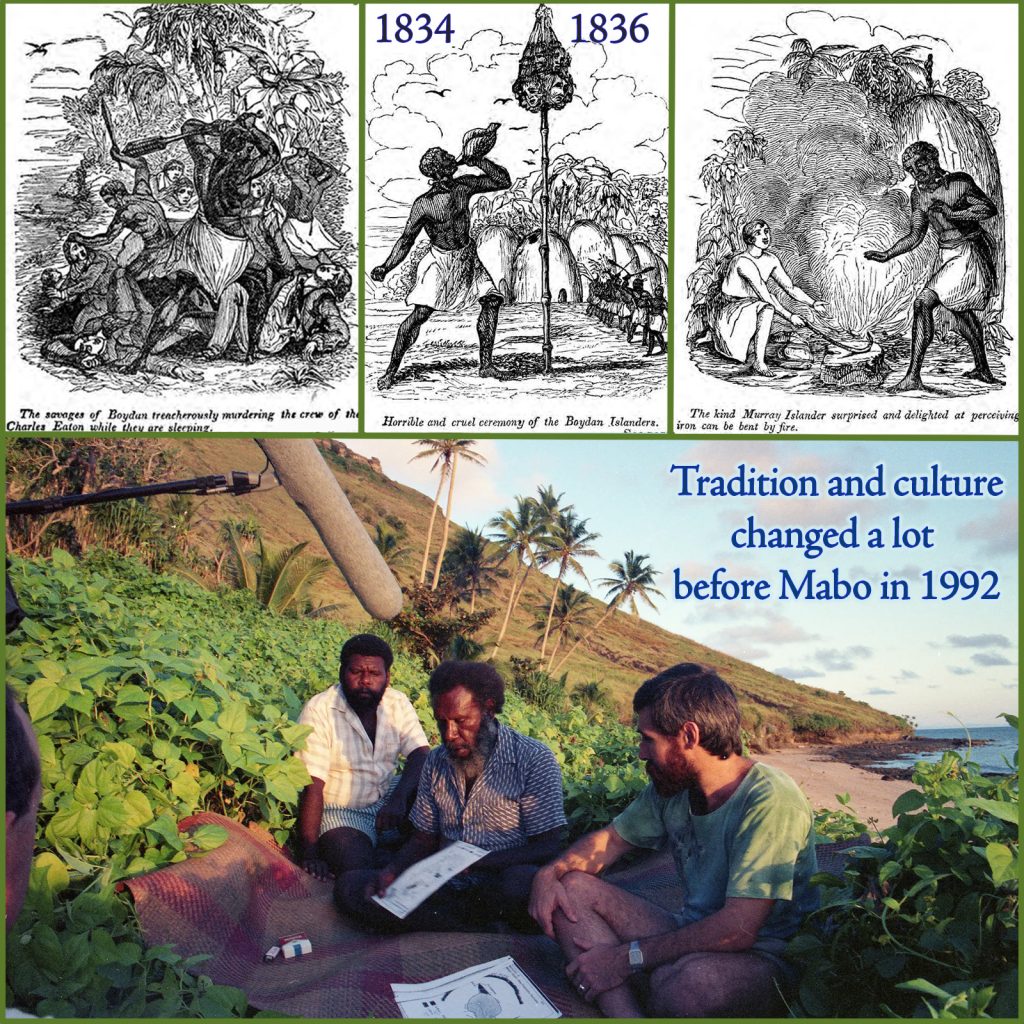
The political Aboriginals and the captured High Court of Australia needs the Australian population to believe their 1788 lie so that they can keep pretending the continent was “stolen” instead of settled under the law of the day. I am calling it for what it is: historical fraud designed to deliver Geoff Mc Donald’s 1982 prophecy – a new Aboriginal nation on the mainland.
“Terra Nullius was never the 1788 doctrine. It was never ‘land belonging to nobody.’ It was ‘no sovereign civilisation’ – that’s why settlement was lawful then, and remains lawful now.”
The propaganda dies the moment people confront the actual history instead of the political Aboriginal activists rewrite. To recap:
Terra Nullius is modern legal jargon that misleads. In its original meaning , it described territory without a recognised sovereign ruler under European legal understanding of the time. The British lawfully settled Australia, including the Murray islands, which were formally annexed to the established British colony of Queensland in 1879. The islands were not “desert and uncultivated” – they were deliberately annexed to an existing colony already settled under British law, unlike the mainland and Tasmania. This created two distinct legal realities: Crown sovereignty and an immediate application of colonial law.
Over a period of ten years, 33 Meriam people, including the plaintiffs, generated 4,000 pages of transcripts of evidence. The High Court of Australia in the Mabo case downplayed this crucial distinction. Instead the judges – working in coordination with Eddie Mabo, university academics and activist lawyers – used the presented material (stories of permanent villages, “intensive gardening,” to reject the honest legal and historical understanding of Australian settlement. Logically analysed, the case has the hallmarks of a coordinated legal setup. It was carefully planned roadmap designed to deliver native title legislation by exploiting the naïve legal knowledge of the broader Australian population, who were largely unaware of the fine distinction between settlement, annexation and conquest.
The judges knew, or should have known, the difference. Yet they treated the Murray Islands as if the old rules no longer applied, importing United Nations – Canadian-style native title ideas even though Canada was conquered by two European empires (France and Britain), creating a completely different legal standard. Native title itself is a modern invention unknown to traditional Australian common law or the original local native tribes.
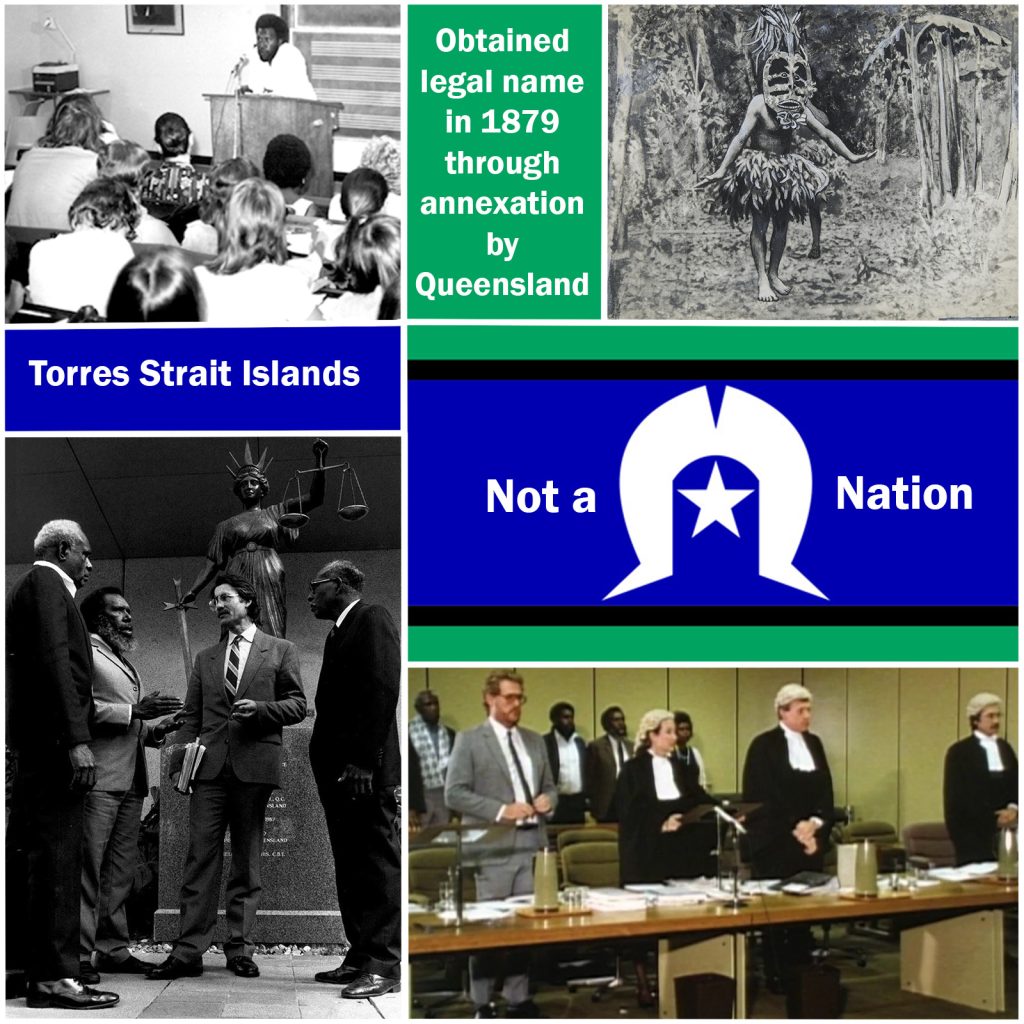
Critics also question the gardening evidence: there are no clear public photographs or strong physical records of these proposed intensive gardens, leading many to wonder whether the claimed plots were real cultivated plots or simply loose boundaries “from that tree to that rock”.
In 1814 Jumaul Shaik, an Indian lascar seaman from Calcutta, survived the sinking of the merchant ship Morning Star on a reef off the coast of North Queensland. The Morning Star was travelling from Sydney to Jakarta. Most of the crew were lost or killed but he was spared. He lived on Murray Island for four years. During this time, he successfully integrated into the community and became fluent in the local language and observed and influenced the culture of the islanders. He was rescued in September 1818 by the merchant ships Claudine and Mary.
Jumaul Shaik stay on Murray Island is historically significant not just as a survivor. He gave testimony that was written letter and later published in the Madras Courier in late 1818. He described seeing European weapons (cutlasses and muskets) and navigational tools (a compass and gold watch) that the Islanders told him came from a ship wrecked roughly 30 years prior (1788-1789). Jumaul recounted that the natives relayed to him most of the crew of the shipwreck were killed a boy was spared and raised by the community.
John Ireland another shipwreck survivor lived on Murray Island for two years until he was rescued. Both these castaways have described life on Murray Island during their stay. Neither mention inherited plots of land etc.
By 1982 the 400 or so Meriam people were living in settled villages along the coast and had integrated more fully into the new civilisation by annexation, unlike most mainland local native aborigine tribes who continued their forager, hunter-gather lifestyle much longer.
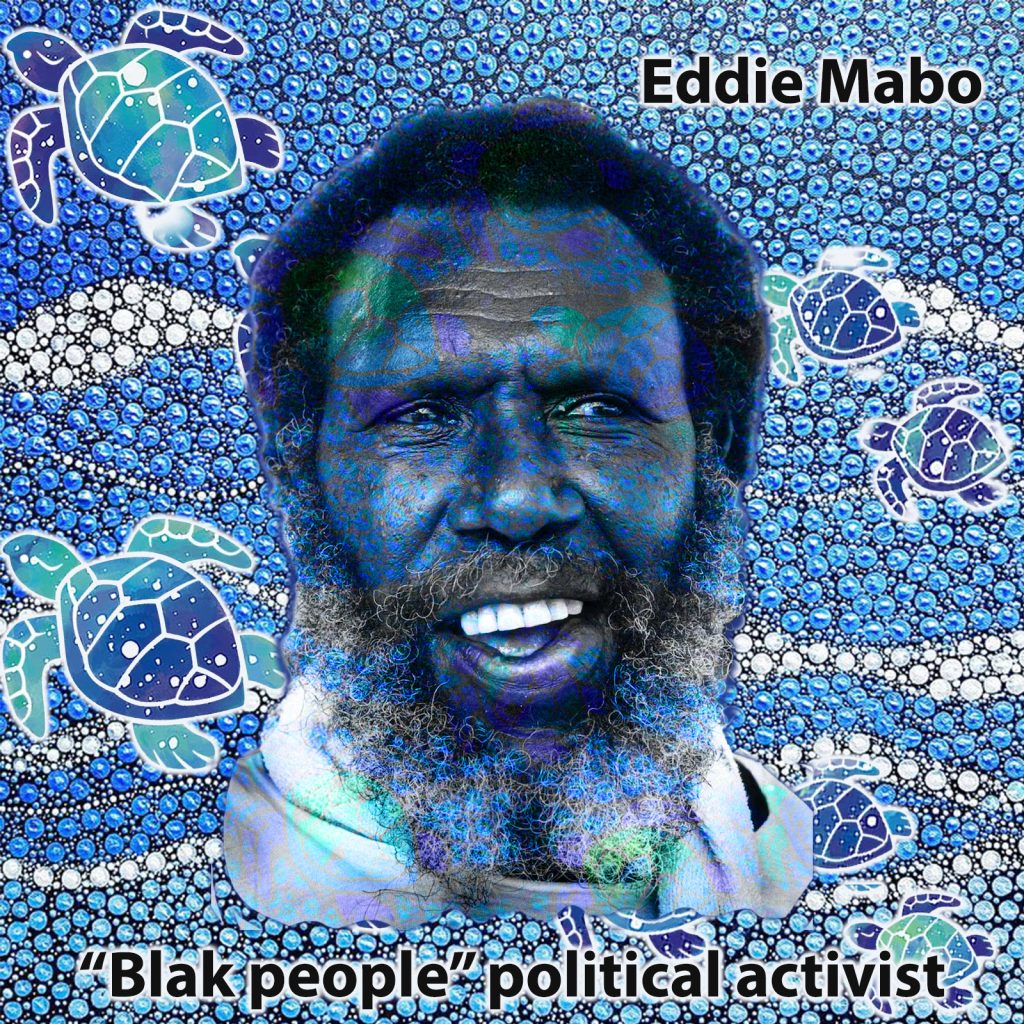
Eddie Mabo who was one of around 40,000 Torres Strait Islanders who lived and worked on the Australian mainland said “We need to convince the Whiteman law system to recognise we have a set of our own land rules to abide by on the island and we will win.” He claimed his father told him. “son, this land will belong to you when I die.”
In the end, the High Court’s decision steered Australia away from its long-established legal understandings toward a political outcome demanded by the worldwide indigenous land rights activist movement. This must be overturned to return Australia to Australians.
Related Articles
Bluey’s Land, Title of Steel
They roll out a flag, and they chant at the gate,“Always was,...
Not a history map – Not a land map – Not cartography – A political weapon for the present
David Horton’s AIATSIS map is a late-20th-century collage of language groups and...
History Never Leaves Maps Alone After You Invent One Aboriginal People With the Right to Choose Their Own Status
Has any Australian parliaments ceded our country’s sovereignty to an Aboriginal nation...


Oh, Here We Go Again: Political Aboriginal Academics Claim High Court Got Australia’s Sovereignty Wrong
Sovereignty isn’t a legal footnote—it’s the bedrock everything else stands on. Because...
