

Australia, did not exist prior to or at British settlement in 1788
 Maria Rigoni07/05/202510 Mins read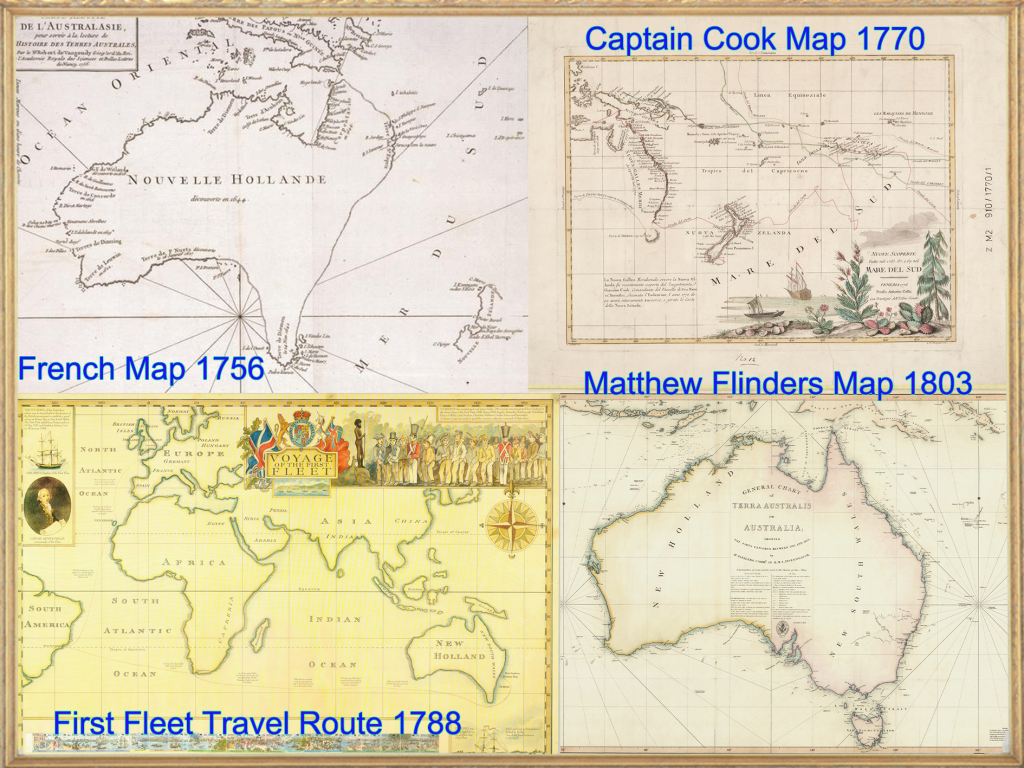
Australia did not exist prior to or at settlement of New South Wales as a British colony in 1788.
A continent with three separate land masses did exist, however, this continent had no universal name or government or rule of law and had never been mapped so no one knew what it looked like. That is until Matthew Flinders circumnavigated and chartered the entire coastline of the mainland and the island Van Diemen’s Land.
Matthew Flinders was born on 16 March 1774 in Lincolnshire, England. Being the son of a surgeon he was well educated. Matthew was 15 years old when he first went to sea with the Royal Navy as a servant. It has been said that he was “induced to go to sea” against the wishes of his peers after reading the novel Robinson Crusoe.
When Matthew Flinders was 27 years old he was responsible for the first inshore circumnavigation of the mainland continent recently discovered in the southern new world. In 1797 and 1798 on a voyage of discovery with British Naval Surgeon George Bass, Matthew Flinders circumnavigated Van Diemen’s Land and confirmed it was an island and a sea strait separated it from the mainland.
On the HMS Investigator, a 334-ton sloop, Matthew Flinders, a Royal Navy Commander, commenced the circumnavigation expedition from London on 18 July 1801 and returned to Port Jackson on 9 June 1803 with completed highly accurate maps including some previously uncharted Australian coastline and islands.
On the voyage from England to Sydney, the ship passed by and mapped the south coast of the Australian continent and Bass Strait. After arriving in Sydney in 1802, HMS Investigator embarked on a second epic voyage that circled the mainland for the first time, providing vital charts that are so accurate, some are still in use today.
After Matthew Flinders finished his work in Australia he was returning home to Britain when on the 17 August 1803 the ship he was travelling on, HMS Porpoise together with the HMS Cato, ran aground on an uncharted reef.
Matthew Flinders and his crew swam to safety on a small island where they stayed for a few weeks. In a small cutter Matthew and 13 crew sailed the 700 miles in open seas back to Sydney to arrange a successful rescue party for those shipwrecked waiting rescue on the island.
The crew continued their journey back to England on the schooner Cumberland which had to stop at the Isle de France (Mauritius) for repairs. The French arrested Matthew Flinders as a spy and he was held in detention for nearly seven years. He finally returned to England in 1810 and died of a kidney disease on 19 July 1814.
For many centuries an unnamed, vast primordial mass of land was available and waiting for civilised man to claim her.
At British settlement in 1788 the eastern side the mainland continent including Van Diemen’s Land was New South Wales and the Western side was New Holland. Three European-Empire possession territories were cartographically displayed by Matthew Flinders for the first time in 1803.
The British colony of New South Wales and the unsettled land of Dutch New Holland were named Australia around 1803 by Matthew Flinders. He recognised that as he had determined that New South Wales and New Holland were one landmass and that there should be a single name for the mainland continent. At this point the unsettled Dutch Van Diemen’s Land had been circumnavigated by Matthew Flinders and George Bass to determine it was not attached to the mainland as previous thought.
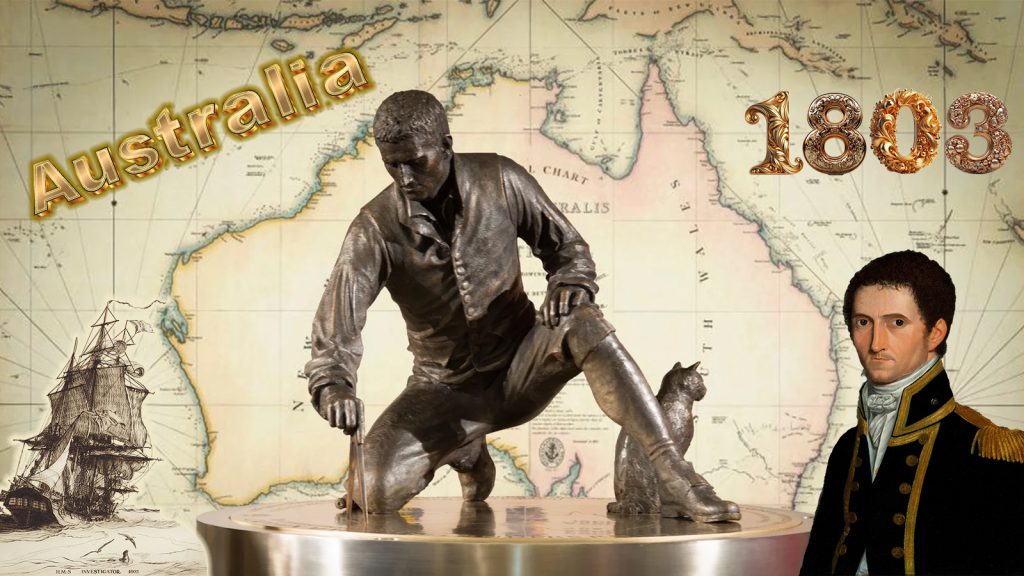
The unsettled Dutch Van Diemen’s land was claimed by the British in 1803 via settlement.
14 years after the First Fleet arrived in Sydney Cove in the Colony of New South Wales all the people living on the Australian mainland and Van Diemen’s Land in 1803 collectively became the First Australians through settlement of uncultivated land.
The idea of a Terra Australis Incognita – the unknown southern land surfaced from the human imagination of the ancient Greeks and Roman philosophers. Confirmed to exist, and piece by piece recorded on maps through feats of exploratory discovery by brave and adventurous seafaring pioneering cartographers between 250 and 500 years ago.
The British colony of New South Wales Governor, Lachlan Macquarie sanctioned the name Australia to replace New Holland in a dispatch to the Colonial Office in London in December 1817. By 1824 the British Admiralty started to officially use the name, and the term Australia was first seen in British legislation in 1828 to pertain to the two colonies of New South Wales and Van Diemen’s Land combined.
The First Fleet’s journey across the deep blue sapphire ocean seas is one of the world’s greatest sea voyage triumphs ever recorded. Eleven ships carrying around 1,500 people and stores travelled for 252 days for more than 24,000 km without losing a ship. The chief surgeon for the First Fleet, John White, reported a total of 48 deaths and 28 births occurred during the epic voyage.
The convict stock of the First Fleet were people transported to New South Wales with sentences of seven years, fourteen years or for the term of their natural life. Included were men and women and twenty-two children, whose crimes ranged from petty theft, perjury, fraud, assault, and a few murders. The bulk were British, from England, Ireland, Wales, and Scotland, but a small number were American, French, and African. Twelve convicts had dark skin colour and were considered to be ‘black’.
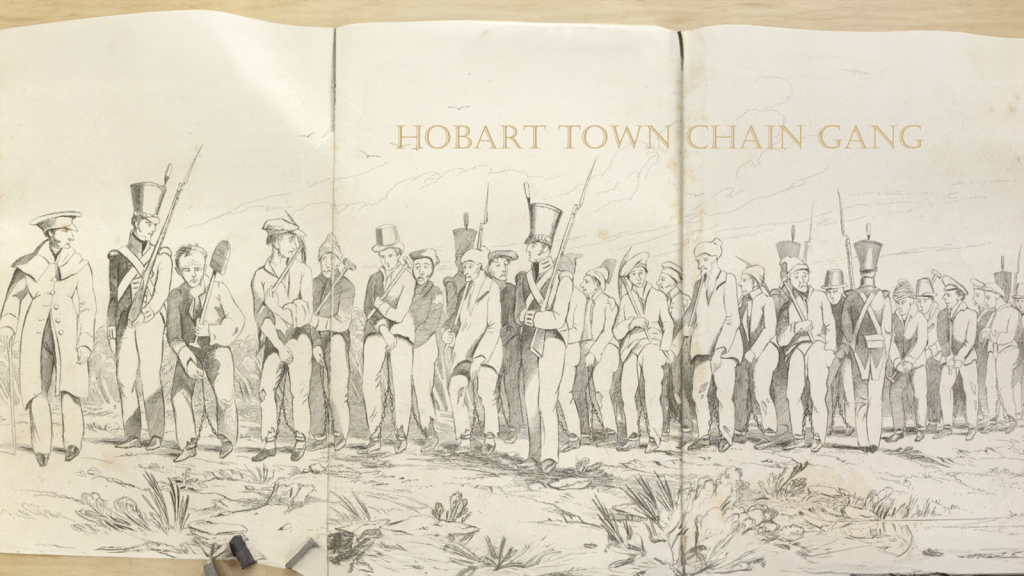
Convict discipline was punitive and often random. About half the convicts were transported for seven years, and a third for the term of their natural life. A convict who re-offended could be sent to work on the chain gang or was banished to harsh desolate penal outposts. Fifty lashes was a common punishment, enough whipping to strip the skin from a man’s back to expose his backbone. Convicts joining the chain gang were used in back-breaking work of making new roads while each ankle was laden with a shackle linked to irons or chains weighing ten pounds or more.
An inclusive society relishes the fact that Australia is a country of immigrants. A continual flow in recent and primordial times. Near and far, from all the lands on Earth human beings have come to this great southern land to make it their home. Not everyone has stayed. Some returned to where they came from, and others ventured on to other locations around our earth.
There is a clear difference between immigrants and settlors. Settlers are not immigrants.
When we speak about Australia we know unknown inhabitants came to a barren land and did live there without any civilised settlement. British Settlers came to a barren land and built a civilisation up from nothing. Immigrants came later to a land that was already settled as a civil society and whereby the immigrants wanted to be a part of that built civil society.
Upon arrival of the First Fleet under the command of Commodore Arthur Phillips, the mainland continent was still in its primordial legally unowned undeveloped state. This meant the mainland continent and island of Tasmania were open to the claims of whoever cultivated it first.
The world’s established empires agreed that the British had the same rights and were exercising the same rights that the contemporary occupants ancestors had done at some unknown time before. The British explorers arrived at a raw land that had not been developed upon with structures, utilities, or significant human modification.
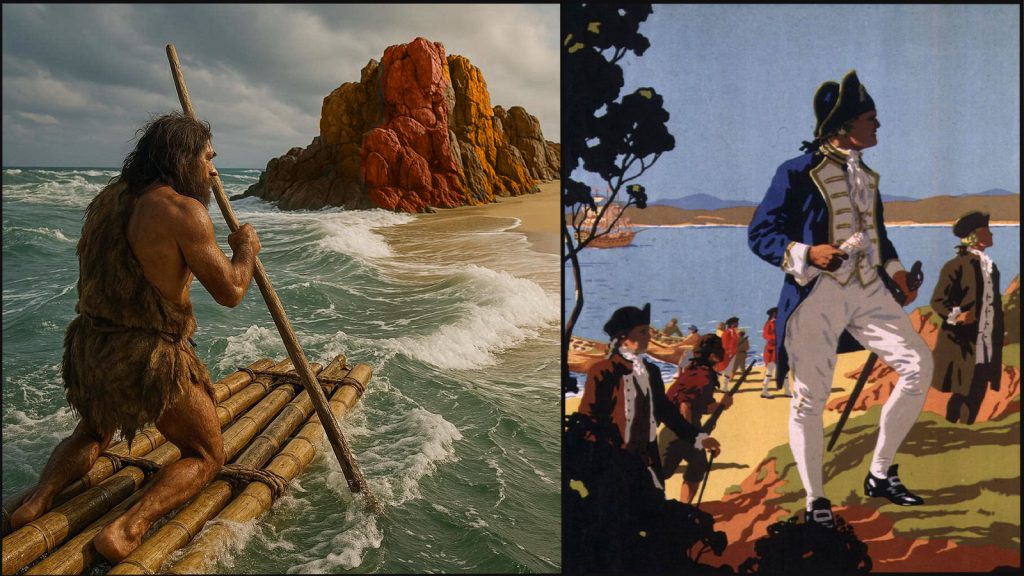
In 1788, the French were only a few days behind the British in their quest to claim the recently discovered unsettled great southern land mass as their own.
Under settler law at that point in history, the local natives had no legal property rights in the land they occupied and thus through tenure and settlement, ownership of the entire mainland continent and Van Diemen’s Land, over a considerable period of time, was bestowed on the British government as Crown land.
The occupier local native mobs were nomadic peoples, with no individual ‘ownership’ in particular plots of land. They had no idea how big the land they dwelled on was or what it looked like on a map. In the local native domain Cartography did not exist.
Early pioneering settlers combatted problems including famine and disease while building a democratic economy and society. They faced huge gaps in knowledge on every front.
When the British Crown acquired sovereignty over Australia, it acquired the power to make laws, to grant interests in land and to extinguish any surviving traditional native title. One vital facet of the common law is the feudal root of property law. Under this law the Crown has the supreme title to all land, and the people own ‘estates’ in the land. Crown land is considered public land and is separate from the monarch’s private estate.
A public national park is accessible to everyone, even sightseers who are not from that neighbourhood. All people benefit unvaryingly from it. No one is denied access to it.
Public land is like the air we breathe when an individual or a group of individuals use it, the supply left for other people to use remains unchanged. Properly protected public land can be used over and over again without fear of depletion of the public reserve.
Recitation indicates that on 18-20 January 1788 the British First Fleet arrived in Botany Bay. The safe arrival of the First Fleet proved a triumph of planning and navigation by the British Empire into the New World.
The influence of the British Empire expansion into New South Wales was reliant on Arthur Phillip’s courage and integrity. His instructions had emerged from centuries of British engagement within the New World.
With authority and instruction from the British government, Arthur Philip was to assume the powers of Captain General and Governor in Chief of the new colony and ‘endeavour by every means possible to open intercourse with the natives, and to conciliate their affections, enjoining all subjects to live in amity and kindness with them’.
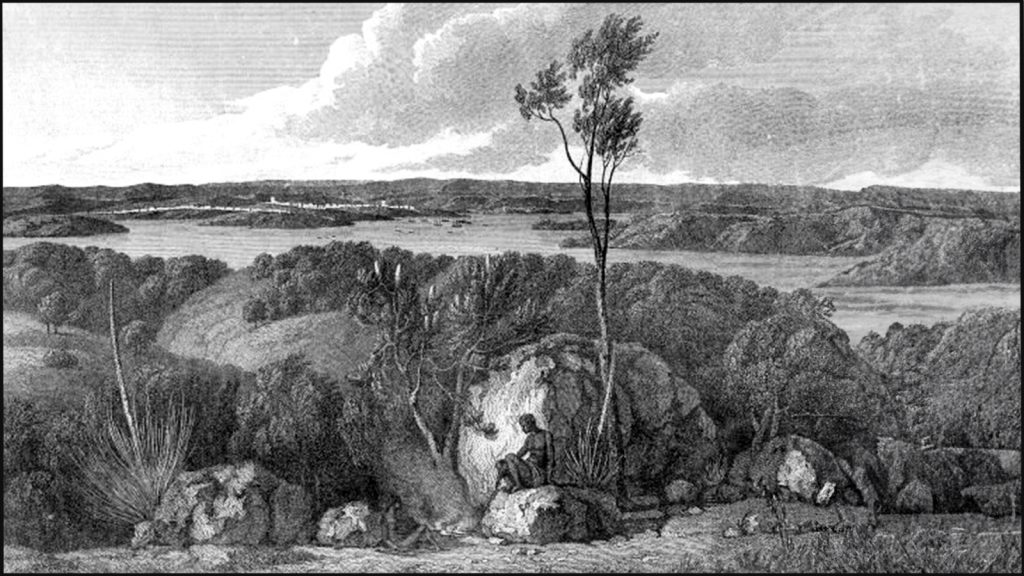
As Lieutenant James Cook before him reported, Commodore Arthur Phillip quickly confirmed the location of Botany Bay was unsuitable for initial settlement as fresh water was inadequate. The river to the north was swampy and there were few trees. The meadows were marshland with damp and poor-quality soil. The anchorages were too open and unprotected in the wide shallow bays.
After arrival ten ships stayed in Botany Bay for nearly a week while Commodore Arthur Phillips set out with some officers on Monday 21 January 1788, voyaging by cutter some 30 kilometres north to enter the cartographic secret of Port Jackson.
Arriving in the early afternoon, they were astonished to find ‘The finest harbour in the world’.
With thought of claiming the great southern land for France two large French flag flying ships, the Astrolabe and the Boussole, led by commander Jean-François de Galaup arrived at the entrance of Botany Bay on 24 January 1788. Due to a thunderstorm, rolling seas, the current, and gale winds the French ships were prevented from entering Botany Bay until the weather cleared over the morning on the 26 January 1788.
To signal Britain’s priority Governor Arthur Phillip at dawn on the morning of 26 January 1788 ordered his men on the HMS Supply to erect a stopgap flagstaff and hoist the British colours before any French ships arrived. This symbolic practice was one of fortifying possession. Under contemporary European rules, his action established England’s priority over France to the surrounding site.
Under clear skies on the same day the ten other ships from the British First Fleet with some difficulty exited Botany Bay and headed to the safe waters of Port Jackson at Sydney Cove to join Governor Phillips on the HMS Supply. In the evening of the 26 January 1788 the remaining ships in the First Fleet arrived at Sydney Cove.
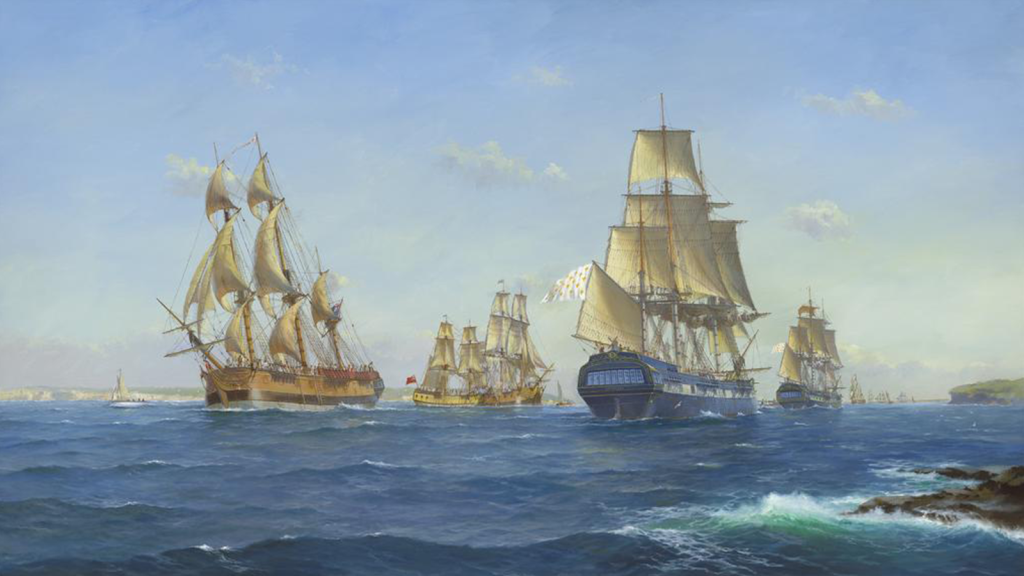
At Sydney Cove the ships dropped their anchors inside a majestic harbour close to a sunny north facing crescent of sand and shady trees that enjoyed a freshwater spring at its head.
Governor Phillip had drawn up a basic town plan and was to oversee the setups. His own quarters along with his staff were on the east side of the cove, whereby, the marines and convicts were to live on the west side.
The next day working parties commenced the business of settlement. Provisions and stores were unloaded, timber was felled, axes were broken or made blunt by the hardwood eucalyptus trees, ground was cleared, store houses were built, tents and marquees were pitched, a hospital was established. An order was given to start the commencement of building his own ‘government house’.
From there the sailors, marines, their families disembarked along with the rest of the convicts. The livestock came ashore on long boats and a vegetable garden was established and the seeds, trees, and shrubs brought from home and ports along their journey were planted. Every detail, no matter how large or small passed under Phillip’s watchful eye including that the bush and trees were left untouched on either side of the stream delivering nine metres of undergrowth and greenery to ensure that the freshwater stream intentionally was kept free of debris.
The Marine Corp were very disciplined and well behaved and once ashore formed a military base for the dual purpose of protecting the settlement against local native and external attack and to preserve good order amongst the convicts. These soldiers shared most of the hardships and fears and dreams of the convicts they guarded.
On 3 February 1788, under a far-reaching tree situated above the Tank Stream the first church service was led, by Reverend Richard Johnson. The Christian service reflected gratitude for the lord providing the congregation with a blessing for an auspicious new life.
With all due solemnity on 7 February 1788, Proclamation Day occurred. This official formal announcement day marked the bureaucratic start of the infant British colony. Two parchment scrolls signed and sealed by the last King of America and the First King of Australia, George III of Britain, were read out by Judge Advocate, David Collins. The reading detailed the commission of Arthur Phillip and the other officials of the colony.
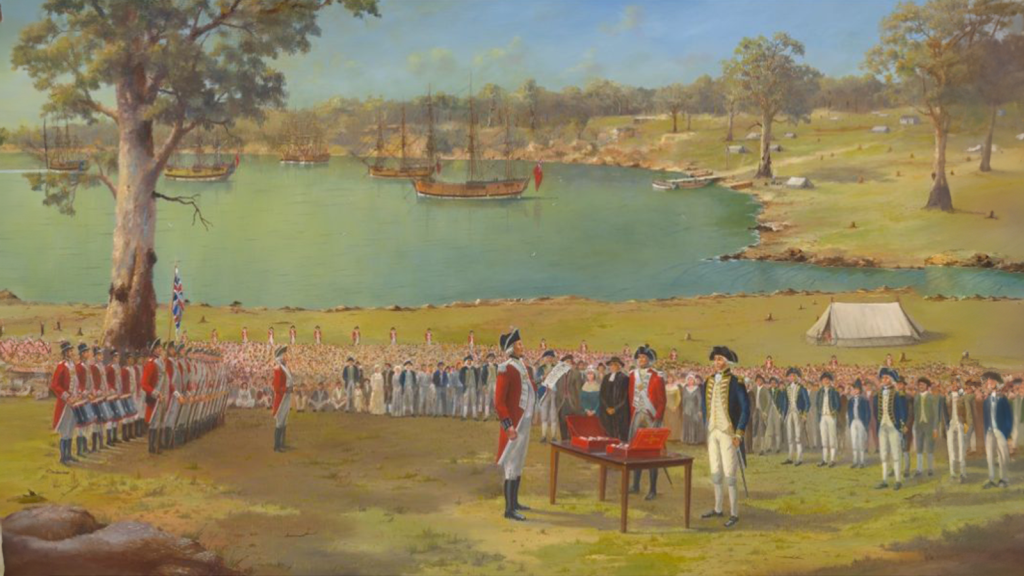
The Instructions advised Governor Phillip about overseeing the convicts, granting, and cultivating the land, and exploring the country. The local natives’ lives and livelihoods were to be protected and friendly relations with them encouraged. The formal act of state which levied the sovereignty of the British Crown over the new dominion was complete.
Proclamation Day was a colourful ceremony with full dress formality, flags flying, invigorated with the band playing music, streamers, and the majority of the people who arrived in the first fleet attended as New South Wales was claimed as a British province. After the official ceremony the convicts were given the rest of the day to themselves.
Arthur Phillip Esquire was entrusted with confidence to be a prudent, courageous, loyal patriot when appointed as the captain-General and Governor-in-chief of the new British colony. The new governor was given all civil power necessary for his operations.
Governor Phillip was an educated visionary who believed that the new settlement’s days as a convict outpost were limited, and it would only be a blink of the eye before it swelled into a thriving community based upon the British way of life.
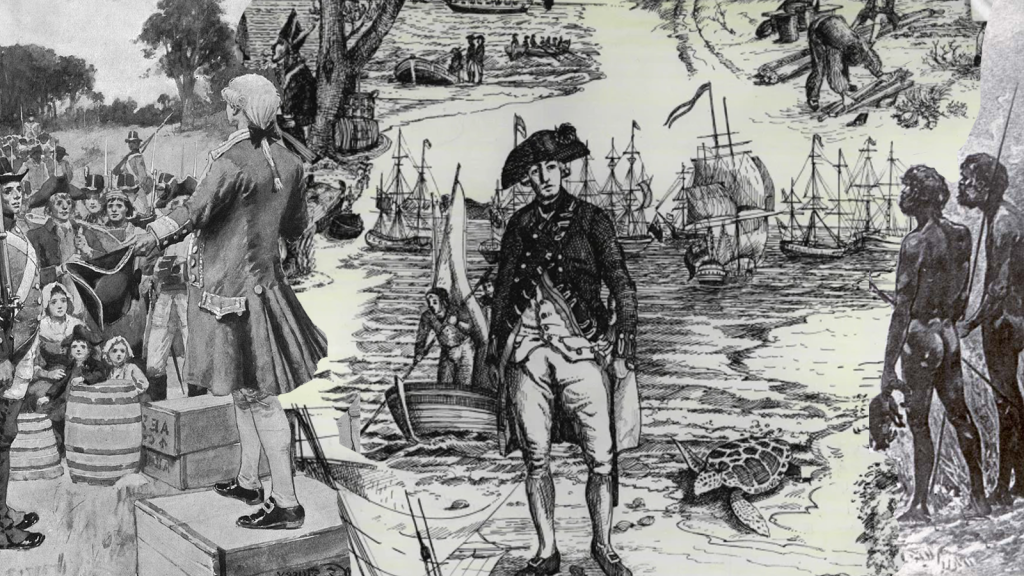
A society based on Christian values. The ten commandments. Grace, faith, love, compassion, hope, humility, service, justice with integrity, prosperity, and peace.
Arthur Phillips was known to be a clean-handed man, principled, honest, and very brave. A sensitive man with deep emotions who freely spoke his mind with an even temper. He had an instinctual practicality which saw the new settlement built from the inside out as every window of opportunity for the creative was given the power to come home strong.
The proclamation stated the same protection under British law for the local natives and settlers. Both had the same legal status – all were considered to be British subjects. Governor Phillip instructed that ‘kindness and amity’ be shown to the local natives including when hostilities emerged amid the settlers and the local clans. Compassion and justice were highly valued, and anyone wantonly destroying the local natives without provocation of rock and spear throwing would be severely punished.
Governor Phillip and his officers were genuinely committed to establishing and maintaining friendly and peaceful relations with the local natives. They were after all establishing a British way of life.
Related Articles
Bluey’s Land, Title of Steel
They roll out a flag, and they chant at the gate,“Always was,...
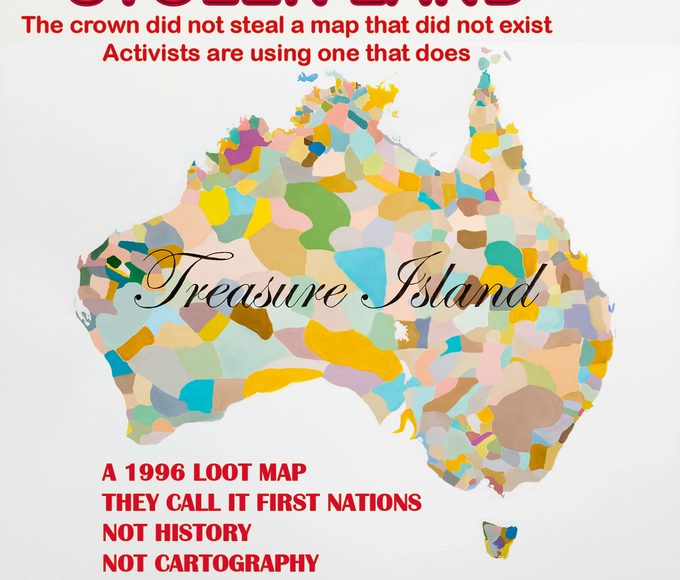
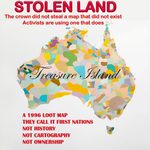
Not a history map – Not a land map – Not cartography – A political weapon for the present
David Horton’s AIATSIS map is a late-20th-century collage of language groups and...
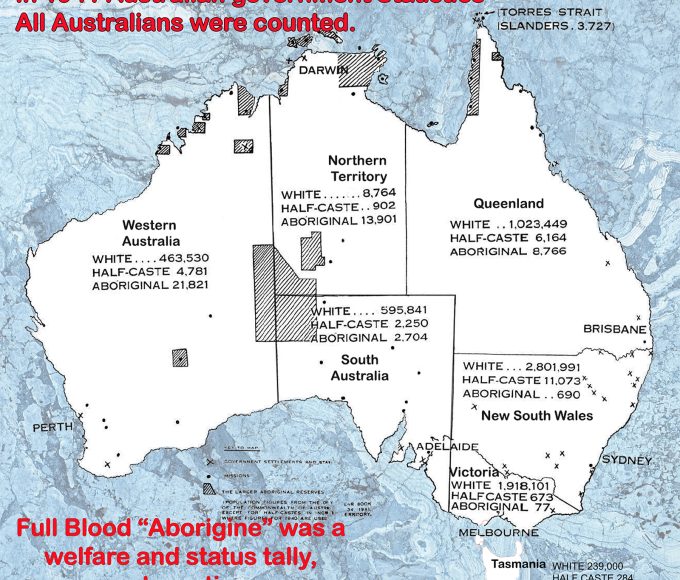
History Never Leaves Maps Alone After You Invent One Aboriginal People With the Right to Choose Their Own Status
Has any Australian parliaments ceded our country’s sovereignty to an Aboriginal nation...


Oh, Here We Go Again: Political Aboriginal Academics Claim High Court Got Australia’s Sovereignty Wrong
Sovereignty isn’t a legal footnote—it’s the bedrock everything else stands on. Because...
